
A new longitudinal study released by Mumbai-based non-profit Antarang Foundation has found that structured career education delivered as part of secondary school curriculum significantly improves long-term workforce outcomes for Indian youth, including a sharp lift in women’s workforce participation and a steep drop in disengagement.
Measured against national benchmarks from the Periodic Labour Force Survey (2024 and 2025) and the India Employment Report (2024), the study found youth disengagement (NEET — Not in Education, Employment or Training) dropped to 16% among Antarang alumni, against 25% nationally. Women’s workforce participation in the alumni group stood at 54.6%, well above the national figure of approximately 35%. Some 51.7% of alumni were in formal salaried roles, against roughly 22% nationally, with 69.1% in full-time employment.
The study also tracked income trajectory. Participants reported average annual earnings of ₹2.4 lakh within the first year of employment, rising to ₹2.6 lakh over time, a 39.2% increase in individual income, alongside a 42.1% rise in household income. The average per-student investment to deliver the programme was approximately ₹4,000.
“For decades, our education system has focused on skilling alone as the primary route to employment,” said Priya Agrawal, Founder and Director, Antarang Foundation. “Our experience has shown that an upstream intervention of career education embedded as part of the secondary school curriculum changes that. When young people are given the tools to understand their abilities, explore real opportunities, and make informed choices as part of secondary school, the outcomes are fundamentally different — young adults enter career pathways that give them better incomes and social mobility. Entire families gain, and industry gains a diverse talent pool.”
The study reports that nearly 31% of participants secure employment within six months of leaving the programme, while 75% achieve a defined career milestone like employment, higher education, or skill certification, pointing to both speed and durability of outcome.
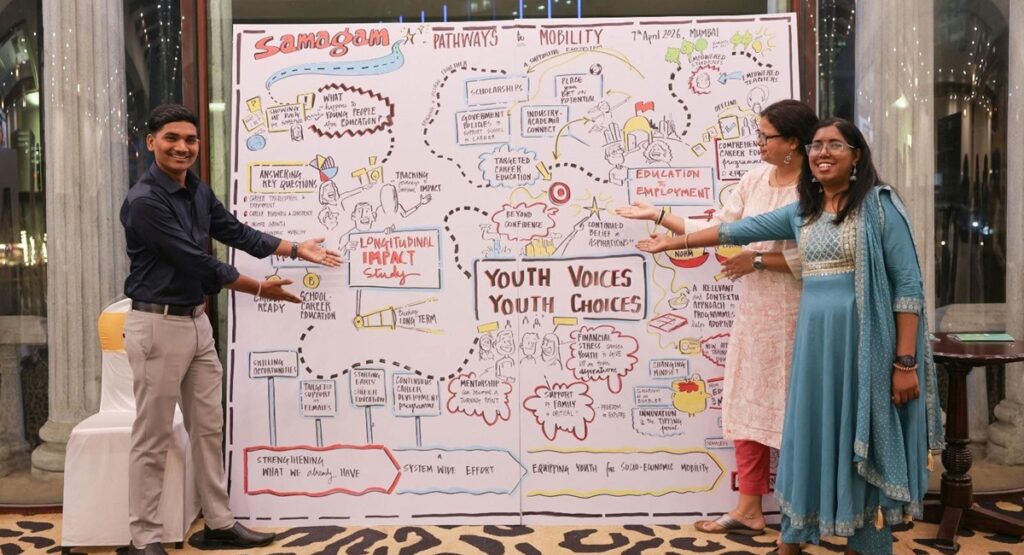
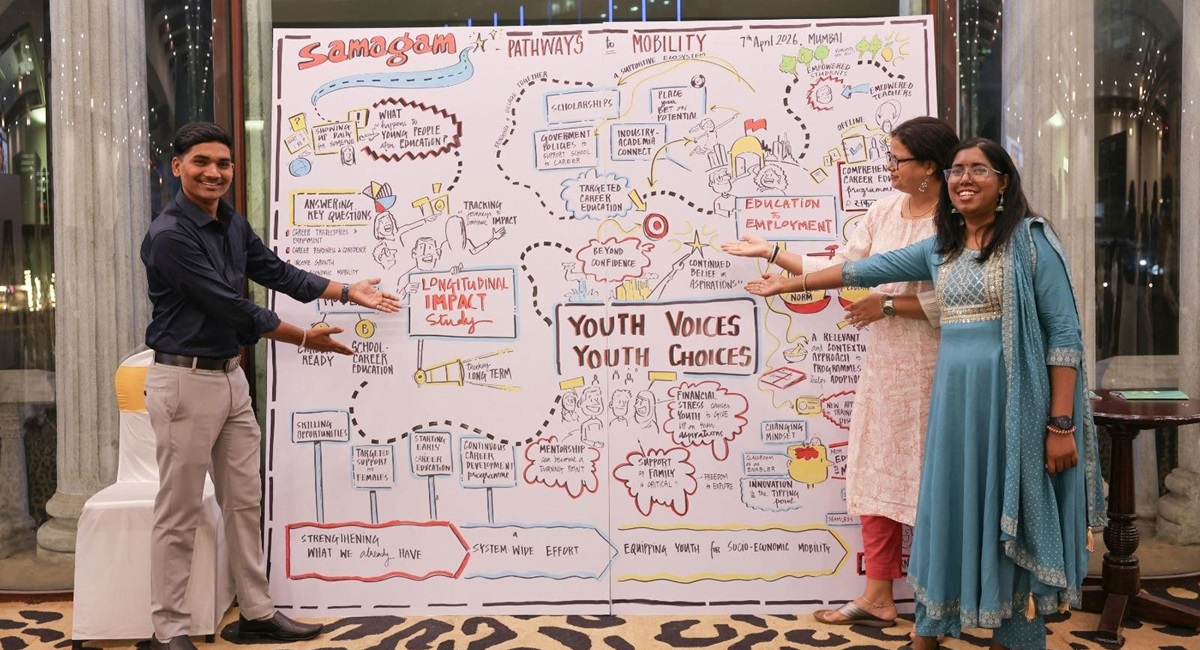
The findings were presented at Samagam 2026 — Pathways to Mobility, the foundation’s annual convening in Mumbai on April 27, 2026, which brought together policymakers, educators, donors, and employers. Tracking 1,057 alumni between 2015 and 2025, the study is among the first of its kind in India to follow career-education recipients from school into the workforce over a decade.