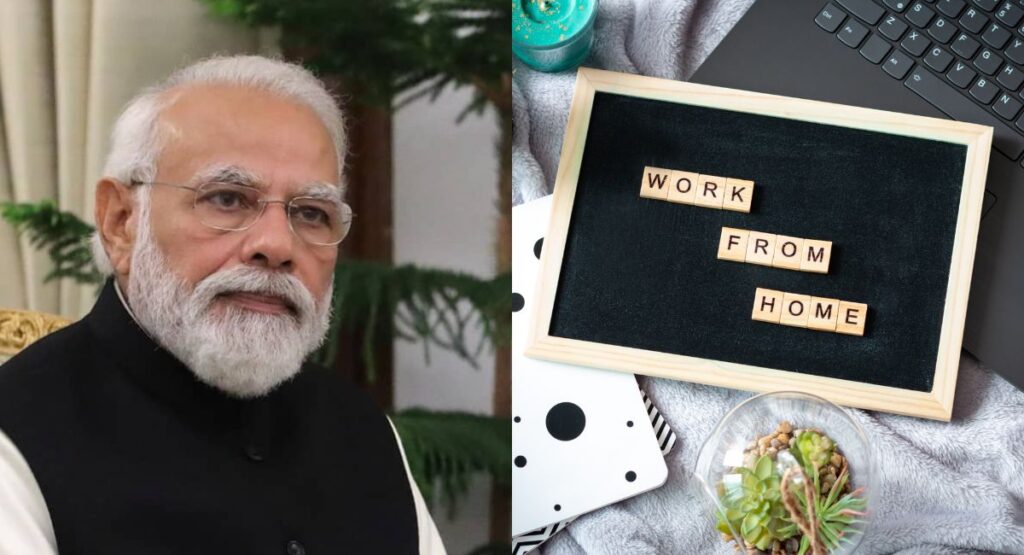
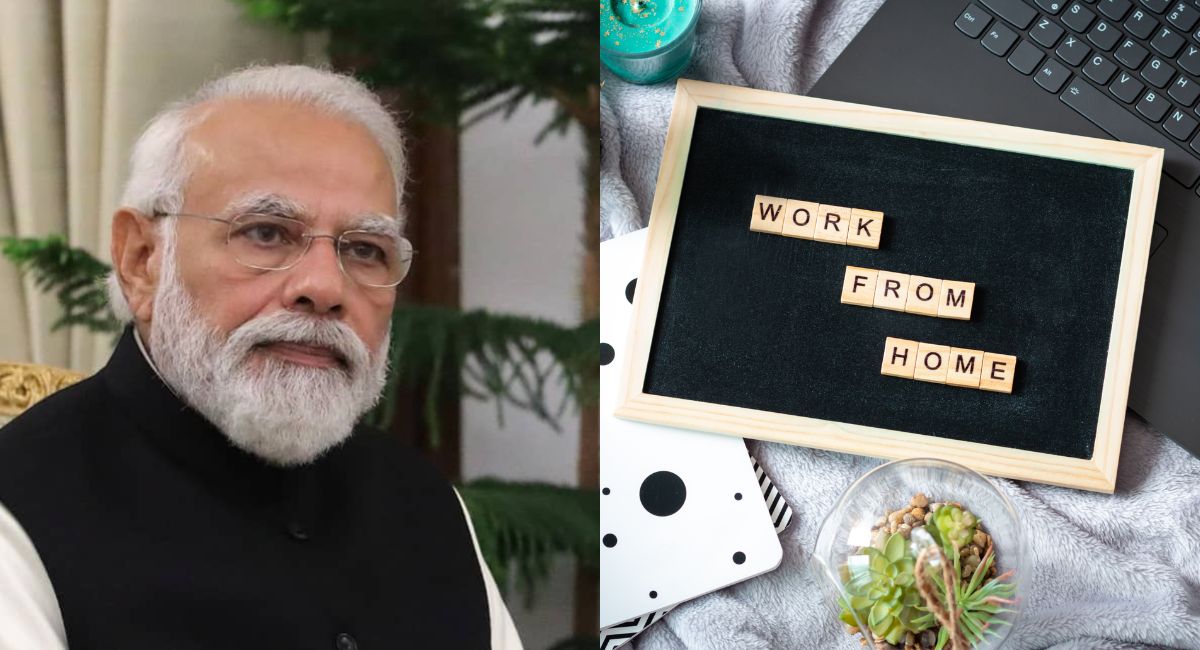

It has been under a week since Prime Minister Narendra Modi, among many requests, promoted the Work From Home model wherever possible.
Following the speech in Hyderabad, many companies and leaders have not only shared their views but also instituted changes to their operating models. The swiftness of the reaction has made it evident that India Inc is reacting well and reacting fast in preparation for what might happen in the future.
Metro Mondays for Delhi Govt Staff
The Delhi government has rolled out a 90-day fuel conservation campaign, “Mera Bharat Mera Yogdan Abhiyan”, effective May 15, 2026, mandating two work-from-home days weekly for all government employees.
Chief Minister Rekha Gupta cited rising global energy concerns and Prime Minister Modi’s appeal amid the West Asia crisis. Departments must hold nearly half their meetings virtually, with staggered office timings introduced to ease peak-hour congestion.
Monthly petrol allocations for officers have been cut by 20%, and no new petrol, diesel, or CNG vehicles will be bought for six months. Mondays are designated “Metro Monday”, with transport allowances raised from 25% to 35%.
Yogi’s 2 Days From Home
Building on PM Modi’s WFH request, the Uttar Pradesh Chief Minister Yogi Adityanath has proposed a two-day weekly work-from-home model for employees in large industrial units, IT companies, and startups
The official statement issued after a high-level review meeting in Lucknow read: “The Chief Minister also appealed for prioritising the work-from-home culture in the State. He laid special emphasis on the use of PNG, Metro services, public transport and buses operated by the Uttar Pradesh State Road Transport Corporation.”
The statement added that “In workplaces with a large workforce, a State-level advisory should be issued recommending work-from-home for two days a week.”
Tripura’s 50% C and D Staff to WFH
The Tripura government has directed that only 50% of Group C and Group D employees attend office daily, with the remainder working from home on rotation, under austerity measures aimed at cutting fuel consumption and administrative costs
As per the order issued on May 13, 2026, by the General Administration Department, relevant departments must prepare weekly duty rosters, prioritising employees living closer to offices in the first phase. Remote employees must remain reachable and report for urgent work. Essential services are exempt.
WFH Wednesdays at Shaadi.com
Shaadi.com founder and CEO Anupam Mittal announced that his company’s employees will be working from home on Wednesdays. This move, he said, is part of “nation-building” needed in these times.
“Yesterday, the PM asked India to import less & consume less imports. Fair ask. So at Shaadi.com, we’re starting with one simple move,” Mittal wrote in his LinkedIn post. He added, “Nation-building is not always a grand sacrifice. Sometimes it is just fewer cars on the road on a weekday.”
Zoho Returning to WFH? Maybe
In support of PM Modi’s words, Zoho’s Founder and Chief Scientist, Sridhar Vembu, said that his company will also be looking into adopting the Work From Home model, despite its employees returning to the office only a few months ago.
“I hope all of us heed the Prime Minister’s appeal. As a company, we adopted Work From Office fully in recent months, but we will revisit Work From Home now,” Vembu shared on X. “We have adopted natural farming in our farm, and we are also actively looking for ways to cut diesel use.”
Less Travel, More Savings at PwC
PwC India has asked its employees to review all domestic and international travel and undertake trips only where there is a “clear business need.” The company added that it would be closely monitoring the evolving macro-economic situation and would continue to focus on “prudence, flexibility and the well-being of its people.”
“We remain aligned with the spirit of this appeal, while continuing to support clients, businesses and the wider economy with discipline and responsibility,” said Sanjeev Krishan, Chairperson, PwC in India.
Existing Hybrid Models
Despite a hybrid policy already in place, KPMG India is still considering PM Modi’s words to see whether anything else needs to change.
“The announcement is being evaluated, and will be addressed suitably – keeping people, business and client commitments in mind,” a spokesperson for KPMG in India told Economic Times.
KPMG is not the only company to share this sentiment, as per ET, which confirmed that Deloitte, EY, RPG, Tata Motors, Mercedes-Benz India, Diageo India, The Coca-Cola Company and others that also have hybrid working models in place will continue to follow the same.
Just a Start?
Though the Indian Prime Minister presented the WFH model as a request, many companies are already making changes out of patriotism and precaution to reduce fuel spending. Statements issued by the UP government also signal that this current request may soon become a mandate for some, if not for all.
The question that has also arisen in the minds of many is whether the statements and actions by some companies are truly about the spirit of patriotism. Or are companies jumping on a trend that is sure to follow, adopting policies that may look revolutionary but are not actually effective?