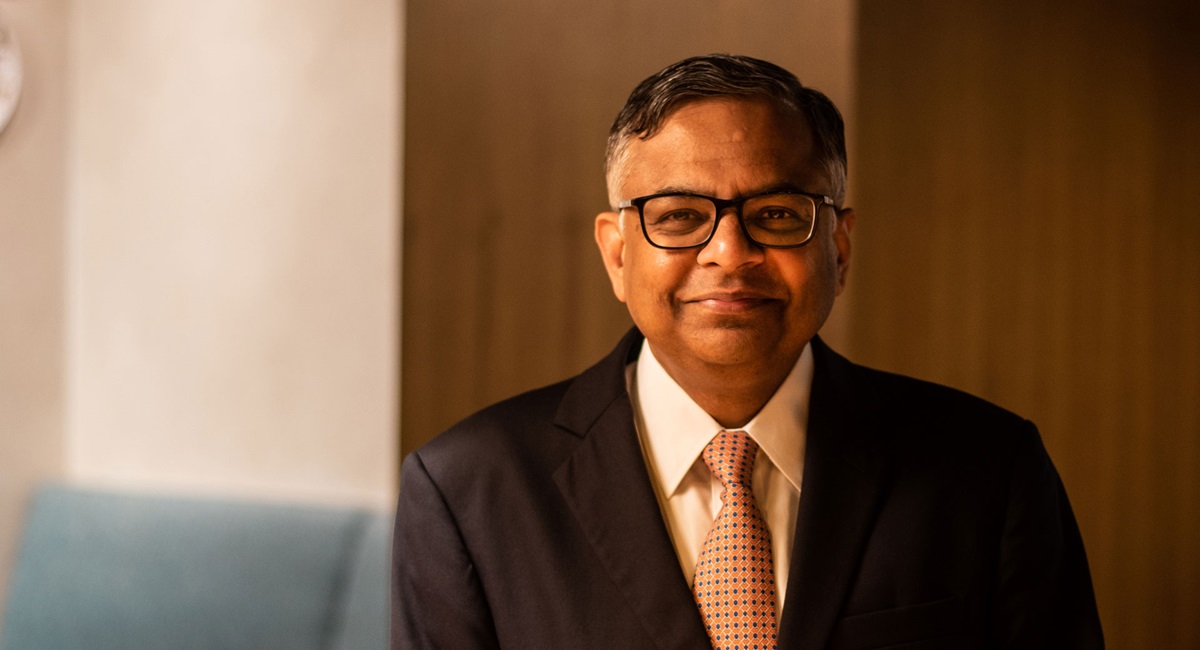

Tata Sons Chairman N Chandrasekaran said India can become a significant player in the global semiconductor supply chain, but investments must be guided by demand, financial viability, and execution capability, and that global collaboration is a necessity, not an option.
Speaking at the 2026 Bloomberg New Economy Forum in New Delhi, Chandrasekaran framed semiconductors as fundamental to India’s economic future and to meeting its domestic consumption needs. He stated that India’s talent base, the size of its home market and its potential to participate in international supply chains place the country in a favourable position.
“We are in a beautiful spot in India, because we have the talent, we have the domestic market, we can play a part in every global supply chain,” Chandrasekaran said.
Chandrasekaran also flagged partnerships with international players, access to technology and energy availability as the critical dependencies for India’s chip ambitions. “We need partnerships, because we have all the technologies … But if you design it, definitely we will get there. But you also have to be careful, because you need to keep an eye on energy,” he said.
The Tata chairman also cautioned against rushing into the most advanced process nodes without a demand case to justify the capital.
“You cannot be reckless and say that I am going to be putting a 2 nanometre chip (plant). It’s just not going to work. So, we need to also see where the demand is,” Chandrasekaran said. On financial viability, he added, “And the financially viable thing, you have got to see the sun cross the river.”
Tata Electronics is setting up India’s first commercial semiconductor fabrication plant in Dholera, Gujarat, in partnership with Taiwan’s Powerchip Semiconductor Manufacturing Corporation (PSMC), with an investment of around ₹91,000 crore. The fab is intended to produce chips for automotive, mobile, consumer electronics, AI and industrial applications. The company is building a separate assembly and test facility in Jagiroad, Assam, with an investment of about ₹27,000 crore.
Chandrasekaran, who was recently given a third five-year term as Tata Sons Chairman, acknowledged that not every variable in a global investment can be predicted. However, he said key factors are known: “Energy is certain, the game is certain, the ability to execute is certain. And the only thing is how much you ramp up, how fast you ramp up, which technology you go to.”
The remarks land as India’s semiconductor ecosystem builds workforce depth alongside capex. Tata Electronics currently employs around 50,000 people across its semiconductor division and has signalled a 4-5 times workforce expansion over the next two to three years. Industry officials estimate that every semiconductor manufacturing job supports roughly 10 jobs in the broader ecosystem, placing hiring, upskilling and talent retention at the centre of the sector’s HR agenda.