
A single employee at a mid-sized Indian enterprise can exist as four different people at once. Payroll knows them by an employee code and a bank account. The applicant tracking system still carries the name and email they applied with two years ago. The attendance system logs a biometric ID that maps to a slightly different spelling. The benefits portal lists a personal mobile number that changed after the last address update. None of these records is wrong on its own.
Together, they describe a person who does not cleanly exist in any one place, and reconciling them falls to HR every payroll cycle, every audit, and every exit.
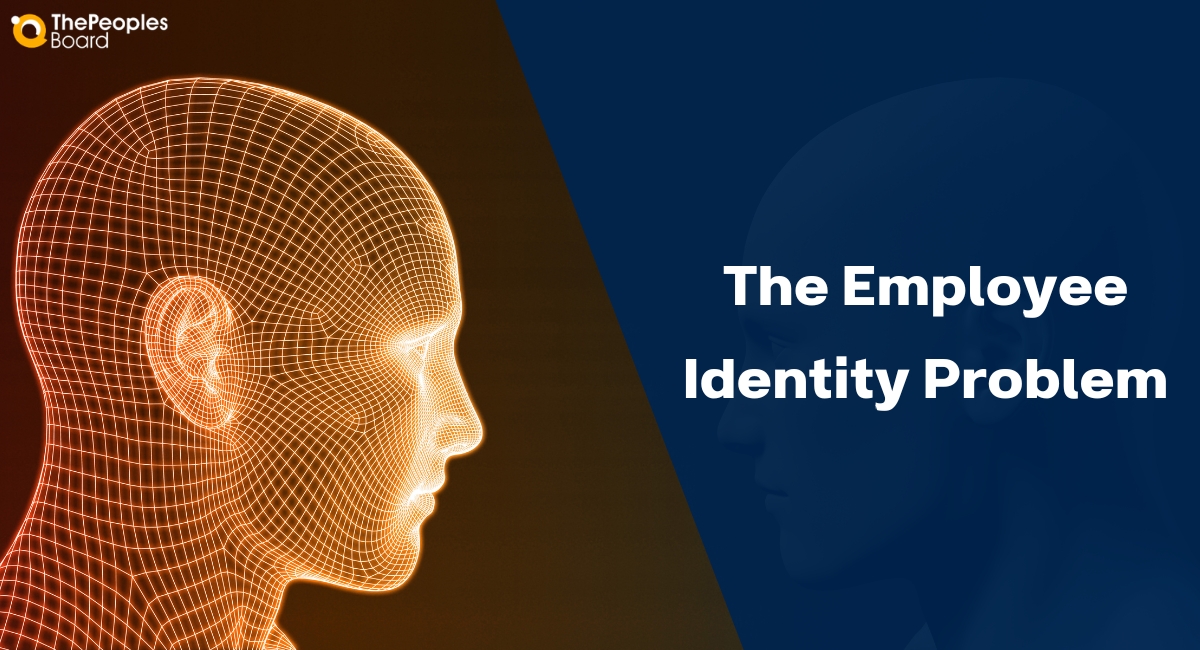
This is the employee identity problem: the same human being fragmented into mismatched records across systems that were each bought to solve a different problem and never designed to agree with one another. It is quietly expensive, occasionally dangerous for compliance, and almost never owned by anyone in particular. The debate over how to fix it is genuinely unsettled, which is why it deserves a closer look rather than a vendor pitch.
Why One Employee Becomes Many Records
The fragmentation is structural, not accidental. Indian HR functions have added tools one problem at a time, and each tool arrived with its own idea of what an employee is.
Most enterprises did not sit down and design a unified people-data architecture. They bought a payroll engine to handle PF, ESI, PT, and TDS accurately across multiple states, added an applicant tracking system when hiring volumes grew, layered a biometric attendance system on top, and adopted a separate learning or performance platform later. Each system stores identity in its own format because each was optimised for its own job. Payroll cares about a bank account and a tax ID. The ATS cares about a candidate profile. Attendance cares about a device-readable token. The result is several partial pictures of one person.
The math of keeping these aligned gets worse as organisations grow. Point-to-point connections between systems do not scale linearly; a company running ten separate HR tools faces dozens of possible integration links, and every acquisition, new subsidiary, or fresh tool adds more. Indian conglomerates and Global Capability Centres feel this acutely because they often inherit multiple HR stacks across entities and geographies, sometimes one per acquired company or per country of operation.
Data standardisation across the enterprise remains incomplete even among firms investing heavily in technology. The EY-Nasscom AI Adoption Index found that 75% of surveyed organisations have standardised data across the enterprise, which means a quarter still have not. Identity data resists standardisation because it lives in more systems than any other category, so a single change to a name or a bank account has to propagate correctly to every one of them or the records drift apart again.
What Fragmented Identity Actually Costs
The costs show up in three places: administrative time, compliance risk, and the reliability of every person’s decision built on the data. Each compounds the others.
The Administrative Drain
Much of the routine effort in an HR operations team goes to making records agree rather than to anything strategic. When attendance data does not feed payroll cleanly, someone exports one file and imports it into another, checks for mismatches by hand, and fixes them before the salary run. India-focused payroll platforms openly market against this exact pain, positioning duplicate data entry and attendance-to-payroll gaps as the core reasons businesses switch to integrated systems. The work is invisible until it breaks, and it most often breaks at month-end, when there is least time to fix it.
Reconciliation also scales badly with headcount. A firm that manually matches records for 200 employees can absorb the effort; at the scale of Infosys, which reported 328,594 employees for FY26 in its own filings, the same task stops being a monthly chore and becomes a permanent team function. Even a tiny share of records that fail to match cleanly runs to hundreds of people whose identity must be resolved by hand.
The Compliance Exposure
Since the DPDP Rules, 2025 were notified in November 2025, fragmented identity is no longer just an efficiency problem. Under the Digital Personal Data Protection Act, 2023, an employer is a Data Fiduciary, and Section 8 obliges that fiduciary to keep personal data complete, accurate, and consistent where it is used to make a decision affecting the employee or is shared with another fiduciary such as a payroll vendor. That obligation is non-delegable, and general breaches can attract penalties running into hundreds of crores.
Fragmented records cut directly against that duty. When the same employee’s salary in payroll disagrees with the figure in the benefits system, or an exited employee stays active in three platforms after being closed in one, the organisation is holding inconsistent and sometimes stale personal data by design. The table below maps common fragmentation failures to the obligation they strain.
| Fragmentation Failure | What Breaks | DPDP Obligation Strained |
| Same employee, different names or IDs across systems | Reporting, audit trails | Accuracy and consistency of personal data |
| Exit processed in one system, active in others | Access lingers, data retained past need | Erasure once purpose is served |
| Salary or bank data mismatched between payroll and benefits | Payment errors, wrong deductions | Accuracy where data drives a decision |
| Personal data copied to vendors without a single source | No reliable record of what was shared | Fiduciary responsibility for processor handling |
The Decisions Built on Sand
People analytics and workforce planning are only as trustworthy as the identity layer beneath them. When headcount reports pull from systems that count employees differently, leadership debates numbers instead of decisions. Reliable people analytics depends on being able to say, without hedging, that one row equals one person. Fragmented identity removes that certainty and quietly caps how far data-driven HR can go.
The Fixes, and Their Trade-Offs
There is no single correct answer, and the honest framing is a set of trade-offs rather than a winner. Which reward has greater impact depends on an organisation’s size, existing stack, and appetite for disruption. The main approaches fall into three camps, each buying different things at different prices.
The all-in-one suite
Consolidating onto one integrated platform is the cleanest route to a single employee record, because identity lives in one database and everything else reads from it. Wipro runs its people processes through the Humanware-powered HRMS, where each employee logs in with a single Wipro Employee ID that ties payroll, leave, attendance, and appraisal into one dashboard.
Indian platforms such as greytHR make the same promise for smaller firms, advertising one employee record with zero duplicate entries across the lifecycle. The cost is lock-in and a painful migration, and few large enterprises can rip out every specialised tool they depend on.
The integration layer
Rather than replace systems, some organisations connect them through a middleware or data layer that keeps a master identity and syncs the rest. This preserves best-of-breed tools while creating a single source of truth above them.
The trade-off is ongoing engineering: each connection must be built and maintained, and maintenance consumes most of an integration’s lifetime cost. It suits firms with strong technical capacity and too much invested in existing tools to abandon them.
The governance-first approach
The least glamorous option treats fragmentation as a discipline problem before a technology one: define a canonical employee ID, assign ownership of the master record, and enforce rules about which system is authoritative for which field. A regular HR audit becomes the mechanism that catches drift before it compounds.
This is cheap to start and hard to sustain, because governance decays the moment attention moves elsewhere.
Most organisations end up blending all three. The useful question is not which is best in the abstract but which failure the organisation can least afford, and which disruption it can actually absorb this year.
In the End…
The instinct when identity data is a mess is to shop for a platform, and that instinct is backwards. The first move is to establish which system is the authoritative source for each identity field, because a migration onto new software with unresolved ownership just relocates the mess rather than clearing it.
A reconciliation this quarter across payroll, attendance, and the core HRIS, counting how many employees fail to match cleanly on ID, name, and status, gives the real size of the problem and converts an abstract worry into a metric leadership can act on. Ownership comes next: one named person accountable for the master employee record, since fragmentation persists mainly because no one owns the person as a record.
The DPDP consistency obligation then does useful work as a forcing function rather than a threat, because an exited employee still active in three systems is now both a data-quality failure and a compliance one, which is exactly the shared incentive that gets fragmentation onto the leadership agenda. The organisations that resolve this treat the employee record as infrastructure worth owning, not a byproduct of whichever tool they bought last.
FAQs
What is the employee identity problem in HR systems?
The employee identity problem is when the same person exists as mismatched records across HR systems that were each bought to solve a different problem. Payroll stores an employee code and bank account, the applicant tracking system holds the profile they applied with, attendance logs a biometric ID, and the benefits portal carries a personal mobile number. None is wrong alone, but together they describe someone who does not cleanly exist in any one place, and reconciling them falls to HR every payroll cycle, audit, and exit.
Why does one employee end up with different records in different HR systems?
The fragmentation is structural. Indian HR functions add tools one problem at a time, and each system stores identity in its own format because each was optimised for its own job. Payroll cares about a bank account and tax ID, the ATS cares about a candidate profile, and attendance cares about a device-readable token. Most enterprises never designed a unified people-data architecture, so several partial pictures of one person build up over time.
Does the DPDP Act make fragmented employee data a compliance risk?
Yes. Under the Digital Personal Data Protection Act, 2023, an employer is a Data Fiduciary, and Section 8 obliges it to keep personal data complete, accurate, and consistent where it drives a decision affecting the employee or is shared with another fiduciary such as a payroll vendor. Since the DPDP Rules, 2025 were notified in November 2025, holding inconsistent or stale employee records by design cuts directly against that duty, and general breaches can attract penalties running into hundreds of crores.
How do you fix fragmented employee identity?
There are three broad approaches with different trade-offs. An all-in-one suite puts identity in one database but brings lock-in and painful migration. An integration layer keeps best-of-breed tools and syncs a master identity above them, at the cost of ongoing engineering. A governance-first approach defines a canonical employee ID, assigns ownership of the master record, and enforces which system is authoritative for each field. Most organisations blend all three. The first move is deciding which system is authoritative for each field before buying any new software.
Which HR system should own the master employee record?
There is no universal answer, but the core HRIS is the most common authoritative source because it is closest to the full employee lifecycle. What matters more than the tool is naming one person accountable for the master employee record and defining which system is authoritative for each identity field. Fragmentation persists mainly because no one owns the person as a record.