
It’s payday, and you are eager to see your account balance go higher. However, you don’t get the salary amount you expect.
Not just by a small amount. Instead, you receive less than 30% of your monthly salary, leaving you wanting answers.
This is what happened to an employee at Nirvasa Telecom Pvt Ltd’s office in Moti Nagar, Delhi. In a video that has now gone viral, the employee claims that after his first month at the company, he was given only ₹3,800 instead of the promised ₹13,000.
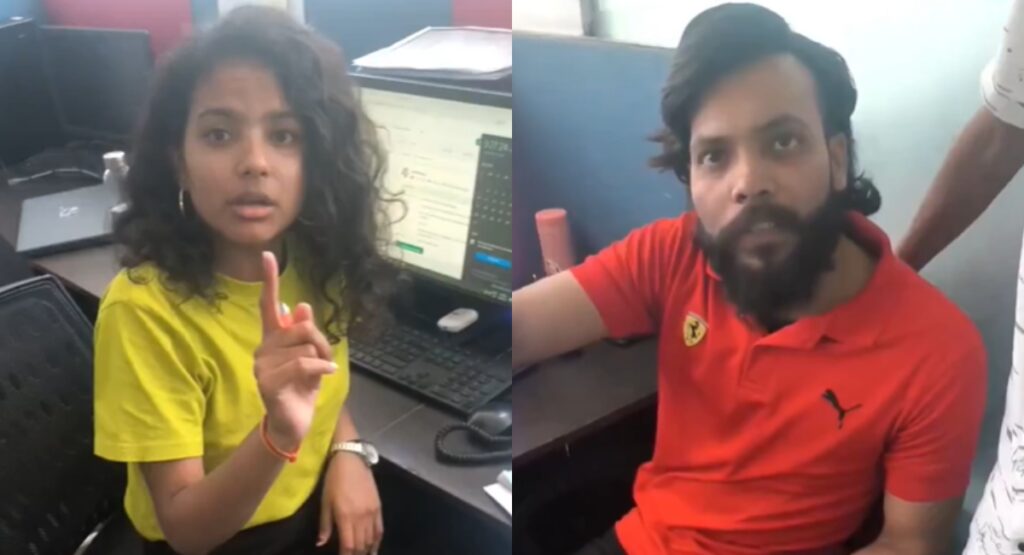
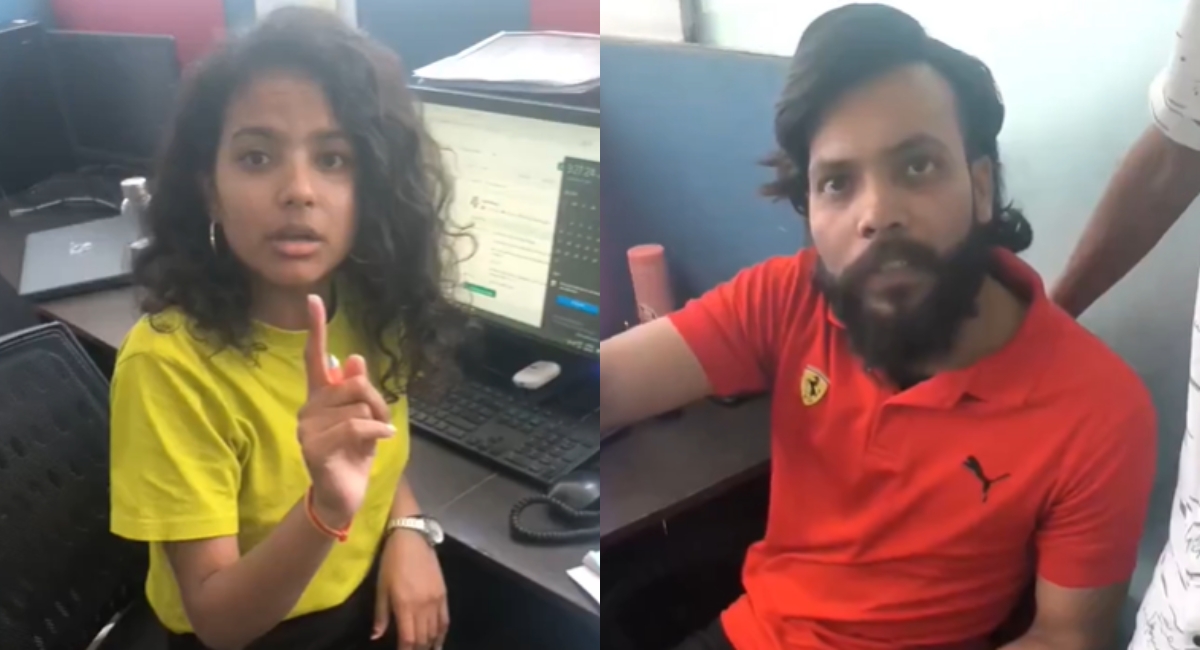
The video in question shows the employee confronting the HR department and asking about the salary discrepancy.
“Salary meri puri kyun nahi aayi (Why my entire salary was not credited)?”
In response, the female HR professional objects to being filmed and then shortly leaves the room. Another HR team member chastises the employee for filming a woman, stating that he himself has no objection to being filmed.
The HR team member, however, when asked why the salary hadn’t been credited, stated that only the other team member could resolve it, referring to the previously seen female HR professional as his senior. He also states that the team has seemingly been working on the issue since “morning.”
When the employee claims he was told by a senior HR member that nothing could be done now and that there wouldn’t be an update, the other team member claims that salary is not up to HR but rather within an employee’s manager’s purview, stating that this is why employees are sent to be interviewed by the manager.
The Public Reaction
Most of the internet has expressed their sympathy with the employee, stating that withholding someone’s salary is highly unethical. A common sentiment was the employee’s frustration that he was seemingly not being properly helped and that such a situation had even arisen in the first place.
Others were unhappy with how the HR team members were dismissive of the employee’s concerns, but admitted they might not have the full picture.
People on the internet were also unhappy that the male HR team member objected to the employee filming the interaction, calling it “filming a female.” This in particular made many wonder why the topic of gender was even brought up in this video. On this point, it’s worth noting that filming someone at work without consent can raise legitimate privacy concerns regardless of gender, but Indian law offers no special filming-related recourse tied specifically to gender in a workplace grievance context. POSH protections apply to sexual harassment complaints, not to being recorded during a salary dispute. The objection, as raised in the video, appears to conflate the two.
A small percentage of the internet did seem to think that posting a video seemed like an escalation, stating that perhaps the employee should have started with an email instead of direct confrontation.
Overall, solid opinions about the video remain hinged on the context of the whole incident, as the 2-minute video left much to be desired regarding what had happened before and what might have happened after.
HR’s Expected Role
One major point of contention in the video for many was the HR team member’s statement that salary calculations and decisions were not dependent on them.
While it is indeed true that most salary decisions are made by owners, managers, and account team members, it is almost always HR that communicates and finalises the final compensation amount with a joinee. In fact, salary negotiation is a key skill for any recruiter or HR team member.
In other words, even if HR might not decide the salary amount, they remain aware of it and are major drivers in ensuring its disbursement.
Moreover, HR plays a key role in addressing and resolving employee concerns, including a salary mismatch. In a case like the one in this video, an employee’s decision to approach HR seems more prudent than meeting with their manager, especially if their manager is directly involved in the employee’s day-to-day work.
In fact, best HR practices in any company dictate that compensation discussions should occur in the presence of a trained HR professional to facilitate a fair conversation, especially if one person has seniority over another.
Rather than an HR employee dictating that the employee should go talk to their manager, HR has the responsibility to act as a middleman, especially if the manager is indeed responsible for any salary deduction decisions.
The Flip Side
The video in question makes it clear that it starts in the middle of a conversation rather than at the beginning. As such, making any concrete claims regarding where the HR or the employee might be wrong is hard to confirm.
Both sides seem to agree that the salary was deducted. The HR did already seem to be working on resolving the issue, and it is evident that the employee likely decided to start filming after encountering a delay.
But does the delay make it the HR’s fault? Decisions like a salary deduction are rarely simple and often require clarification regarding the amounts promised and delivered. Additionally, in many MSMEs, HR lacks the independence to take a confrontational role, as the decision-makers are often their direct employers, leaving them in a position of less power.
Some have also argued that situations like this rarely get resolved in a single day, and while an unexpected salary cut for the employee is far from acceptable, expecting all the answers from HR is not the solution.
The True Dilemma
The reason the video caught the internet’s attention was not just the salary deduction but also the apparent lack of reason for it. Oftentimes, employees might receive less than the usual amount, owing perhaps to leaves without pay or other reasons depending upon their work model.
However, the employee stated that he was simply told that “update kuch nahi ho sakta. Ab tum jaa sakte ho. (There is no possibility of an update. You may go now.)”
The lack of reasoning and the apparent, easy dismissal of a genuinely impactful concern are what the internet is unable to tolerate. The lack of clear reasons, many claim, is a violation of the very least of what an employee deserves.
This also brushes up against the law. Under India’s Payment of Wages Act, 1936, employers are required to pay full wages within a fixed period and cannot withhold or delay payment without a valid, disclosed reason. An unexplained shortfall like this one, with no clear justification offered to the employee, sits uneasily against that statutory obligation, and gives the employee legitimate grounds to escalate the matter to a labour commissioner if it isn’t resolved internally.
Context or no context, the video highlights in many ways the importance of clear and proper communication. Irregularities cannot be handled with dismissal, and reasons for any decisions should be clear in order to properly respect employees and also to maintain compliance and morality. As of now, Nirvasa has not issued a public statement on the incident.