
Manager check-ins are one of the few engagement levers HR cannot outsource to a survey tool or a recognition platform. As per ADP Research’s People at Work 2025 report, India’s engagement fell to 19% in 2025, down from 24% in 2024.
Manager engagement fell even faster, from 39% to 30% in a single year, according to Gallup’s State of the Global Workplace data. When the people responsible for driving team engagement are themselves disconnecting from their roles, the one-on-one becomes the most direct repair mechanism available to HR.
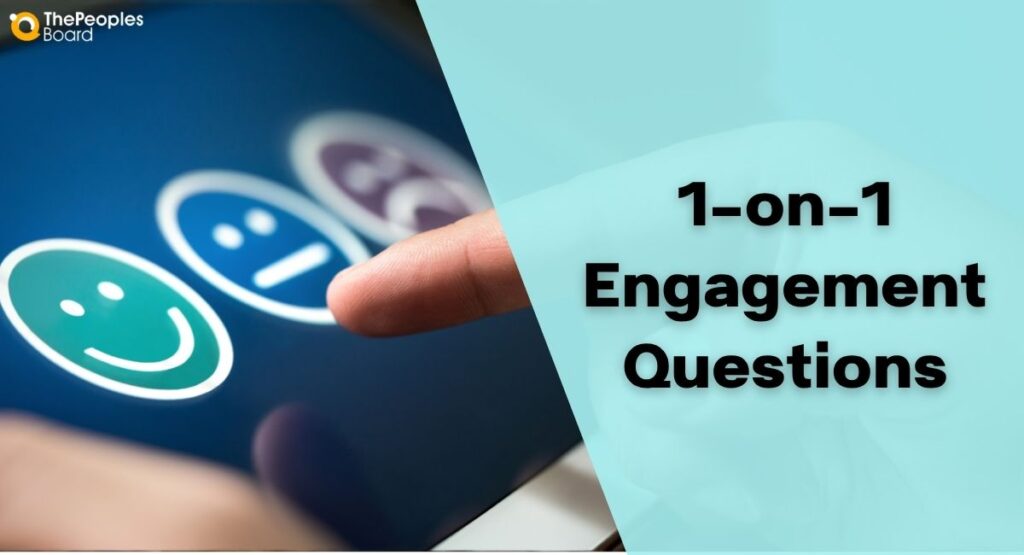
The questions a manager asks in a one-on-one determine whether the meeting builds trust or simply confirms that a status update happened. This piece lays out one-on-one meeting questions, mapped to specific employee engagement drivers, along with what each one is designed to surface.
Why The Right Questions Matter More Than The Meeting Cadence
There is no universal rule on how often one-on-ones should happen. Lattice’s 2025 State of People Strategy Report found that 78% of managers now hold daily or weekly check-ins with direct reports, and 97% of those managers said they feel connected to their reports as a result.
But frequency alone doesn’t drive engagement. Employees without any regular manager check-ins show engagement levels of roughly 15%. Organisations with highly engaged workforces are far more likely to run regular one-on-ones than disengaged ones, according to Gallup data compiled by PerformYard. The variable that separates a useful one-on-one from a wasted half hour is what gets asked.
| Cadence | Best Suited For |
| Weekly | New hires, high-change periods, complex or high-stakes projects |
| Biweekly | Established team members who need steady but lighter-touch support |
| Monthly | Highly autonomous employees who need minimal oversight |
1. What’s One Thing That Would Make Your Work Easier This Week?
This question surfaces operational friction before it becomes a resignation reason. Employees frequently work around missing tools, unclear approvals, or access issues rather than raising them. This is particularly true in hybrid Indian teams where IT services and BFSI firms have tightened return-to-office norms partly around collaboration gaps. A direct, weekly version of this question catches blockers while they’re still small and fixable.
2. What’s Something You Did Recently That You’re Proud Of But Haven’t Mentioned?
Recognition works best on a short recall window. Employees who received meaningful recognition in the last seven days report substantially higher engagement than those who did not, a pattern reflected in Gallup’s Q12 framework. Asking employees to name their own win, rather than waiting for the manager to notice it, also reduces the risk of recognition feeling generic or tenure-based.
3. Where Do You Feel Stuck Right Now, And What Would Unstick You?
This question is a coaching prompt, not a performance check. It invites the employee to name a specific obstacle, whether that’s a skill gap, a dependency on another team, or unclear priorities. This puts the manager in a support role rather than an evaluative one.
Manager support remains one of the strongest predictors of sustained engagement, and asking this consistently signals that the manager sees the employee as more than a resource to be tracked.
4. What’s One Skill You Want To Build In The Next Few Months?
Development conversations tend to get postponed until the annual review cycle, by which point the employee may have already started job hunting. Regular, smaller-scale check-ins on growth keep this front of mind.
Growth opportunity is one of the more durable engagement drivers, since employees who see a credible path to learning and advancement tend to stay engaged even through periods of organisational stress, such as hiring slowdowns or restructuring.
5. How Clearly Do You See How Your Work Connects To The Team’s Goals?
Line-of-sight questions matter most in functions where the connection between daily tasks and business outcomes isn’t obvious, such as back-office, support, and shared-services roles. A vague answer here is a signal that the manager needs to spend more time connecting individual work to team objectives, not that the employee lacks motivation.
6. Is There Anything I’m Doing, Or Not Doing, That’s Making Your Work Harder?
This question puts the manager, not just the employee, under review. It requires enough psychological safety for an honest answer, and the first few times it’s asked, employees may deflect. Asking it consistently, and visibly acting on what comes back, is what eventually makes it land.
Rahul Goyal, Managing Director of ADP India and Southeast Asia, has noted that “employees who feel connected, valued, and empowered are significantly more engaged” in comments on the People at Work 2025 findings, and asking a manager to be accountable in this way is one direct route to that outcome.
7. What Feedback Have You Been Holding Back On Sharing?
Employees frequently sit on feedback because they’re unsure how it will be received, or because a previous instance of speaking up went nowhere. This question names that hesitation directly instead of hoping it surfaces on its own.
It works best when the manager has a track record of closing the loop on past feedback, even when the answer is that a suggestion can’t be implemented right now.
8. How Connected Do You Feel To The Rest Of The Team Right Now?
Belonging is closely tied to engagement outcomes in India specifically. Only 33% of Indian workers currently report being part of the best team they’ve worked on, per ADP’s research, a figure TPB has examined in its coverage of hybrid work and engagement in India.
For hybrid and remote employees in particular, this question catches isolation before it shows up as disengagement or attrition, since informal, in-person interactions that build team cohesion don’t happen automatically when teams are split across locations.
9. What Would Make You Recommend This Team To A Friend Looking For A Job?
This is effectively an informal, real-time employee Net Promoter Score question, run inside a one-on-one instead of a quarterly survey. It tends to produce more specific, actionable answers than a generic “how satisfied are you” question, since it forces the employee to think about concrete reasons rather than a vague overall impression.
10. If You Could Change One Thing About How We Work Together, What Would It Be?
This closes the loop by making the manager-employee relationship itself the subject of the conversation, not just the work. It’s a harder question to ask consistently, since the answer sometimes points back at the manager’s own habits. However, it’s also one of the more reliable ways to catch relationship friction before it turns into disengagement or a resignation.
Building These Questions Into A Regular Practice
None of these questions works as one-off additions to an existing agenda. They need a consistent cadence and, more importantly, visible follow-through. Managers who ask about a blocker or a piece of feedback and then never mention it again train employees to stop answering honestly.
HR’s role here is less about mandating a script and more about equipping managers to hold these conversations well. This is consistent with Gallup’s finding that manager capability, not employee-facing perks, produces the larger engagement lift.
In The End…
A one-on-one is only as useful as the questions that get asked in it. Status updates can be handled over email or a project tracker. What a one-on-one offers, and what nothing else in the HR toolkit replicates, is a regular, structured moment for a manager to check on role clarity, recognition, growth, belonging, and trust, one conversation at a time.
None of the ten questions above requires new software or a formal program to implement. They require a manager willing to ask them consistently, listen to the answer, and follow up on it. In a year when India’s engagement numbers have dropped to a four-year low and manager engagement has fallen even faster than individual contributor engagement, that consistency is not a soft skill. It is one of the more direct, measurable interventions HR has available.