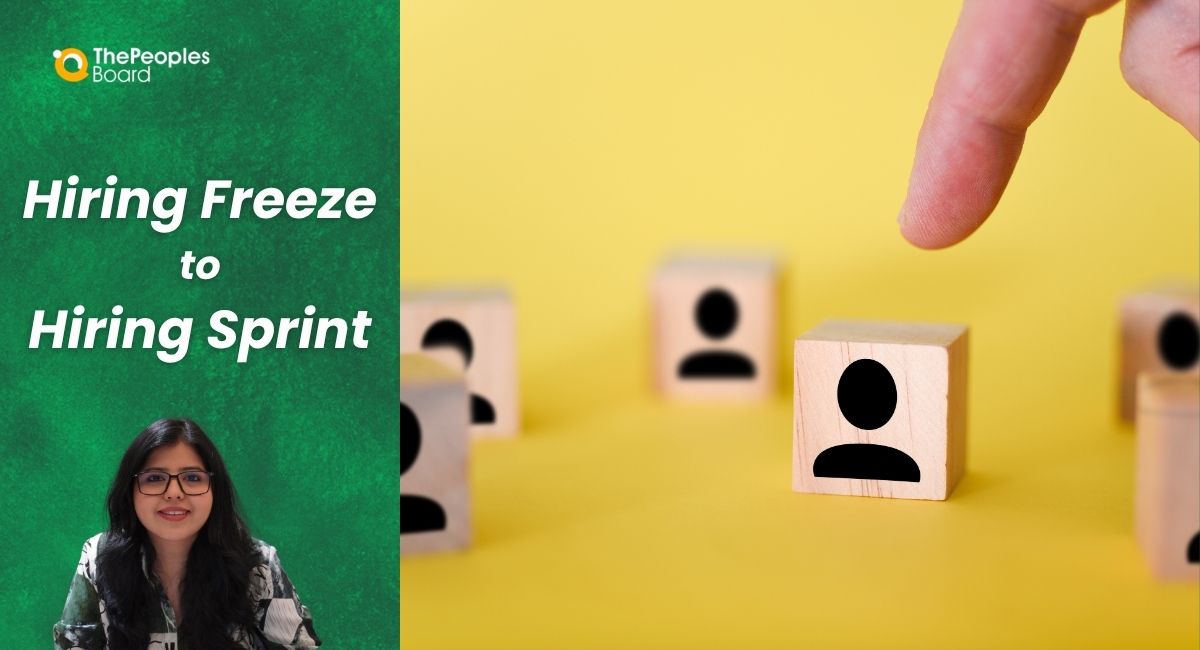

Most companies treat a hiring freeze as a pause. It isn’t. It’s a preview of every structural problem your talent function has been deferring. The organisations that treat the freeze as a diagnostic tool will be the ones who sprint cleanly when it lifts, and the ones that don’t? They’ll scramble, make bad hires under pressure, and wonder why the quality of hire dropped despite a perfectly good ATS.
India’s IT sector is living proof. After nearly a year of subdued activity with negative or near-flat hiring growth in 8 of the last 12 months through mid-2025, the market started turning, according to Naukri JobSpeak. GCC hiring in India jumped 12–14% quarter-on-quarter in Q4 FY26, as per QuessCorp. Pharma is in what workforce analysts are calling a “perfect storm” of talent demand. BFSI’s GCCs, despite a 42% skill gap in AI and data roles, are back in active recruitment mode.
The sprint has begun. The question is whether your team is ready to run it.
Why Most HR Teams Get Caught Flat-Footed When the Freeze Lifts
When a hiring freeze ends, most TA teams discover three things simultaneously: their pipeline has gone cold, their processes have rusted, and their employer brand has drifted. None of these is obvious while the freeze is in effect. All of them are painfully obvious the moment a business head says, “We need 40 people by Q2.”
India’s IT sector freeze between 2023 and 2025 is the clearest case study. TCS, Infosys, and Wipro all paused or dramatically reduced campus hiring during this period. Wipro cut its FY26 fresher hiring target from 10,000 to 8,000 after having already hired only 7,500 before the year closed. Infosys delayed onboarding for freshers from the 2022 batch so long that some candidates waited 18+ months for a joining date. Campus recruitment teams at tier-2 and tier-3 engineering colleges barely saw a visit from a top IT company.
What didn’t happen during that period: talent mapping, pipeline maintenance, employer brand investment, or process redesign. TA teams that were pared down had no bandwidth for it.
So when the recovery signals came, IT hiring posted a +5% YoY rebound in June 2025, then accelerating through FY26, the teams that had coasted found themselves starting from zero. Warm candidate lists had aged out. Empanelled hiring managers had changed. JDs were stale. Vendor relationships had lapsed.
The pipeline doesn’t pause just because the hiring does. It decays.
The Freeze Is a Diagnostic — Use It That Way
Here’s the shift in mindset that separates the HR teams who sprint cleanly from the ones who stumble: a hiring freeze is the best time to fix everything you never had time to fix when you were busy hiring.
Four things every TA function should be doing actively during a freeze:
1. Audit your talent pipeline — who’s still warm, who’s gone cold
A CRM or ATS full of stale candidates isn’t a pipeline. It’s a liability. Go through it systematically: segment by role type, last contact date, and current employment status. Candidates who were strong 18 months ago and have since moved may now be more senior — and potentially more relevant. The ones who’ve been in the same role for three years might be in passive consideration. Re-engagement during a freeze is low-pressure and high-signal. You’re not selling a role; you’re building a relationship.
Savanna HR’s Q1 2026 GCC market report noted that pre-built, verified talent pools are now one of the primary differentiators between GCC TA teams that meet sprint targets and those that miss them. That pool doesn’t build itself at the moment of need.
2. Map the roles that will open first when budget releases
Most HR teams wait for a hiring mandate before building a sourcing strategy. That’s a 4–6 week head start you’re giving your competitors. In India’s context, where notice periods run 30–90 days (and often longer at senior levels), you need the pipeline to be live well before the hire is formally approved.
Work with your finance and business planning teams now. Which roles are on the bench? Which projects are near approval? Which teams have been operating understaffed for the last 12 months? Map those first. Build a sourcing queue. Brief your preferred vendors if you use them.
3. Fix the process issues you never had time to fix
Interview loops that take six rounds when four would do. JDs that read like a wish list rather than a job. Offer processes that take 10 days when a strong candidate’s decision window is four. These problems existed before the freeze. They’ll be worse during a sprint when everyone is time-pressured.
A freeze is a gift of time. Use it to redesign the interview process for your three most common role types. Get hiring managers calibrated on what “good” looks like. Standardise the offer approval chain so you’re not waiting for five sign-offs on a ₹15 LPA role.
4. Rebuild employer brand quietly
Employer brand doesn’t need a campaign. It needs consistency. During a freeze, the companies that maintain a presence on LinkedIn, contribute to industry conversations, and keep showing up at HR events are the ones that candidates think of first when a role does open. This is especially true in India’s tight HR and tech professional communities — where word travels fast, and Glassdoor India reviews from freeze-era experiences linger.
You don’t have to promise jobs. But you do have to stay relevant.
The 90-Day Pre-Sprint Checklist for TA Teams
When the signal comes, a budget release, a leadership decision, a green light from the CFO — you have roughly 90 days before the business starts asking why people haven’t joined yet. In India, that’s barely enough time given notice period realities.
Here’s what should be done before the starting gun fires:
30 days out: Prepare infrastructure
- Review and update all active JDs for your top 5 role types. Kill the 5-year-old copy-paste job descriptions.
- Re-audit your ATS data hygiene. Dead candidate records slow your team down.
- Confirm your empanelled vendors are still active and calibrated on current requirements.
- Re-evaluate your sourcing channel mix. For GCC roles and mid-senior IT positions, Naukri.com and LinkedIn India remain primary, but tier-2 city expansion (Coimbatore, Kochi, Baroda, Ahmedabad) may require different sourcing channels than you’ve used before.
60 days out: Activate the pipeline
- Begin passive outreach to top candidates in your pre-mapped pool. No roles to pitch yet, just relationship reconnects.
- Schedule hiring manager calibration sessions. Alignment on must-have vs nice-to-have before the mandate hits saves weeks during the sprint.
- Get an employer brand content plan in motion. Even two LinkedIn posts a week from your company page changes visibility meaningfully over 60 days.
90 days out: Run a process dry run
- Test your full hiring loop end-to-end on at least one role. Time it. Find the bottlenecks.
- Confirm your offer approval chain. Who signs off? How long does it actually take? What’s the workaround if someone’s on leave?
- Brief your HR business partners so they’re not surprised when requisitions land.
The 42% skill gap in AI and data roles within BFSI GCCs, flagged in Quess Corp’s Q4 FY26 report, didn’t appear overnight. Companies trying to fill those roles from a standing start are now competing with organisations that started pipeline-building months earlier. The lag is real, and it compounds.
Rebuilding Employer Brand After a Freeze (Without Pretending It Didn’t Happen)
Here’s the thing about freezes in India’s professional market: candidates remember.
The Wipro FY23 batch situation where freshers were offered roles, asked to complete training programmes like TalentNext, and then either left in limbo or asked to accept a salary cut of nearly 50% didn’t leave the internet. Glassdoor India reviews from that period still appear in candidate research. The LinkedIn posts from freshers who waited 18 months for a joining date still circulate in group chats.
You can’t erase that institutional memory. Trying to paper over it with a “we’re hiring again!” campaign is transparent, and it backfires. What works instead is honesty.
Acknowledge the period for what it was, a market-driven reality, not a permanent judgment on your employer proposition. Be specific about what’s different now: what’s funded, what’s stable, what the growth trajectory looks like. Let your current employees speak. Internal advocates who genuinely believe in the organisation carry more weight than any campaign creative.
For companies expanding into tier-2 cities, the data is clear that this is where significant sprint activity is happening, from Oracle’s push into smaller cities to the GCC ecosystem expanding beyond Bengaluru and Hyderabad, employer brand in these markets is built differently. Community presence, college relationships, and genuine local visibility matter more than LinkedIn ad spend.
Trust, once eroded, rebuilds slowly. Start now.
Sectors Turning First; Where HR Leaders Should Be Watching
Not all recovery signals are equal. In India’s current hiring environment, four sectors are moving faster than the rest:
GCCs: The sharpest signal. After 4–6% QoQ growth in the previous quarter, GCC hiring jumped to 12–14% QoQ in Q4 FY26. BFSI, manufacturing, technology, retail, and healthcare GCCs all re-entered growth mode. The demand is anchored in AI-driven capabilities, platform engineering, and infrastructure modernisation. If you’re a TA leader in a GCC or supporting one, the sprint is already happening.
Pharma: Biosimilars expansion, API manufacturing scale-up, and government PLI support have created parallel demand across both niche roles (pharmacovigilance, regulatory affairs, biologics manufacturing) and mainstream hiring. Pharma TA teams that had lean bench capacity are now looking at RPO arrangements to handle the volume.
BFSI: Strong demand, particularly in tech and data roles, though the 42% AI skill gap is a genuine constraint. Mid-level and senior talent is where the competition is fiercest. Companies with pre-built pipelines for fintech-adjacent roles, risk analytics, digital banking operations, and cloud infrastructure for financial services have a real head start.
IT Services (selective): The broad recovery isn’t here yet. The 12-month moving average for IT hiring in January 2026 stood at approximately 3,437 hires per month, close to 2025 levels, but well below the 5,000-plus monthly hires of early 2022. Recovery is real but selective. Mid-career professionals with 4–10 years of experience made up 65% of IT hiring in 2025. Demand for AI, data engineering, and cloud roles specifically grew by 30–42% year-on-year, per Quess Corp data, while legacy tech roles continued declining. Entry-level intake dropped to 15%. If your team is planning for the IT sector hiring, plan for precision, not volume.
The CHRO’s Mandate: Don’t Just Restart Hiring – Restart It Better
I’ve had enough conversations with CHROs across India to know that the ones who navigated the freeze well aren’t the ones who simply waited it out. They used the time. They redesigned processes that had calcified over years of busy hiring. They invested in their TA teams’ skills during a period when the pressure was off. They built the employer brand infrastructure that a sprint would have made impossible.
The freeze offered something rare: breathing room. Most organisations didn’t use it.
There’s still time. If the sprint hasn’t hit your sector yet, you have a window probably measured in quarters, not years. The organisations coming out of recovery strongest won’t be the ones with the biggest recruiting budget. They’ll be the ones who built the pipeline, fixed the process, and told an honest story about who they are as employers.
The CHROs I most respect in India right now are asking a different question than “when does hiring open up?” They’re asking: when we restart, are we restarting the same broken system or something better?
That question is worth sitting with. The sprint is coming. Make sure you’re running in the right direction.
FAQs
What should HR teams do during a hiring freeze?
A hiring freeze is the best window to fix the talent function before the sprint begins. Use it to audit your candidate pipeline and re-engage cooled leads, map the roles that will open first when budget releases, redesign slow interview and offer processes, and maintain employer brand presence so candidates think of you when roles reopen. The teams that treat a freeze as a diagnostic rather than a pause are the ones that hire cleanly when it lifts. Quess Corp’s Q4 FY26 data shows GCC hiring rebounded to 12 to 14 percent quarter-on-quarter, so the sprint is already underway in several sectors.
Which sectors are hiring fastest in India right now?
Global Capability Centres are the sharpest signal, with hiring up 12 to 14 percent quarter-on-quarter in Q4 FY26, accelerating from 4 to 6 percent the previous quarter. Pharma is scaling across both niche roles and mainstream hiring on the back of biosimilars expansion and PLI support. BFSI shows strong demand in tech and data roles, though a 42 percent AI and data skill gap remains a real constraint. IT services recovery is real but selective, concentrated in AI, data engineering, and cloud roles rather than entry-level volume.
Why do TA teams struggle when a hiring freeze lifts?
Pipelines decay even when hiring stops. Warm candidate lists age out, empanelled hiring managers change, job descriptions go stale, and vendor relationships lapse, all while there’s no bandwidth to maintain them. India’s IT sector between 2023 and 2025 is the clearest case: TCS, Infosys, and Wipro paused or cut campus hiring, and teams that coasted found themselves starting from zero when the +5 percent YoY rebound arrived in June 2025. The pipeline doesn’t pause just because the hiring does.
How long does it take to rebuild a hiring pipeline after a freeze?
Plan for roughly 90 days before the business starts asking why people haven’t joined, and in India that’s barely enough given notice periods of 30 to 90 days. A practical sequence runs across three checkpoints: 30 days out, refresh job descriptions, clean ATS data, and confirm vendors are active. 60 days out, begin passive outreach to your pre-mapped candidate pool and run hiring manager calibration sessions. 90 days out, test your full hiring loop end-to-end and confirm your offer approval chain.
How should companies rebuild employer brand after a freeze?
Honesty works better than a “we’re hiring again” campaign, because candidates in India’s tight professional networks remember freeze-era experiences and Glassdoor India reviews linger. Acknowledge the period as a market-driven reality, be specific about what’s funded and stable now, and let current employees speak as genuine internal advocates. For companies expanding into tier-2 cities like Coimbatore, Kochi, and Ahmedabad, community presence and college relationships matter more than LinkedIn ad spend.