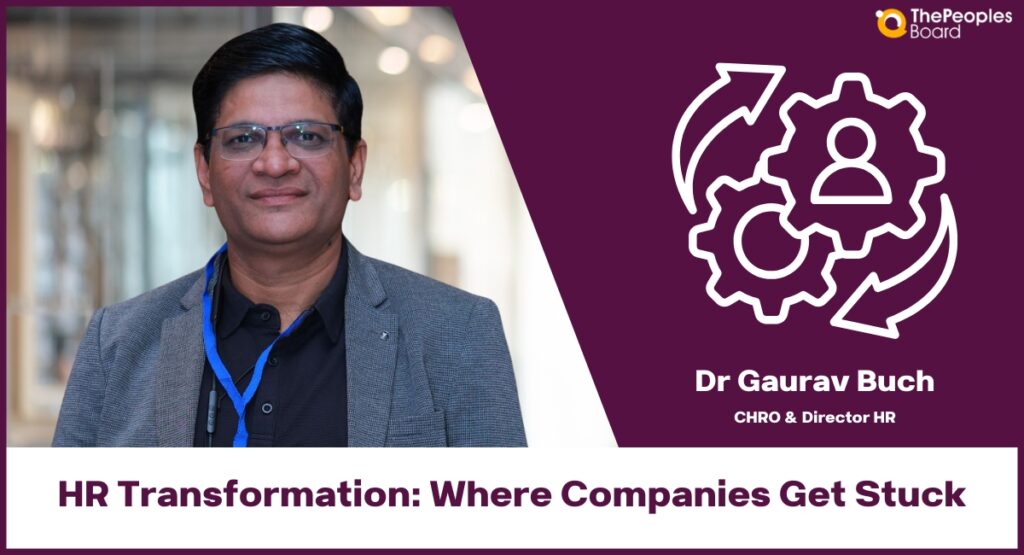
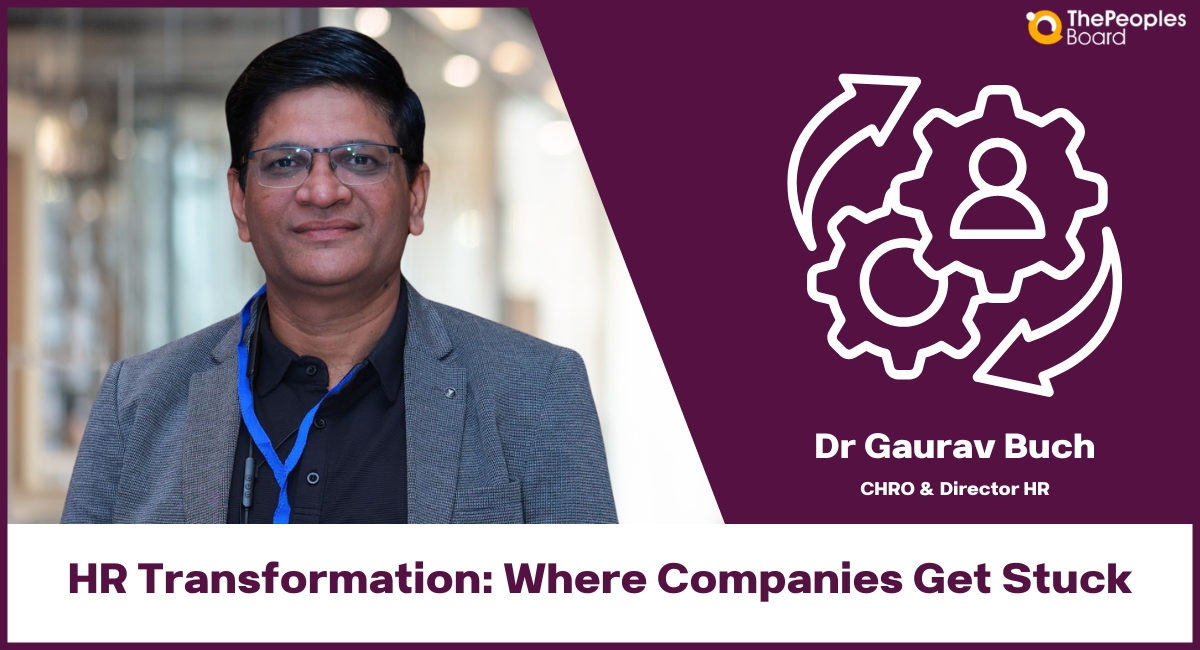

HR transformation is often mistaken for a technology rollout, a new HRMS platform, an AI-powered dashboard, or a fresh set of digital tools. Dr Gaurav Buch, CHRO & Director, HR, argues that this framing misses the point entirely. In his experience, real transformation begins with mindset, not machinery, and it takes hold only when an organisation is willing to align its people, culture, and processes with where the business is actually headed.
Dr Buch brings a practitioner’s view shaped by years of leading HR functions through periods of genuine change, including a widely recognised transformation journey at GHCL that earned recognition as one of the best HR practices in India. In this conversation with ThePeoplesBoard, he unpacks why so many transformation efforts stall soon after they begin, why hiring a CHRO is not the same as empowering one, and what leaders need to get right before they even start the process.
TPB Team: How would you define HR transformation? Is it simply about adopting new technology, or does it involve a broader organisational shift
Dr Buch: Transformation begins with mindset; it comes from within rather than from technology adoption alone. In my experience, organisations usually begin an HR transformation journey when they recognise the need to align people, culture, and processes with changing business priorities.
TPB Team: Where do companies most commonly get stuck when trying to modernise their HR function?
Dr Buch: It is often observed that organisations begin a transformation journey and hire a CHRO to lead change, but they do not truly integrate or empower the CHRO role within the organisation. As a result, the scale and pace of transformation remain inadequate. When the initiative fails, HR is often blamed as a function.
TPB Team: Do you think organisations sometimes focus too much on technology and too little on people and processes? Why?
Dr Buch: Yes. When the conversation focuses only on AI and digital scale, it becomes more of a digital transformation than an HR transformation. Technology alone cannot deliver the desired change. True transformation requires a deep understanding of people, behaviour, and organisational culture.
TPB Team: What are some early signs that an HR transformation initiative is heading in the wrong direction?
Dr Buch: A key warning sign is when an organisation talks about transformation but does not align its mindset, thinking, and behaviour with that change. Transformation is not a switch that can simply be turned on; it is a journey that requires commitment, trust, and consistent adoption.
TPB Team: How important is leadership buy-in for a successful HR transformation, and what role should business leaders play throughout the process?
Dr Buch: Leadership buy-in is essential for successful HR transformation. HR is a key driver of organisational culture, and without a strong HR leader, the journey cannot succeed. As the process owner, the CHRO plays a vital role in leading the transformation. However, because transformation ultimately affects people across the business, active involvement from business heads is equally necessary to make it meaningful and impactful.
TPB Team: As organisations grow, which HR processes should they prioritise transforming first to create the biggest impact?
Dr Buch: Organisations should begin by defining a clear vision, mission, and core values. These provide the foundation for setting overall goals and annual targets. From there, they can build a KRA-based, performance-driven culture.
TPB Team: How can HR leaders balance standardising processes with maintaining flexibility for different teams and business needs?
Dr Buch: For HR leaders, the starting point should always be a human touch and a people-centric approach. When processes and systems are designed with this objective in mind, they can be both standardised and flexible enough to meet different business needs.
TPB Team: What skills do HR professionals need to develop to successfully lead transformation initiatives?
Dr Buch: Communication, approachable, prompt and Human approach are very important skills for HR professionals to lead transformation initiative.
TPB Team: How should organisations measure the success of an HR transformation beyond the implementation of new tools or processes?
Dr Buch: Taking employee satisfaction survey or pulse survey will help to measure HR transformation.
TPB Team: Can you share an example of an HR transformation initiative that delivered meaningful business value, and what made it successful?
Dr Buch: A strong example is my journey at GHCL, where HR transformation was implemented in a structured and systematic manner. The initiative delivered meaningful impact and was recognised by a reputed survey agency as one of the best HR practices in India.
TPB Team: Looking ahead, which trends do you believe will have the biggest impact on HR transformation over the next few years?
Dr Buch: As Gen Z is in the field now, the transformation must require it if organisations want to attract talent, as this generation is no more in compromised approach. A more flexible approach in the organisation will impact the max in coming time.
TPB Team: If you could give HR leaders one piece of advice before they begin an HR transformation journey, what would it be?
Dr Buch: Before moving to a transformation journey, make clear in the mind of the promoter that this is a process, and it takes time to build the approach for which everyone in the organisation must support the process and for which they must be ready to accept the change in good faith.
In the End, Dr. Buch’s insights point to a simple but often overlooked truth: HR transformation succeeds or fails on commitment, not on the sophistication of the tools deployed. Organisations that treat it as a mindset shift, backed by genuine leadership buy-in and a people first approach, stand a far better chance of building something lasting than those chasing digital scale alone.