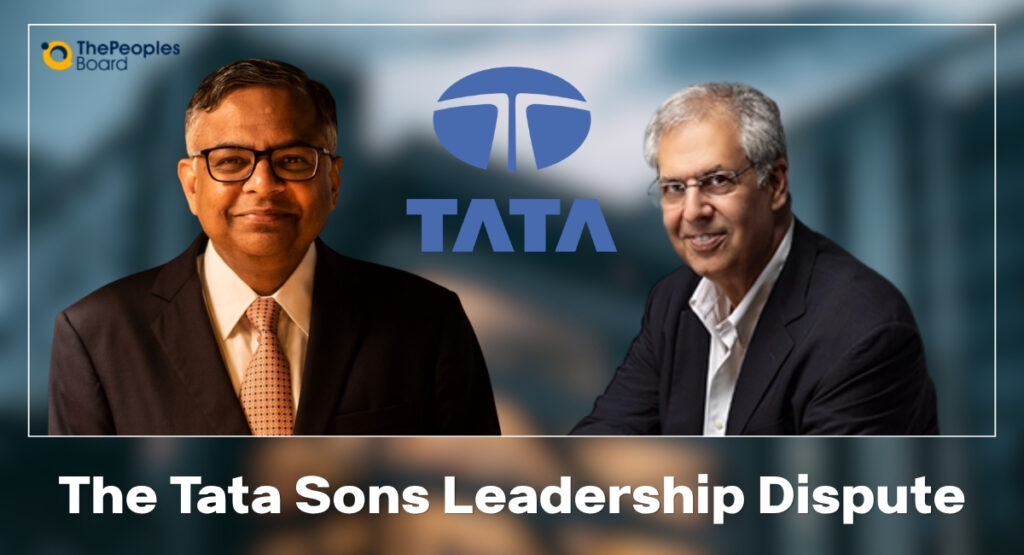

N Chandrasekaran’s reappointment as chairman of Tata Sons on 17 September 2026 has captured headlines for more reasons than one, and none of them seems good. The decision has literally split the company from its majority owner within hours, as the Tata Trusts declared the board’s decision illegal and legally void.
The reversal of Chandrasekaran’s initial resignation played out over a five-week stretch in which India’s largest business group went from planning Chandrasekaran’s exit to compelling his stay. All this time, a regulator pushed it towards a stock-market listing it had spent years avoiding.
The brewing leadership conflict at the top level of one of India’s most recognisable brands is rooted not in a single event.
| Date | What happened |
| February 21, 2017 | Chandrasekaran becomes Tata Sons chairman, months after Cyrus Mistry’s removal. |
| Sep 2022 | The RBI classifies Tata Sons as an upper-layer NBFC, a status that requires a listing. |
| 12 Aug 2026 | Chandrasekaran tells the board he won’t seek reappointment after 20 February 2027. |
| 13 Aug 2026 | Sir Dorabji Tata Trust accepts the exit and moves to form a selection committee. |
| 11 Sep 2026 | The RBI rejects Tata Sons’ bid to drop its NBFC registration, reviving a forced listing. |
| 17 Sep 2026 | The board reappoints Chandrasekaran four to one; Tata Trusts calls the move illegal. |
2017 to 2024: The Years That Set the Stage
The confrontation grew out of conditions that had been building for years. Chandrasekaran took over as Tata Sons chairman in 2017, months after the acrimonious removal of Cyrus Mistry in 2016, a fight that ran through tribunals for years and left the relationship between the company and its owner-Trusts sensitive to any dispute over control. An appellate tribunal even declared that the 2017 appointment was illegal in 2019, before the Supreme Court stayed the order in 2020.
In September 2022, the RBI classified Tata Sons as an upper-layer non-banking financial company (NBFC). Companies that are part of this category must list on the stock market within three years. However, Tata Sons didn’t want to go public. Instead, it cleared its debt and applied to surrender the registration behind that classification, hoping to be released from the rule, but the application sat pending for years.
Tata Trusts holds about 66% of Tata Sons and has long opposed a listing, as it would loosen its control over the group. On the other hand, the Shapoorji Pallonji group, the largest minority shareholder, has wanted one for years so it can sell down part of its stake.
However, when Ratan Tata passed away in October 2024, Tata Trusts lost the figure who had kept them aligned, and trustees soon began voting against one another.
August 2026: A Planned Handover Begins
On 12 August 2026, Chandrasekaran told the Tata Sons board he wouldn’t offer himself for another term once his tenure ends on 20 February 2027. The next day, 13 August 2026, Sir Dorabji Tata Trust said it respected the decision and moved to set up a committee to find his successor, formally starting a succession planning process for the group’s top job.
However, at an adjourned annual general meeting on 18 August, the two main Trusts couldn’t jointly nominate a director, and the Maharashtra Charity Commissioner barred the Sir Ratan Tata Trust from holding trustee meetings while a case ran before it. A handover that looked settled on paper had no clear path to a successor.
11 September 2026: The RBI Closes the Exit
On 11 September 2026, the RBI rejected the company’s bid to surrender the NBFC registration. This particular application had kept a listing on the table since 2022. RBI told the group to comply with the rules for upper-layer NBFCs. The debt-clearing route Tata Sons had used to argue it no longer belonged in that category was now closed.
A forced listing would loosen the Trusts’ grip on the group and hand the Shapoorji Pallonji group the exit it had long sought, and a transition of that scale raised the stakes on who would lead the company through it.
17 September 2026: The Board Reverses Course
On 17 September 2026, the Tata Sons board undid its own August plan. The Nomination and Remuneration Committee recommended that Chandrasekaran come back as Chairman.
The company board reappointed him for a fresh five-year term, while also setting the listing process in motion. This decision was backed by four of the five directors, with Noel Tata, who chairs Tata Trusts, being the lone vote against it.
Under Tata Sons’ Articles of Association, and specifically Article 121A, consequential decisions such as appointing a chairman need the support of a majority of the directors the Trusts have nominated. The Trusts’ representation on the board runs to just Noel Tata and Venu Srinivasan, and the pair split one against one. The board treated that as a tie a chairman’s casting vote could break, and the resolution carried, with the incumbent chairing the very meeting that decided his continuation.
17 September 2026, Hours Later: The Owner Calls It Illegal
Within hours of the vote, Tata Trusts rejected it outright. In a statement, the majority owner said the reappointment failed to meet the requirements of the Articles of Association, and Noel Tata submitted a legal opinion from former Chief Justice of India DY Chandrachud arguing that the nominee directors’ approval is a standalone requirement a casting vote can’t replace. The Trusts said the board didn’t take the opinion into account.
The Trusts’ language left little room for compromise. “A legal nullity in view of the provisions of the Articles of Association.” – Tata Trusts, in its 17 September statement
What Remains Unresolved
Several questions remain open, and none has a clear answer yet. The committee meant to shape the group’s next leadership pipeline at the very top is still stuck, and the board’s vote has drawn a formal challenge from the owner that holds two-thirds of the company. What happens next turns on how each of these threads moves.
- A legal fight looks likely: With the Trusts calling the resolution void and holding an opinion from a former Chief Justice of India, the validity of the vote and the reading of the Articles of Association could move to the courts or regulators.
- The successor search is in limbo: The selection committee can’t function while Sir Ratan Tata Trust is unable to hold trustee meetings, and it becomes moot if Chandrasekaran’s fresh term stands.
- The listing clock is ticking: With the RBI refusing the exemption, how and when Tata Sons complies, and whether the Trusts’ opposition to going public holds, remain open.
In the End…
When stripped of the legal arguments, the Tata Sons dispute is a contest over who really controls the organisation: the board or the shareholder that owns two-thirds of it? As such, the eventual ruling could reset that balance across corporate India. That verdict is one to watch. The sharper lesson, though, is one every board can act on now.
Tata Sons had a chairman ready to leave and no successor ready to replace him. As such, when the ground shifted under a forced listing, keeping the known option became the easy choice. A handover shouldn’t hinge on one person’s goodwill or on a bench that was never built.
The lesson to be learned? Every board must run its transition plan through the same stress test that Tata Sons just failed. If your named leader left tomorrow, is a successor ready? Is the appointment in independent hands? Does your largest shareholder agree on the timing? Building a bench of successors for senior roles long before you need it is the cheapest insurance a board can buy.
FAQs
What went wrong with succession planning at Tata Sons?
The board had a chairman ready to leave but no successor ready to replace him, so when a forced listing raised the stakes, retaining the incumbent became the default choice.
Was N Chandrasekaran reappointed as Tata Sons chairman?
Yes. On 17 September 2026 the board reappointed him for a fresh five-year term, backed by four of five directors, though Tata Trusts declared the decision illegal.
Why did Tata Trusts call the reappointment illegal?
Tata Trusts argues Article 121A of the Articles of Association requires approval from a majority of the Trusts’ nominee directors, which a chairman’s casting vote can’t substitute.
Why does Tata Sons face a stock-market listing?
The RBI classified it as an upper-layer NBFC in 2022, a category that must list within three years, and on 11 September 2026 it rejected the company’s bid to surrender that registration.
What’s the succession lesson for other boards?
Run your transition plan through a stress test: if your named leader left tomorrow, is a successor ready, is the appointment in independent hands, and does your largest shareholder agree on the timing?