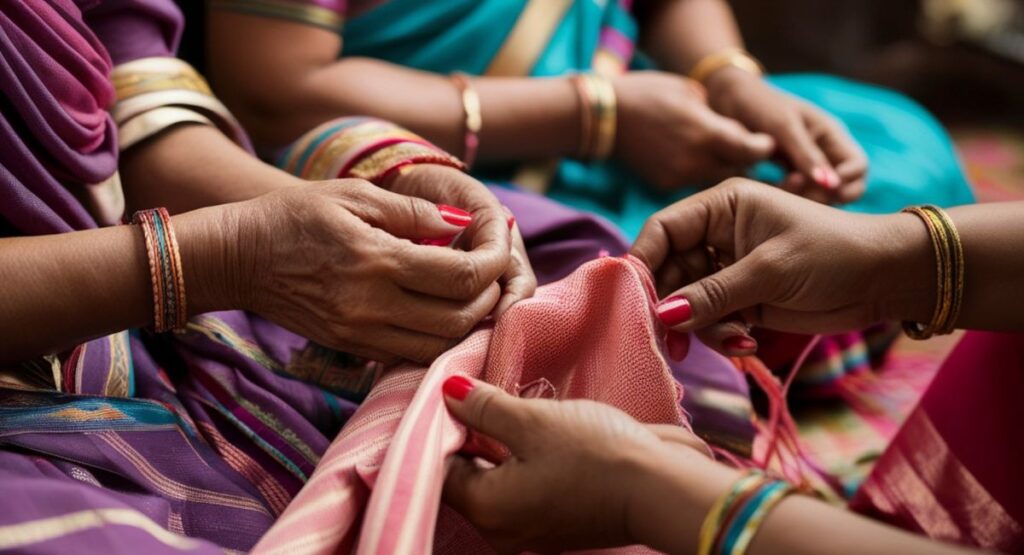


India’s female labour force participation rate has risen sharply over the past seven years, with the latest Periodic Labour Force Survey (PLFS) data placing it at 41.7% for women aged 15 and above in 2023-24, up from 23.3% in 2017-18. The shift, government statements released around International Labour Day note, has been powered overwhelmingly by rural India.
The data, drawn from the National Statistical Office’s annual PLFS report, shows the Worker Population Ratio (WPR) for women in the same age bracket climbing from 22% in 2017-18 to 40.3% in 2023-24. Rural female WPR has been the standout, holding steady at 44.9% in the most recent annual report after consistent gains since 2022.
The PLFS also reflects a continued upward trend in 2025, with the Ministry of Statistics’ monthly bulletins recording a rise in the female Labour Force Participation Rate (LFPR) from 32% in June 2025 to 35.1% in November 2025 under the Current Weekly Status framework.
Government communication has linked the rise to a clutch of rural livelihood, skilling and social security programmes that have widened the on-ramps for women into paid work.
The Deendayal Antyodaya Yojana-National Rural Livelihoods Mission has been the most visible of these. The mission has connected over 10 crore rural women households into self-help groups, providing access to bank credit, federation-level enterprise support and market linkages. SHG-led micro-enterprises in food processing, handicrafts, dairy and apparel have become a significant source of paid economic activity for rural women, particularly in states such as Bihar, Andhra Pradesh, Odisha and Madhya Pradesh.
Skilling efforts under the Skill India Mission, Pradhan Mantri Kaushal Vikas Yojana and sector-specific programmes have continued to focus on improving employability, including for women entering non-traditional roles in manufacturing, logistics and digital services.
The e-Shram portal, launched in 2021 to formalise the unorganised workforce, has registered over 31 crore workers, a significant share of whom are women employed in agriculture, construction and domestic work. Registration on the portal feeds into welfare delivery and social security coverage that historically excluded informal workers entirely.
While the headline numbers tell an encouraging story, a closer reading of the PLFS surfaces structural concerns that HR practitioners and policymakers have repeatedly flagged. Male LFPR for the same age group stood at 78.8% in 2023-24, leaving a participation gap of over 37 percentage points. The wage gap remains persistent: salaried women earn approximately 76% of what their male counterparts earn, with the disparity widening further in self-employment.
The composition of work also matters. A significant share of the rural female workforce is engaged as unpaid helpers in household enterprises or as own-account workers in agriculture, both categories that count as employment under the PLFS but offer limited income stability or social security coverage. Urban female participation has improved, but lags behind rural growth.
For corporate HR teams, the data carries practical implications. The widening pool of skilled, work-ready women, particularly in tier-2 and tier-3 cities, intersects directly with the talent strategies of Global Capability Centres, BFSI, retail and ITeS employers expanding outside metros.
The new labour codes, which came into force on November 21, 2025, codify women’s right to work in all establishments and across all shifts subject to consent and prescribed safety arrangements, opening up a wider operational window for sectors that previously restricted night-shift hiring.
The deeper challenge, as several CHROs have noted in industry forums over the past year, is converting participation into sustained career progression. That requires investment in retention, return-to-work programmes, manager capability and infrastructure such as transport and childcare. The PLFS numbers point to a workforce ramp-up at the entry level. Whether it translates into representation at middle and senior levels over the next decade will depend on what employers do next.