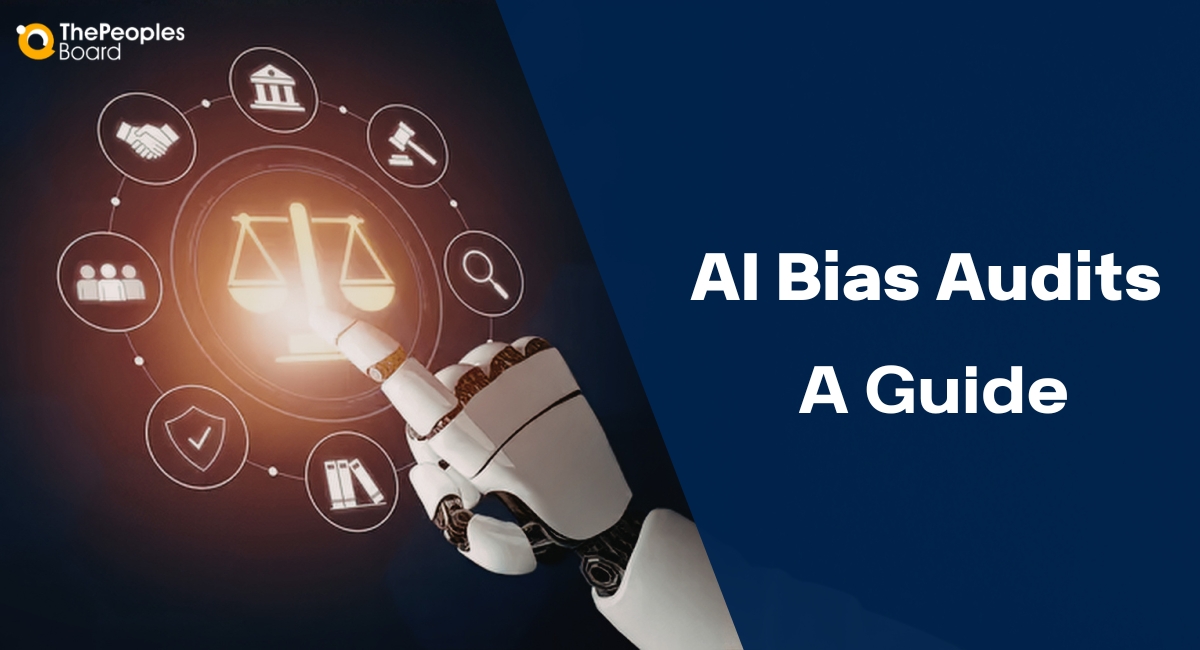

An AI bias audit is a structured check of whether an algorithm used in hiring, promotion, or performance decisions treats candidates or employees differently based on gender, region, disability, or other protected characteristics.
For Indian HR teams, this has moved from a nice-to-have to a working requirement. Over 90% of Indian firms have already piloted GenAI in HR functions, and 72% have integrated AI features directly into their HR software. Every one of those tools makes decisions about people, and every one of those decisions can be biased without anyone noticing until it shows up in attrition data, a rejected candidate’s complaint, or a regulator’s notice.
Why This is An HR Problem, Not Just an IT One
The clearest cautionary tale remains Amazon’s. Between 2014 and 2017, the company built an AI resume screener trained on a decade of past hiring data. Because most of those historical hires were men, the model taught itself to downgrade resumes containing the word “women’s” and to penalise graduates of women’s colleges. Amazon’s engineers tried to correct it, could not guarantee the fix held, and scrapped the tool entirely.
That data problem is not unique to Amazon, and it maps onto Indian hiring in specific ways. A resume screener trained on a company’s past shortlists will absorb whatever pattern already exists in those shortlists, whether that pattern is intentional or not.
What a Bias Audit Actually Tests
A proper audit does not ask whether an AI tool is “fair” in the abstract. It measures whether selection rates differ across groups by more than a defensible margin, and whether the tool relies on data points that function as stand-ins for protected characteristics. In Indian hiring data, five vectors show up repeatedly:
| Bias Vector | How It Shows Up In Indian HR Data |
| Gender-coded language | Resumes penalised for terms like “women’s college” or maternity-related career gaps |
| Location as proxy | Pin codes and addresses correlating with caste, religion, or regional background |
| Education-tier scoring | Automatic downgrades for state-board or vernacular-medium schooling versus CBSE or English-medium |
| Employment gap penalties | Career breaks for childcare or family caregiving flagged as “inconsistency” |
| Language and accent scoring | AI interview tools scoring English fluency in ways that disadvantage regional-language-first candidates |
TPB’s audit guide for AI resume screening covers these vectors in more depth for the screening stage specifically. This guide focuses on the audit process itself, across any AI-assisted employment decision, not just resume screening.
The Regulatory Backdrop
Two frameworks now shape how Indian employers are expected to run these checks.
Under Section 8 of the DPDP Act, organisations must be able to explain the factors material to an automated decision in language a candidate can understand. A rejected applicant who asks why is entitled to more than “the algorithm scored you low.” MeitY’s AI Governance Guidelines, released in November 2025, add a non-binding but influential layer, built around seven “sutras” that include Fairness and Equity and Understandable by Design.
India does not yet have a dedicated law mandating bias audits the way New York City does. The comparison is still useful for HR teams benchmarking their own practice.
| NYC Local Law 144 | India’s Current Position | |
| Legal status | Mandatory annual third-party audit for covered hiring tools | No dedicated bias audit mandate yet |
| What it requires | Independent audit, public disclosure of results, candidate notice before use | DPDP Section 8 requires explainability of automated decisions, not a formal audit |
| Who enforces it | NYC Department of Consumer and Worker Protection | Data Protection Board of India, under the DPDP framework |
| Penalty for non-compliance | Up to $1,500 per violation per day | Up to ₹250 crore for DPDP violations tied to data misuse |
For Indian IT services firms and global capability centres serving European clients, the EU AI Act adds another layer. It classifies recruitment AI as high-risk, with enforcement beginning August 2026 and penalties reaching €35 million or 7% of global turnover.
Step-By-Step: Running The Audit
HR teams that jump straight into statistical testing usually audit only the tool they already suspect, often a final interview-scoring model, while an earlier screening tool quietly filters out an entire group before anyone gets that far. The sequence below starts with scoping the full hiring funnel for exactly that reason: a clean audit result on one tool means little if a biased one is sitting upstream of it, unchecked.
Step 1: Build an inventory of every AI-assisted employment decision
List every tool that scores, ranks, or filters candidates or employees: resume parsers, chatbot screeners, video interview analysers, performance-rating models, attrition-risk predictors. Note whether each tool makes the final call or only assists a human recruiter, since that distinction affects both audit priority and legal exposure.
Step 2: Decide which attributes to test
Gender and disability status are the baseline. In India, add region, religion, and caste indirectly through proxies such as surname, pin code, and school name, since these are rarely collected directly but frequently inferred by the model anyway.
Step 3: Assemble outcome data by group
Pull historical selection rates: how many candidates from each group applied, were shortlisted, and were hired. Without this breakdown, no audit can proceed.
Step 4: Run the selection rate comparison
A common threshold, adapted from US employment law, flags a problem when one group’s selection rate falls below 80% of the highest-scoring group’s rate. If men clear screening at 40% and women at 22%, that ratio (0.55) sits well below the threshold and warrants investigation.
Step 5: Test for proxy discrimination specifically.
Run the model with PIN code, school name, or graduation year masked, and compare outcomes. A meaningful shift in results when these fields are removed indicates the model was leaning on them as substitutes for protected characteristics.
Step 6: Document findings against DPDP Section 8
Write up the audit in terms a rejected candidate could understand if they asked. If the documentation cannot answer “why was this candidate rejected” in plain language, the explainability bar has not been met, regardless of the statistical result.
Step 7: Set a remediation plan and a re-audit cadence
Fix the specific gap, whether that means retraining the model, adjusting the data used to train it, or adding a mandatory human review step for borderline scores. Re-run the audit at fixed intervals, not only when a complaint surfaces.
When The Audit Finds Bias
A finding of bias is not the end point. What matters is how consistently the response scales to the size of the gap, and whether the same fix holds up when the audit is run again.
| If The Audit Shows | The Practical Response |
| A clear selection rate gap tied to one input | Remove or reweight that input, then re-test before redeploying |
| Bias tied to the vendor’s underlying model | Raise it with the vendor directly; ask what explainability and retraining support the contract actually covers |
| A gap too small to isolate a single cause | Add a mandatory human review step for all borderline scores until the pattern is better understood |
| Repeated bias across audit cycles | Escalate to a cross-functional review involving legal, HR, and the vendor before continuing to use the tool |
In The End…
An AI bias audit is not a compliance checkbox to file away once a year. It is an ongoing discipline, closer to a payroll reconciliation than a one-time certification, because the data feeding these models keeps changing and so does the bias hiding inside it.
Indian HR teams have an advantage here that did not exist five years ago: enough public case studies, from Amazon’s scrapped tool to NYC’s bias audit law, to know roughly where to look before a problem surfaces in the numbers. The harder part is building the habit of looking before a rejected candidate, a journalist, or a regulator does it first.
The teams that get this right will not be the ones with the most sophisticated audit methodology. They will be the ones that ran the audit at all, documented it honestly, and were willing to act on what it found.
FAQs
What is an AI bias audit in HR?
An AI bias audit is a structured check of whether a hiring, promotion, or performance tool treats candidates or employees differently based on gender, region, disability, or other protected characteristics. It measures selection rate gaps across groups and tests whether the tool relies on proxy data points that stand in for those characteristics.
Does India have a law requiring AI bias audits?
Not yet. India has no dedicated bias audit mandate like NYC’s Local Law 144. Section 8 of the DPDP Act requires organisations to explain the factors material to an automated decision, which pushes companies toward informal audit practices even without a formal mandate.
What is the 80% rule in a selection rate test?
It is a threshold, adapted from US employment law, that flags a problem when one group’s selection rate falls below 80% of the highest scoring group’s rate. If men clear screening at 40% and women at 22%, the resulting ratio of 0.55 sits below the threshold and warrants investigation.
What counts as a proxy for protected characteristics in Indian hiring data?
Pin codes, surnames, school names, and graduation years often function as stand ins for caste, religion, or regional background, even when these attributes are never collected directly. Testing outcomes with these fields masked helps reveal whether a model leans on them.
How often should HR teams re-run a bias audit?
At fixed intervals, not only when a complaint surfaces. The practical response depends on what the audit finds: a clear gap tied to one input calls for removing or reweighting it and re-testing, while repeated bias across cycles should be escalated to a cross-functional review involving legal, HR, and the vendor.
What happens if Indian HR teams ignore AI bias audits?
Unchecked bias tends to surface in attrition data, a rejected candidate’s complaint, or a regulator’s notice, often after the damage is already done. For India based IT services firms and global capability centres serving European clients, the EU AI Act also classifies recruitment AI as high risk, with enforcement beginning August 2026.