
Leave and attendance automation is the use of software and connected devices to capture employee attendance, validate it against company rules, update leave balances, and route approvals without manual registers or spreadsheets. For HR teams in India, it sits at the intersection of accuracy, payroll integrity, and statutory compliance, which is exactly why it has moved from a back-office convenience to a core part of the HR technology stack.
This explainer walks through how the system works, from the moment a biometric device records a punch to the point where a leave request is approved and reflected in payroll.
Why Attendance Management Stays Hard for HR Teams
Manual attendance tracking is slow, error-prone, and difficult to audit. Paper registers can be tampered with, punch cards can be misused, and spreadsheets depend entirely on someone keying in the right numbers. The Government of India recognised this gap years ago. Its own attendance portal notes that traditional registers are prone to time theft and human error, which is one reason the Aadhaar Enabled Biometric Attendance System was rolled out across central government offices under the Digital India programme.
The stakes are higher now. India’s four labour codes, including the Occupational Safety, Health and Working Conditions (OSH) Code, came into effect on 21 November 2025, consolidating thirteen earlier laws. Under the framework, employers must maintain accurate records of working hours and overtime, and overtime is payable at twice the ordinary wage rate once an employee crosses 48 hours a week. Getting attendance wrong is no longer just an administrative nuisance. It is a compliance and wage-calculation risk.
A few recurring problems make manual tracking unsustainable:
- Proxy attendance and time theft. One employee marking presence for another inflates payroll silently.
- Reconciliation effort. Matching registers to leave records to payroll consumes HR hours every cycle.
- Compliance exposure. Working-hour and overtime records must be defensible if a labour inspector asks for them.
- No real-time visibility. Managers cannot see who is in, who is on leave, or who is overworking until the month closes.
Automation removes the human data-entry step, which is where most of these problems begin.
What Leave and Attendance Automation Actually Covers
The term covers three connected functions that most modern systems handle in a single platform rather than three separate tools. If you are weighing whether you need dedicated software for this, our explainer on HRMS versus payroll versus workflow tools is a useful primer on where attendance modules fit.
| Function | What It Does |
| Attendance capture | Records when an employee starts and ends work, across office, field, or remote settings |
| Leave management | Tracks leave types, accruals, balances, and applications, and applies leave policy automatically |
| Shift tracking | Assigns shifts, monitors adherence, and flags late marks, early exits, and overtime |
These functions feed each other. A missed punch can trigger a leave query. An approved leave updates the attendance calendar. A shift rule decides whether extra hours count as overtime. Treating them as one workflow is what makes automation valuable.
How Attendance Data Gets Collected
Capture is the foundation. If the input is wrong, everything downstream is wrong. Indian workplaces typically use one or a mix of four methods, chosen by workforce type rather than by preference.
Most organisations combine methods. A manufacturer might run biometric terminals on the shop floor and mobile check-ins for its sales team, with both feeding the same system. The principle of capturing accurate workforce data also underpins broader people analytics and HR automation initiatives, where clean attendance data becomes an input for workforce planning.
Biometric Devices
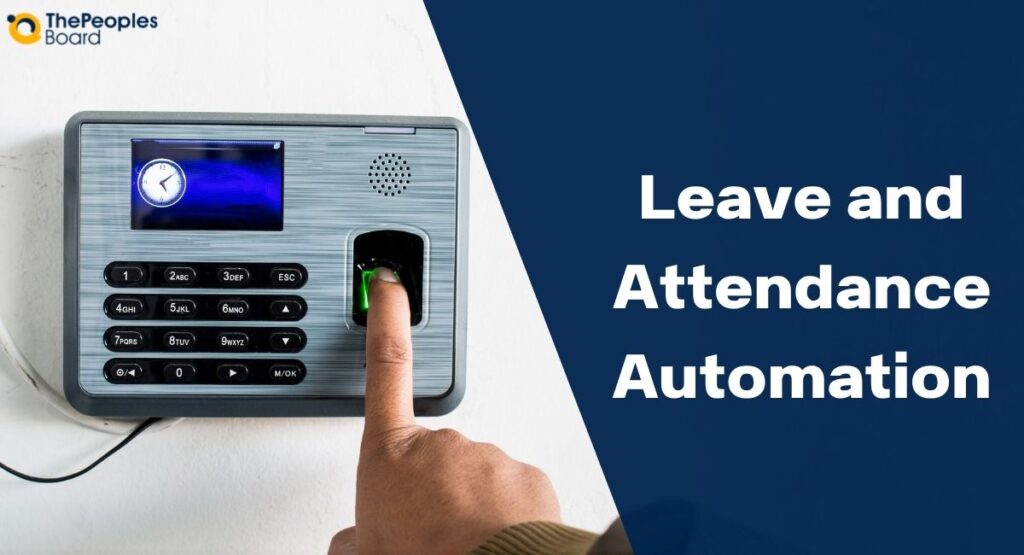
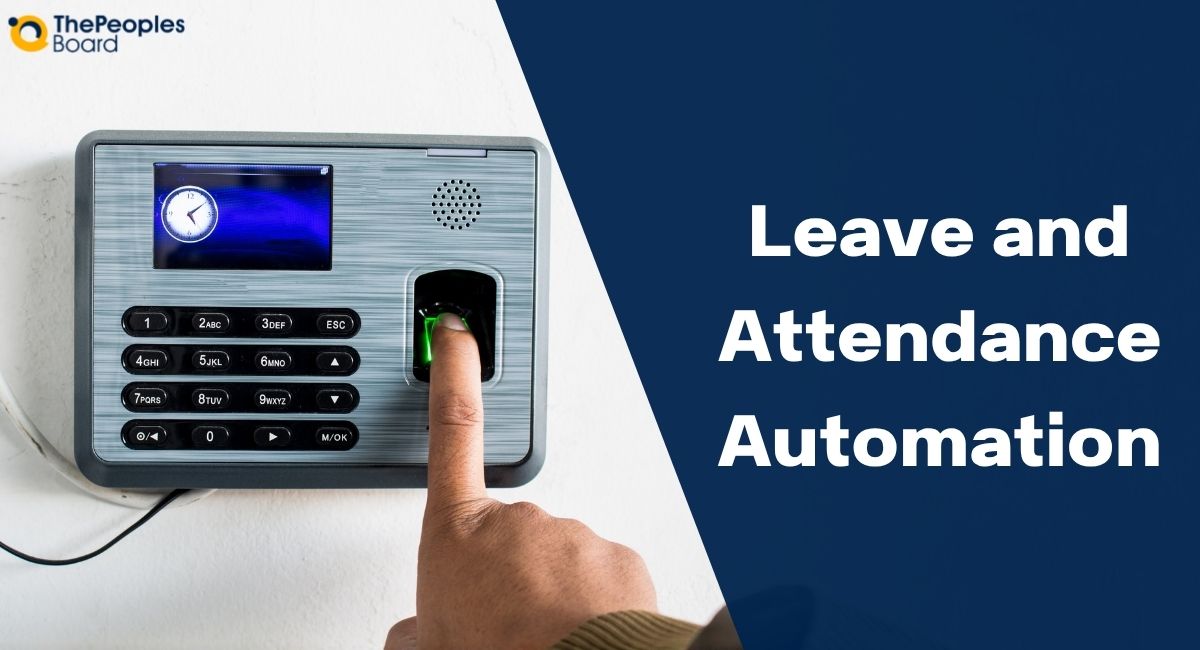
Fingerprint, iris, and increasingly face-recognition terminals are the default for fixed-location workplaces such as factories, hospitals, and offices. They are popular because attendance becomes physically difficult to fake.
The Aadhaar Enabled Biometric Attendance System used in government offices completes authentication in roughly two to three seconds and uploads each record to a central server in real time, according to the UIDAI’s AEBAS documentation. Face recognition has gained ground because it is contactless, a feature that became important across healthcare and institutional settings.
Mobile Attendance
App-based check-ins suit distributed teams, sales staff, and hybrid workers who do not pass through a single entry point. The employee marks attendance from a phone, often with a selfie or device-level verification.
Geo-tagged Check-ins
For field forces, mobile attendance is paired with GPS location tagging so the system records not just when someone clocks in but where. The government’s own GPS-based variant of biometric attendance was designed precisely for officers working outside the office.
Web-based Tracking
For desk and knowledge workers, a browser login or integration with the work system records presence without any dedicated hardware.
The Automated Workflow, Step by Step
This is where automation earns its place. A single punch sets off a sequence that, done manually, would involve several people and several days.
- Attendance capture: The device or app records a time-stamped entry and exit and sends it to the central system.
- Rule validation: The system checks the record against the applicable policy: shift timing, grace period, half-day thresholds, and weekly-off rules. It flags late marks, missed punches, and exceptions automatically.
- Leave balance updates: When an absence maps to an approved leave, the system deducts it from the right leave bucket and recalculates the remaining balance. When an absence has no leave applied, it gets flagged for action.
- Approval routing: Leave requests and attendance regularisations are routed to the right manager, who approves or rejects from a dashboard or app. Approved items flow back into the attendance calendar and the payroll feed.
The value is not any single step. It is that the four steps happen continuously and consistently, without an HR executive stitching them together at month-end. Many of these handoffs are powered by the same employee self-service portals that let staff apply for leave, check balances, and regularise attendance on their own.
How it Connects to Payroll
Attendance automation delivers its biggest payoff when it talks to payroll. The link converts raw attendance into rupee figures, which is where errors are most expensive and most visible to employees.
- Loss-of-pay calculations: Unapproved absences and shortfalls in working days are automatically deducted, so the salary run reflects actual attendance without manual cross-checking.
- Overtime management: The system tallies hours worked beyond the statutory limit and applies the correct rate. Under the OSH Code framework now in force, that means twice the ordinary wage rate for work beyond the prescribed hours, a calculation that is far safer automated than estimated by hand. For the legal details, our guide to working hours and overtime rules in India breaks down the limits and exemptions.
- Compliance reporting: Because every punch is logged and time-stamped, the system can generate the working-hour and overtime registers that labour law requires, ready for audit rather than reconstructed after the fact.
This is also why teams increasingly evaluate attendance, leave, and payroll as one connected decision. If you are at the selection stage, our walkthrough on choosing the right HR software covers integration as a primary criterion, not an afterthought. The same logic is driving the adoption of AI in payroll across India, where automated attendance is the clean input these tools depend on.
Where it Still Gets Complicated
Automation reduces effort, but it does not erase complexity. Three challenges surface most often.
- Shift complexity: Rotational shifts, split shifts, night shifts, and frequent shift swaps make rule configuration hard. A system set up for a single nine-to-six schedule will struggle with a factory running three rotating shifts. Getting the rule logic right at setup matters more than any feature.
- Remote and field workforce tracking: Distributed teams stretch the definition of attendance. Mobile and geo-tagged check-ins help, but they raise questions about location privacy and what counts as a valid workday for someone with no fixed worksite.
- Device synchronisation issues: Biometric terminals depend on connectivity to push data to the central server. Network drops, power cuts, and offline devices can create gaps that need reconciliation. The government’s own systems were built to be self-sustained through small power cuts for exactly this reason, which signals how real the problem is.
None of these is a reason to avoid automation. There are reasons to plan the rollout carefully.
Practices That Make Automation Work
The difference between a system that saves time and one that creates new headaches usually comes down to setup and governance, not the brand of software.
- Write clear attendance policies first. Define shift timings, grace periods, half-day and full-day rules, leave types, and approval hierarchies before configuring anything. The software only enforces the policy you give it.
- Plan integration deliberately. Decide early how attendance will feed leave, leave will feed payroll, and the whole chain will produce compliance reports. Integration bolted on later is harder and more fragile.
- Build an exception-management process. Missed punches, device failures, and disputed records will happen. A defined path for regularisation, with the right approver and a clear audit trail, keeps exceptions from becoming month-end chaos.
A short pilot with one team or one location, before an organisation-wide rollout, surfaces most configuration problems while they are still cheap to fix.
In the End…
Leave and attendance automation works because it removes the manual data-entry step that quietly corrupts attendance records, inflates payroll, and creates compliance risk. From a biometric or mobile punch, through rule validation and leave updates, to manager approval and a clean payroll feed, the value lies in the chain running continuously and consistently.
For Indian HR teams, the timing matters. With the labour codes now in force and overtime and working-hour records carrying real legal weight, accuracy is no longer optional. The organisations that get the most from automation are the ones that treat it as a policy and integration exercise first, and a technology purchase second. Start with the rules, plan the connections to leave and payroll, build a process for exceptions, and the system will give back what manual tracking never could: attendance that is accurate, auditable, and visible in real time.
FAQs
What is attendance automation in HR?
Attendance automation is the use of software and connected devices to capture employee working hours, validate them against company policies, update leave balances, and route approvals without manual registers or spreadsheets. For Indian HR teams, it covers three connected functions: attendance capture, leave management, and shift tracking, all handled within a single platform.
How does a biometric attendance system work?
A biometric terminal records a fingerprint, iris scan, or face recognition at entry and exit. The device sends a time-stamped record to a central server in real time. The system then validates the record against the applicable shift policy, flags late marks or missed punches, and updates the employee’s attendance calendar automatically. India’s Aadhaar Enabled Biometric Attendance System, used across central government offices, completes authentication in roughly two to three seconds per employee.
How does attendance automation connect to payroll?
Once attendance data is validated, it flows directly into the payroll engine. Unapproved absences are calculated as loss-of-pay deductions. Hours worked beyond the statutory limit are tallied and paid at the applicable overtime rate. Under India’s Occupational Safety, Health and Working Conditions Code, that rate is twice the ordinary wage for work beyond 48 hours a week. This integration removes manual cross-checking and reduces salary errors that employees notice first.
What attendance capture methods are used for remote or field employees?
Distributed teams typically use mobile app-based check-ins, often paired with GPS location tagging. The system records not just when an employee clocked in, but where, making it suitable for field forces and hybrid workers who do not pass through a fixed entry point. Web-based logins or integrations with existing work tools serve desk-based knowledge workers without requiring additional hardware.
What are the most common challenges in implementing attendance automation?
Three challenges surface most often: configuring shift rules for rotational or split shifts, tracking attendance for distributed and field workforces without raising location-privacy concerns, and managing biometric device synchronisation when network or power disruptions cause data gaps. None of these is a reason to avoid automation, but each needs to be addressed during the rollout planning phase rather than after go-live.
Is automated attendance tracking mandatory under Indian labour law?
The four labour codes, including the Occupational Safety, Health and Working Conditions Code which came into effect on 21 November 2025, require employers to maintain accurate records of working hours and overtime. While the law does not prescribe a specific technology, automated systems make it significantly easier to produce the audit-ready registers that labour inspectors can request. For companies with overtime liability, inaccurate manual records now carry direct financial and legal risk.