
Most onboarding programmes treat new hires the same way. Same welcome deck, same compliance modules, same week-one calendar invites, whether the joiner is a graduate trainee in Hyderabad or a vice president parachuting in from a competitor. The result is predictable.
Early attrition remains high, time-to-productivity drags on, and the goodwill built during the offer stage starts to leak by week three.
That uniformity is what AI is now being used to break. Indian enterprises, from IT majors to PE-backed startups, are wiring artificial intelligence into pre-boarding, role-specific learning, manager nudges, and check-in cycles across the first 90 days. The promise isn’t to remove humans from the onboarding process. It’s to free them up for the parts that actually need a human.
Why Generic Onboarding Stopped Working
The first three months decide a lot. Indian employers are watching attrition cool from 18.7% in 2023 to roughly 17.1% in 2025, according to Aon’s Annual Salary Increase and Turnover Survey covering 1,060-plus companies. But sector-level numbers tell a sharper story. E-commerce sits at 28.7%, IT services around 25%, and BFSI close to 24%. A meaningful share of those exits happen inside the first 90 days, exactly when onboarding is supposed to be doing its job.
Two pressures are reshaping the HR mandate at this stage:
- Volume and variety in hiring: Indian IT services hire hundreds of thousands of freshers and laterals each year. Their notice periods range from 60 to 90 days, so the post-offer window is long, and candidates often receive counteroffers before joining.
- Expectations from joiners: A workforce that’s mostly under 35 expects the kind of personalisation it already gets from many online applications. Generic onboarding feels lazy by comparison.
AI is being positioned as the layer that absorbs the variety. It doesn’t replace the manager’s coffee chat or the buddy system. It does the segmentation, scheduling, and content matching that humans were never going to do well at scale.
How AI Is Reshaping Employee Onboarding
AI in onboarding isn’t a single product. It’s a stack of capabilities being plugged into HRMS platforms, learning systems, and IT provisioning workflows.
Dynamic Learning Paths
The model is straightforward. Pull the role, location, skill data, and prior experience from the offer record, then assemble a learning journey that’s specific to that joiner.
The result? Two software developers with the same designation but different stacks see different content, different sandboxes, and different reading lists.
Infosys built one of the earliest examples in the Indian market. Its proprietary platform Lex, which Infosys reports has crossed 270,000 lifetime users, uses an AI-powered virtual learning assistant and dynamic learning paths that adjust to the learner’s pace and interest. A new hire doesn’t get the full library. They get what’s relevant to their immediate role and what the system thinks they’ll need in the next quarter.
Chatbots and Virtual Assistants
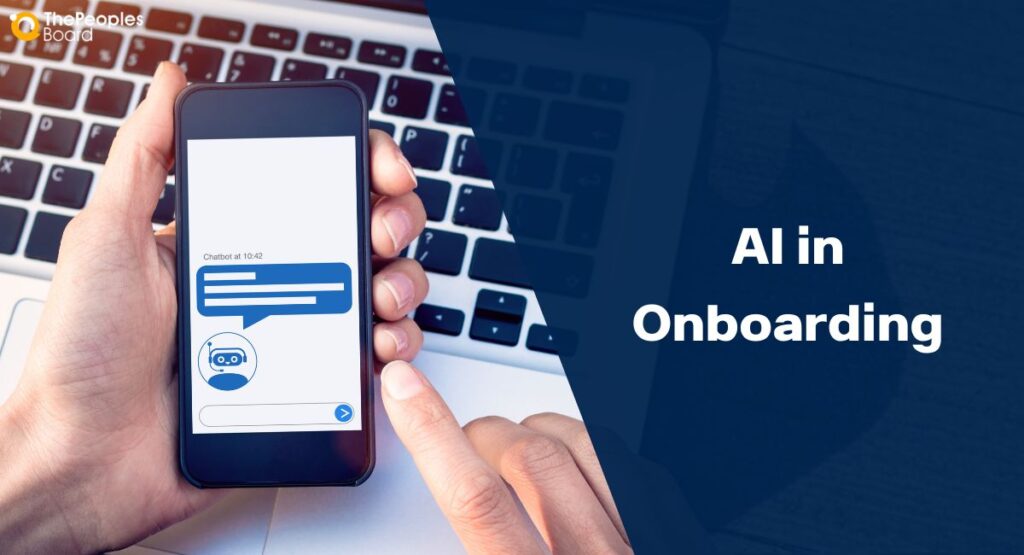
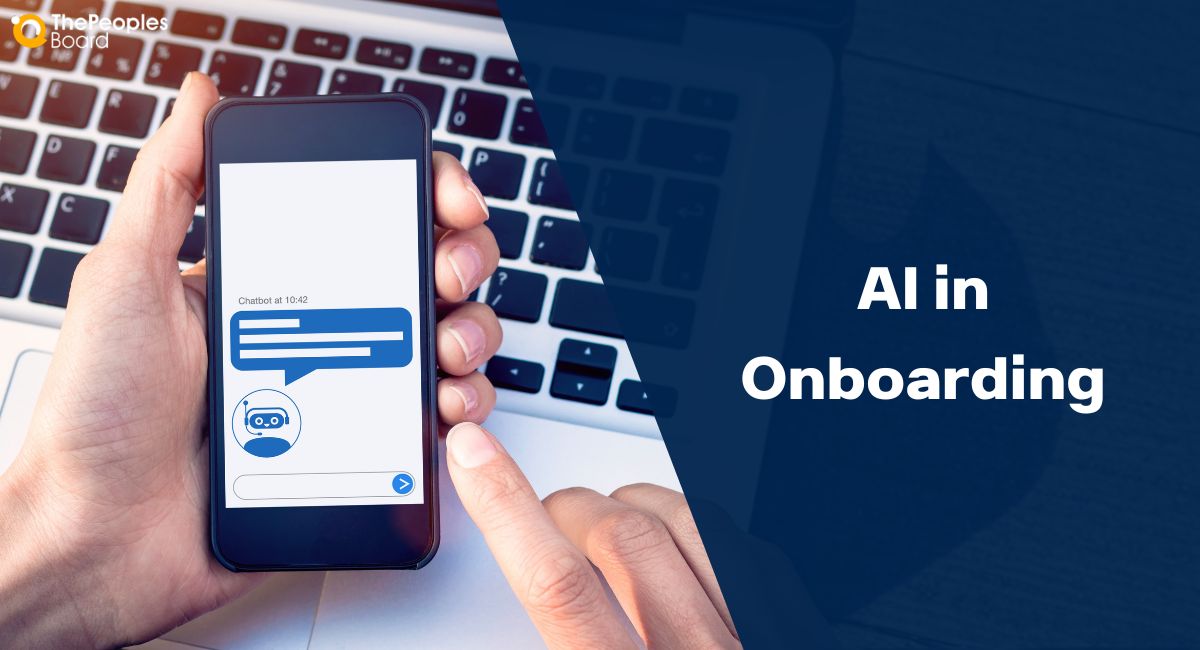
This is where most Indian HR teams first encounter AI in onboarding. The chatbot handles the questions a new hire is afraid to ask twice. Where’s my offer letter? How do I claim relocation? What’s the dress code? When does PF kick in?
All these questions can now be answered at any time, any place, while eliminating the hesitance that comes with asking questions as a new joinee.
InFeedo’s Amber is one of the most widely deployed examples in India. Built in 2016 and now operating across 175-plus enterprise clients in 60 countries, Amber checks in with new hires at preset milestones, runs sentiment analysis on the responses, and flags joiners showing early disengagement to HR before a resignation conversation starts. Genpact has publicly stated that employees who engage with Amber are twice as likely to stay.
Adaptive Scheduling
Onboarding plans break when calendars don’t cooperate. A buddy is on leave. The manager is travelling. The compliance training clashes with the team’s quarterly review. Adaptive scheduling tools, driven by calendar APIs and a few simple rules, rebuild the week-one and week-two plan automatically when meetings shift.
For high-volume joiners in IT services and BPO, this matters in pure operational terms. When 500 freshers join in the same week, no HR business partner is manually sequencing 500 week-one calendars.
Culture Points
Using AI in the onboarding process can highlight subtle aspects of a company’s culture without making them overly obvious or even verbalising them. The very integration of the technology can highlight how open the company is to technology integration and where it is considered acceptable and even encouraged.
Additionally, the usage of tools like AI chatbots highlights that the company has no qualms about employees asking any questions and is always looking to provide them with easy access to the answers they need.
The use of AI is ultimately about access to knowledge and efficiency. The scale at which this is evident in the onboarding process sets a precedent for what a new employee can expect in the future.
Where Personalisation Actually Adds Value
Not every part of onboarding benefits from AI-driven tailoring. The places it genuinely earns its keep are narrower than vendor marketing suggests.
| Onboarding area | What personalisation actually does | Why it works |
| Role-specific content | Sequences the right tools, policies, and reading material for a developer vs. a sales executive vs. a finance analyst | The same designation rarely means the same work. A backend engineer at a fintech needs different week-one content than one at a SaaS firm. |
| Manager guidance | Prompts the reporting manager with structured nudges. Week one: set expectations. Week three: first feedback conversation. Week eight: assign an ownership project. | Many first-time managers in Indian companies don’t know how to onboard. The system gives them a runway. |
| Learning recommendations | Suggests modules based on skill gaps surfaced from the joiner’s CV, assessments, or self-rating | Indian IT firms run continuous upskilling cycles. Onboarding becomes the on-ramp, not a separate event. |
The common thread: personalisation works where the decision is structured (what content, what sequence, what reminder) and where the underlying data is clean. It struggles, or shouldn’t be used at all, where the decision is interpersonal.
What AI Should Not Automate
This is where most onboarding projects quietly go wrong. The temptation to automate everything, because the tool can, runs straight into trust issues.
Sensitive Conversations
Salary clarifications, role corrections, performance concerns raised in the first 30 days, and any conversation involving complaints or grievances. The DPDP Act, 2023 and its associated Rules, notified in November 2025, also make this a compliance point.
Employee personal data falls squarely under the law, and using AI to mediate sensitive discussions raises consent and purpose-limitation questions that most organisations haven’t fully worked through.
Culture Building
Culture isn’t a module. It’s what people see managers do in the first week. AI can prompt the manager to host the welcome lunch. It can’t host it. Founding CHRO Kalpan Desai, speaking to ThePeoplesBoard on HR transformation across industries, made the point that scale without architecture creates “compounding talent debt.” Culture-by-chatbot is exactly the kind of deferred risk he was describing.
Human Connection Moments
The buddy assignment. The first one-on-one with the skip-level. The introduction to a cross-functional partner. These create the relational scaffolding that decides whether someone stays. Automating them dilutes them.
A useful rule of thumb: if the conversation involves negotiation, judgment, or emotion, AI is at best a prompt. The conversation itself needs a person.
Challenges in AI-Driven Onboarding
Even when the case for AI is clear, the implementation rarely is. Certain issues come up consistently in Indian deployments, creating a gap between what AI promises and what it actually delivers.
Data Quality
AI onboarding systems run on data from the HRMS, the ATS, and the offer letter. If that data is wrong, the personalisation is wrong. A joiner whose role is mis-tagged in the system ends up with the wrong learning path.
A location field that defaults to the head office sends a Bangalore hire compliance training meant for Maharashtra. The fix isn’t more AI. It’s a tighter recruiter-to-HR handover, and someone owning data hygiene as a job.
Tool Fragmentation
Most Indian enterprises run separate systems for recruitment, onboarding, learning, and IT provisioning. Each vendor pitches its own AI layer. The new hire experiences this as five logins, four chatbots, and three different definitions of “Day 1.”
Integrating across systems through proper APIs or consolidating on a single HRMS isn’t glamorous work. But without it, AI just adds a layer of confusion to an already confusing journey.
Privacy Concerns
This is now a legal question, not a best-practice one. India’s Digital Personal Data Protection Act, 2023 (DPDP Act) treats every employer as a data fiduciary. The DPDP Rules, finalised on 14 November 2025, set a phased implementation with full compliance expected by mid-May 2027.
Employee data has a “legitimate use” carve-out for standard HR activities such as recruitment, onboarding, payroll, and benefits, so explicit consent isn’t always required for those purposes. But if onboarding AI starts profiling joiners for retention risk, training behaviour, or sentiment, the legitimate-use shield gets thinner. Penalties under the Act can reach ₹250 crore for security failures.
The practical implication: any AI feature touching new-hire data needs a clear purpose statement, a defined retention window, and an audit trail.
Metrics That Matter
The hardest part of AI in onboarding isn’t deployment. It’s proving the thing works. Most HR teams measure activity, like modules completed and forms submitted, when they should be measuring outcomes.
| Metric | What it tells you | What to watch for |
| Time-to-productivity | How long until a new hire performs at the standard expected of their role | Define “productive” with the line manager before measuring, not after. A salesperson’s first closed deal isn’t the same milestone as a developer’s first merged PR. |
| Early attrition (0 to 90 days) | Whether onboarding is actually keeping people in the seat | Segment by source (campus, lateral, referral) and by manager. Aggregate numbers hide the problem teams. |
| Engagement scores in the first quarter | Whether the joiner is connecting to the role, team, and company | Sentiment data from check-in bots is leading. Pulse survey scores are lagging. Use both. |
There’s a deeper measurement gap worth naming. India’s overall attrition is forecast to settle around 13.6% in 2026, but that masks the first-90-day churn that onboarding is meant to fix. Most HR dashboards don’t isolate it.
Building that view is a foundational step before any AI investment can be evaluated honestly. A wider take on the HR metrics Indian employers should track in 2026 sits alongside this conversation.
Best Practices for HR Teams
Across the deployments that work, there are some specific patterns that are common and for good reasons. This set of actions adds to the efficiency of an AI model’s operations while also catering to the possible needs of new employees.
Design Onboarding as Hybrid by Default
Decide upfront which parts of the journey are AI-led, human-led, or joint. A simple matrix per role helps:
- Pre-boarding paperwork: AI-led.
- Manager-set expectations conversation: human-led
- Learning path: AI-suggested, manager-approved.
Documenting the split prevents drift, where teams either over-automate or quietly abandon the tool.
Build Feedback Loops Into the First 90 Days
The point of AI in onboarding isn’t to deliver a perfect experience on Day 1. It’s about learning from each cohort and improving the next. Three check-ins, at 30, 60, and 90 days, tied to specific questions, give the system the data it needs to refine. Without this, the personalisation stays static, which defeats the purpose.
A short example of what a structured 90-day check-in covers:
- Day 30: Role clarity, tools access, immediate team integration.
- Day 60: First deliverable feedback, learning path relevance, and manager support.
- Day 90: Engagement, intent to stay, suggestions for the next cohort.
Our piece on providing effective feedback during onboarding goes deeper into how to structure these conversations so they actually produce a useful signal.
Build for Accessibility From the Start
The Indian workforce is linguistically and geographically diverse. A chatbot that only speaks English misses a chunk of the joiner population in BPO, retail, hospitality, and frontline manufacturing.
Voice-first interfaces, multi-language support, and mobile-first design aren’t optional features. They’re table stakes. Indian HR tech platforms like Hunar.AI have built voice-AI specifically for frontline onboarding, recognising that a desk-and-laptop-shaped product doesn’t reach half the country’s workforce.
Accessibility also covers neurodiversity, disability, and the simple reality that not every new hire absorbs information the same way. AI personalisation can support this only if the underlying design assumes variation rather than retrofitting it.
In the End…
AI in onboarding isn’t a productivity story. It’s a focus story. The work AI absorbs, document chasing, schedule juggling, content matching, FAQ deflection, is the work that was crowding out the parts of onboarding that always mattered most: the manager actually onboarding, the buddy actually showing up, the new hire actually feeling like someone was waiting for them.
The Indian context makes this sharper. With sector-level attrition still running well above the national average, and the DPDP Rules tightening the rules of engagement on employee data, HR teams can’t afford either a generic onboarding programme or a sloppy AI one. The strongest first 90 days will come from teams that treat AI as a sequencing engine and humans as the experience itself. Not the other way around.
For HR leaders building their 2026 roadmap, the question isn’t whether to use AI in onboarding. It’s where, with what data, under what governance, and measured against what outcome. Start narrow. Personalise the learning path. Add the check-in bot. Measure 90-day retention by manager. Then expand only where the data tells you it’s working.
The best onboarding programmes in India a year from now won’t be the most automated. They’ll be the ones where AI did the boring work so the humans could do the important work.
FAQs
What does AI actually do during employee onboarding?
AI handles the structured, repetitive parts of onboarding: assembling role-specific learning paths, answering joiner FAQs through chatbots, scheduling week-one and week-two calendars, and running periodic check-ins to flag disengagement. It does not replace the manager conversation or the buddy assignment. Its job is to absorb variety at scale so HR can focus on the human parts.
How does AI personalise the first 90 days for a new hire?
By pulling data from the offer letter, ATS, and HRMS, role, location, prior experience, skill assessments, AI sequences a unique onboarding journey. Two software developers with the same designation can see different reading lists, sandboxes, and manager nudges. Infosys’ Lex platform and InFeedo’s Amber are widely deployed Indian examples.
Is AI in onboarding compliant with India’s DPDP Act, 2023?
Standard onboarding falls under the “legitimate use” carve-out of the DPDP Act, meaning explicit consent is not always required for activities like recruitment, payroll, and benefits. But profiling joiners for retention risk, sentiment, or behaviour weakens that protection. The DPDP Rules notified on 14 November 2025 set a phased compliance deadline of mid-May 2027, with penalties up to ₹250 crore for security failures.
What parts of onboarding should not be automated?
Sensitive conversations like salary corrections, performance concerns in the first 30 days, and grievances. Culture-building moments like the welcome lunch or first skip-level meeting. Human-connection touchpoints like buddy assignments. AI can prompt these, but it shouldn’t host them.
What is the early attrition rate in Indian companies, and how does onboarding affect it?
Overall attrition has cooled from 18.7% in 2023 to about 17.1% in 2025, per Aon’s Annual Salary Increase and Turnover Survey. But sector numbers are sharper, e-commerce at 28.7%, IT services around 25%, BFSI close to 24%, and a significant share of these exits happen within the first 90 days. Strong onboarding directly affects this window.
Which AI onboarding tools are commonly used in India?
InFeedo’s Amber (engagement and sentiment check-ins), Infosys Lex (learning paths, 270,000+ lifetime users), and Hunar.AI (voice-AI for frontline onboarding) are some of the widely deployed platforms. Most large Indian enterprises layer these on top of HRMS systems like Darwinbox, SAP SuccessFactors, or Workday.
How should HR teams measure if AI onboarding is working?
Track outcome metrics, not activity metrics. Time-to-productivity (defined with the line manager before measurement), early attrition between 0 and 90 days segmented by source and manager, and first-quarter engagement scores combining bot sentiment data and pulse surveys. Most HR dashboards don’t isolate first-90-day churn, which is the metric onboarding is meant to fix.
Can AI onboarding work for India’s frontline and non-English-speaking workforce?
Yes, but only with voice-first interfaces, multi-language support, and mobile-first design. Platforms like Hunar.AI are built specifically for frontline onboarding in BPO, retail, hospitality, and manufacturing, where a desk-and-laptop product reaches only half the country’s workforce.