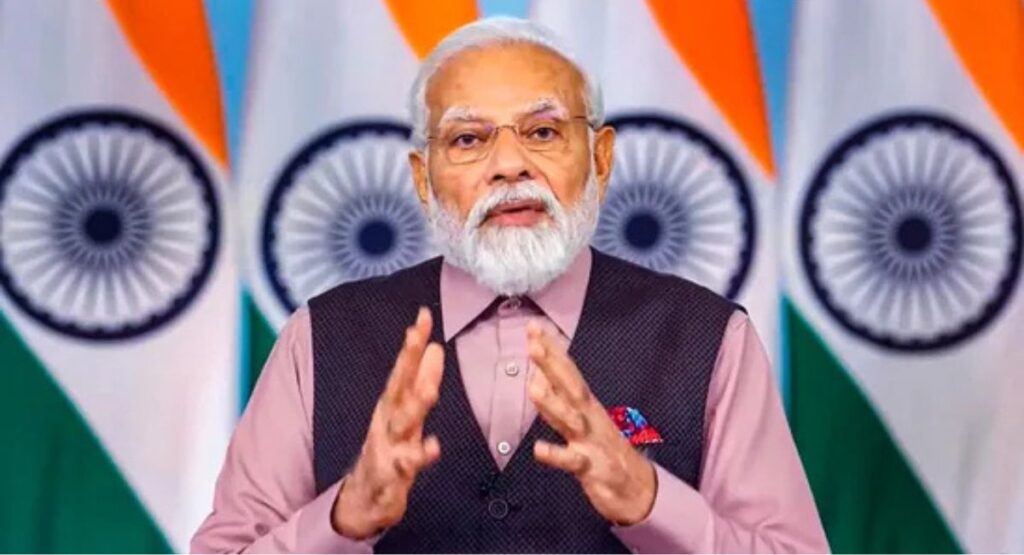
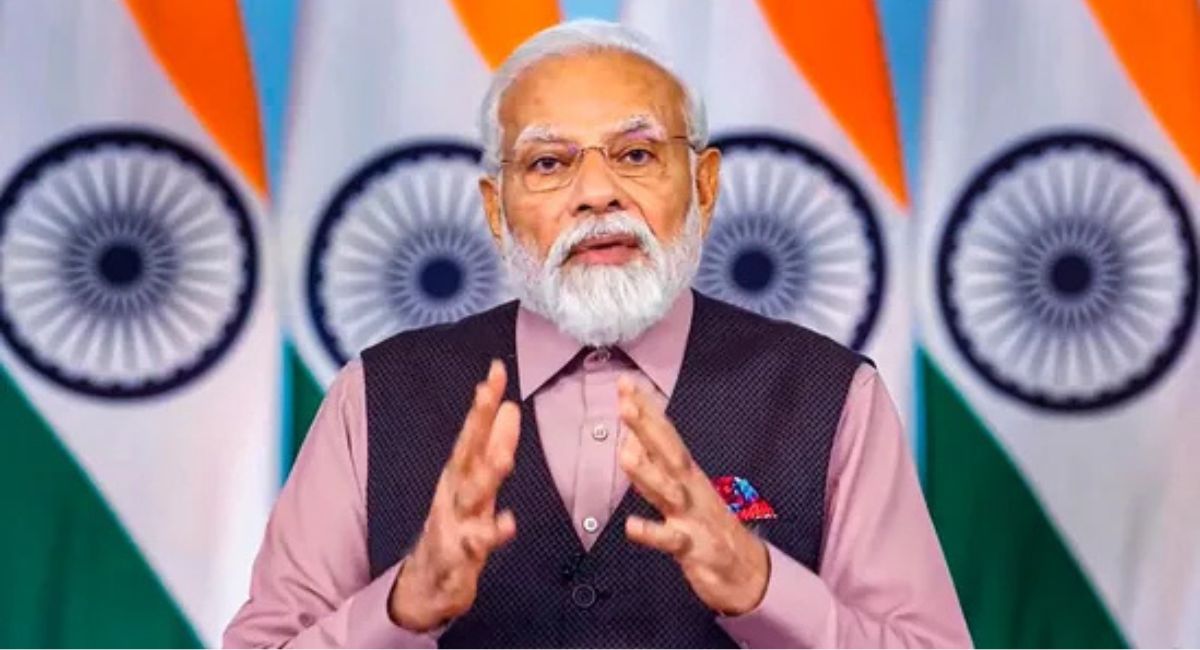

Prime Minister Narendra Modi has called on Indian companies and employees to revive Covid-era working practices, including work-from-home and virtual meetings, to help cushion the country from the economic fallout of the ongoing conflict in West Asia.
Addressing a BJP rally in Hyderabad on Sunday, May 10, 2026, the Prime Minister said the disruption caused by the US-Iran conflict had pushed petrol and diesel prices sharply higher and was putting additional strain on household budgets and the national economy. Brent crude was hovering near $100 a barrel at the time of his address, with uncertainty around the Strait of Hormuz, the key shipping route Tehran has effectively blocked.
“During the Corona period, we adopted work from home, online meetings, video conferences, and developed many such systems. We had also become accustomed to them,” the PM noted. “We must prioritise work from home, online conferences, and virtual meetings again. We must also place a strong emphasis on saving foreign exchange, as petrol and diesel have become so expensive globally.”
The appeal sits alongside a broader call for fuel conservation. Modi urged citizens to lean on metro rail, buses, and trains for daily commutes, and to carpool for private journeys. He also asked people to postpone foreign travel and gold purchases for a year, and to reduce edible oil consumption as part of efforts to make the country more self-reliant.
India is the world’s third-largest oil importer and remains particularly exposed to Strait of Hormuz disruptions. Several countries in the region, including Thailand, Indonesia, Pakistan, Bangladesh, and the Philippines, have already introduced WFH policies or scaled back office attendance to manage fuel consumption.
For Indian HR teams, the PM’s appeal lands at a time when many large employers, particularly in IT services, banking, and consulting, had spent much of the last two years pushing employees back to the office on full-time or hybrid mandates. Whether this shifts those mandates in any structural way will depend on how long the West Asia situation persists and how directly the Centre follows up with formal advisories to industry.