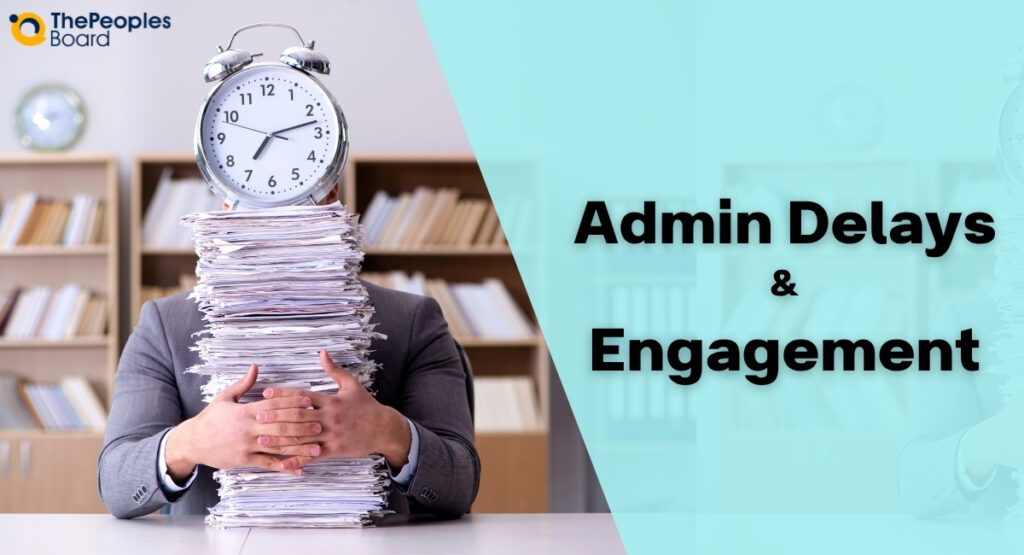


Nobody quits over a reimbursement form. But ask a demotivated employee what wore them down, and the answer is rarely one big thing. It’s the third follow-up email to get a leave approved. The expense claim was stuck in someone’s inbox for two weeks. The onboarding checklist that took a month to close. Small frictions, repeated daily, that slowly turn a willing employee into a checked-out one.
Global employee engagement fell to 20% in 2025, its lowest level since 2020, according to Gallup’s State of the Global Workplace 2026 report. South Asia, led by India, recorded the steepest regional decline. Most conversations about that number jump straight to managers, culture, and pay. Administrative friction rarely makes the list. And that’s exactly why it does so much damage. It’s invisible until you go looking for it.
For people managers, this matters more than the reporting structure suggests. You sit between the employee filing the request and the system that keeps stalling it. When the process breaks, your team feels it first, and so do you.
What Counts as an Administrative Hassle
Administrative friction is any routine, non-core task an employee has to complete to keep working, and that takes more effort than it should. It shows up on both sides of the desk.
On the employee side, it looks like:
- Chasing approvals for leave, expenses, or travel across multiple people
- Re-entering the same information into three different systems
- Hunting for a policy document nobody can locate
- Waiting days for IT access, a laptop, or a login
On the HR and manager side, it looks like:
- Manually reconciling attendance and payroll every cycle
- Onboarding paperwork spread across email, spreadsheets, and PDFs
- Fielding the same five queries from employees every single week
- Approving requests through tools that don’t talk to each other
None of these is dramatic. That’s the point. A dramatic problem gets escalated and fixed. A minor, recurring one gets absorbed, quietly, into everyone’s day.
Why Small Friction Adds Up
The cost isn’t the single task. It’s the frequency.
Indian professionals already work long days. DeskTime’s 2025 data, based on 13,667 users, puts the average Indian workday at 9 hours and 46 minutes, longer than counterparts in the US or Europe. When a share of that stretch goes to work that isn’t the actual job, two things happen. People fall behind on what they were hired to do. And they start resenting the time they’re losing.
There’s a psychological layer too. Every stalled approval is a small signal that says your time isn’t valued here. One signal is forgettable. Fifty a month is a pattern. And patterns shape how people feel about their employer far more than any town hall or engagement survey does.
Here’s how the friction travels through a team:
| Stage | What Happens | Effect on Engagement |
| The task | A simple request needs several manual steps | Mild irritation, brushed off |
| The repeat | The same friction returns next week, and the week after | Frustration starts to build |
| The workaround | Employees stop asking and route around the system | Trust in the process erodes |
| The disengagement | People do the minimum, mentally check out | Quiet quitting, lower discretionary effort |
By the time it reaches the last row, most managers read it as an attitude problem. Often it started as a process problem.
Where People Managers Feel It First
When an employee’s reimbursement is late, they come to the manager before they go to HR. When onboarding drags, the new hire’s slow start lands on the manager. When a leave request bounces between systems, the manager is the one smoothing it over.
That puts managers in a bind. You didn’t design the process, but you own its fallout. And the time you spend resolving administrative issues is time you’re not spending on coaching, one-on-ones, or the work that actually moves your team forward. Gallup’s finding that managers account for roughly 70% of the variance in team engagement cuts both ways here. A manager buried in administrative cleanup has less bandwidth to be the thing their team needs most.
This connects to a broader shift India’s IT sector is seeing, where flatter structures leave fewer managers handling wider teams. More people, same manual processes, less time each.
Spotting the Drain Before It Shows Up in Attrition
Administrative friction rarely announces itself. It surfaces as vague complaints, so it helps to know the tells. Watch for these signals on your team:
- Repeat questions: If the same query comes up weekly, the process, not the person, is unclear.
- Workarounds: People building private spreadsheets or side channels means the official system isn’t trusted.
- Approval backlogs: Requests sitting for days point to a broken routing chain, not lazy approvers.
- Onboarding lag: New hires taking weeks to get productive usually signals setup friction, not skill gaps.
- Quiet disengagement: Effort dropping without a clear reason is often the residue of a hundred small annoyances.
If two or three of these are familiar, the drain is probably already active. The good news is that process friction is one of the more fixable causes of disengagement, unlike pay bands or market conditions, which sit outside a manager’s control.
What Managers Can Actually Do
You can’t rebuild the company’s systems on your own. But you have more room to reduce friction than it feels like.
- Map the top three recurring hassles. Ask your team directly: what’s the most annoying routine task you deal with? The answers are usually specific and quick to name.
- Fix what you own first. Some friction lives inside your own approval habits. Clearing your pending queue daily removes a bottleneck instantly, at zero cost.
- Standardise the repeat queries. A short, shared FAQ or a pinned message ends the weekly question loop and frees everyone’s time.
- Escalate the structural issues with evidence. When friction sits in a companywide system, take it to HR with specifics: how often it happens, how much time it eats, who it affects. Vague complaints get ignored. Documented ones get budget.
- Push for the right tools, not more tools. The goal isn’t another platform. It’s fewer places to do the same task. When HR evaluates HR automation and workflow systems, managers who’ve documented the friction give them the strongest case to act on.
Automation helps, but only when it removes steps rather than adding a login. A survey commissioned by Automation Anywhere found 88% of Indian workers believe repetitive administrative tasks shouldn’t be done by humans if they can be automated. The appetite is there. What’s often missing is someone naming the specific friction worth fixing. That someone is usually the manager.
In the End…
Administrative hassles won’t ever be the headline reason engagement drops. They’re too small, too ordinary, too easy to dismiss. But engagement rarely dies from one big blow. It erodes, one stalled approval and one duplicate form at a time, until the willing employee you hired is just going through the motions.
The fix doesn’t start with a new system or a bigger budget. It starts with a question. Ask your team which routine task frustrates them most, and listen to the answer. Clear your own approval backlog this week. Document the friction that’s out of your hands, and take it up the chain with numbers attached. None of it is glamorous. All of it protects the thing that’s hardest to rebuild once it’s gone, which is a team that still cares.
FAQs
What are administrative hassles at work?
Administrative hassles are routine, non-core tasks an employee must complete to keep working that take more effort than they should. Common examples include chasing multiple approvals for leave or expenses, re-entering the same data into different systems, hunting for policy documents, and waiting days for IT access or a laptop.
How do administrative hassles affect employee engagement?
The damage comes from frequency, not from any single task. Repeated friction signals to employees that their time is not valued, and that pattern shapes how they feel about their employer far more than a town hall or survey does. Over time, small annoyances accumulate into quiet quitting and lower discretionary effort.
What is the current state of employee engagement in India?
Global employee engagement fell to 20% in 2025, its lowest level since 2020, according to Gallup’s State of the Global Workplace 2026 report. South Asia, led by India, recorded the steepest regional decline.
Why do people managers feel administrative friction first?
Managers sit between the employee filing a request and the system that stalls it. When a reimbursement is late or onboarding drags, the employee goes to the manager before HR. The time managers spend resolving these issues is time taken away from coaching and one-on-ones, the work that actually moves a team forward.
How can managers reduce administrative friction on their team?
Managers can map the top three recurring hassles by asking the team directly, fix friction inside their own approval habits by clearing pending queues daily, standardise repeat queries with a shared FAQ, and escalate structural issues to HR with documented evidence of frequency, time cost, and who is affected.
Can automation fix administrative hassles?
Automation helps only when it removes steps rather than adding another login. A survey commissioned by Automation Anywhere found 88% of Indian workers believe repetitive administrative tasks should not be done by humans if they can be automated. The appetite exists, but someone still has to name the specific friction worth fixing.