
The Galgotias University made headlines at the India AI Impact Summit 2026, but for all the wrong reasons.
The Greater Noida-based university attended the summit’s expo with its students representing their startups and AI-driven ideas, incubated at the university’s centres of excellence.
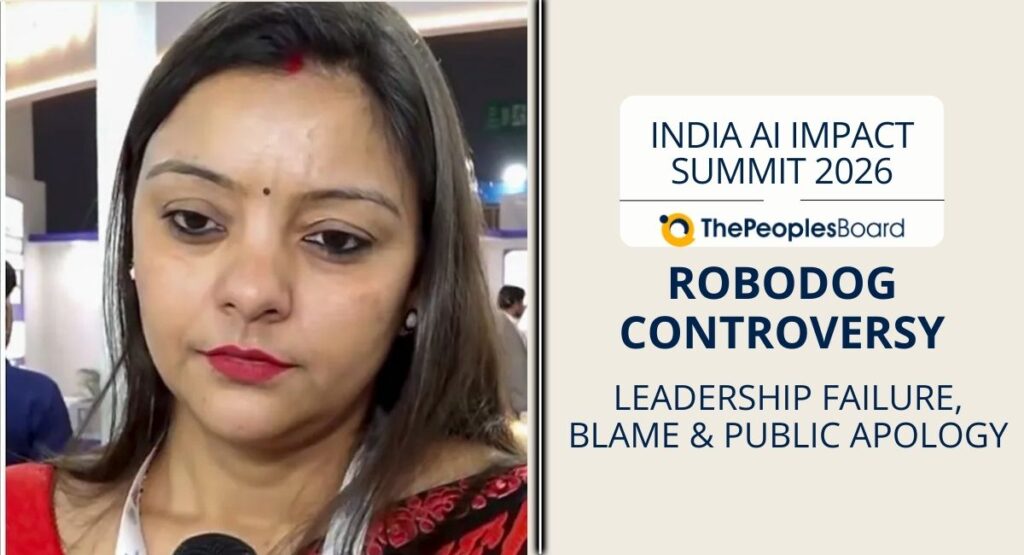
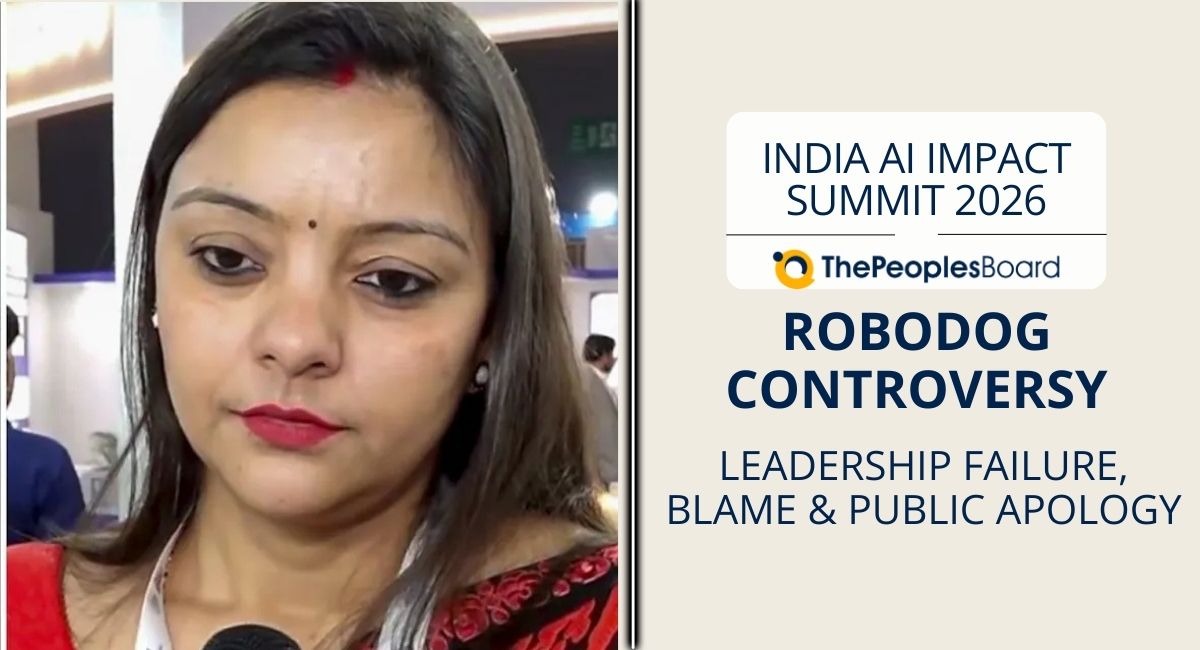
However, amid the ongoing expo, what drew the attention of the international media was a robodog. Communications department professor Neha Singh told DD News that the robodog named Orion was “developed” by the students of the university. But online users later identified the robot as the Go2 model made by Chinese firm Unitree Robotics, which is commercially available in India, starting at Rs. 2,00,000.
Following this, the university faced major backlash. When the media started asking questions, the professor, correcting herself, said that the intent was not expressed clearly, which caused this confusion. She told PTI, “The controversy happened because things may not have been expressed clearly. I take accountability that perhaps I did not communicate properly, as it was done with a lot of energy and enthusiasm and very quickly, in a jiffy, so I may not have come across as very eloquent, which is a rare case.”
According to media reports, the university was also asked to leave the expo venue immediately after the incident went viral. As per a TOI report, MeitY Secretary said that the organisers took a strict view of the matter. He said that the ministry didn’t want any controversy around the expo and wanted genuine exhibits.
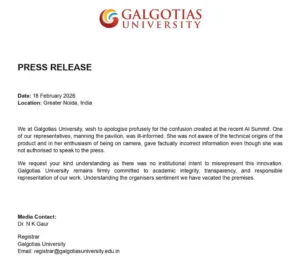
Issuing a statement, the institute said, “We at Galgotias University wish to apologise profusely for the confusion created at the recent Al Summit. One of our representatives, manning the pavilion, was ill-informed. She was not aware of the technical origins of the product and, in her enthusiasm of being on camera, gave factually incorrect information even though she was not authorised to speak to the press.”
Interestingly, following this ordeal, the media observed that Neha Singh’s LinkedIn profile had a status of “Open To Work”. This sparked speculations about her employment status at the university. However, Nitin Kumar Gaur, Registrar of Galgotias University, informed the relevant authority that she has not been suspended. Rather, she has been asked to stay with the institution as long as the investigation goes on.

This raises several major questions about the leadership and accountability on the part of the university. The first question to ask here is whether Neha Singh is a professor of the communications department, and whether she was groomed enough with the products being exhibited there. To what extent did she have information about whom and what to speak?
When the university, in the statement, says, “One of our representatives, manning the pavilion, was ill-informed,” who is the right person to be accountable for the mess?
The expo at the AI summit was held mainly for companies, universities, entrepreneurs and others to showcase their original ideas. At such a point, what was the purpose of presenting a robot that was purchased? This raises questions about the integrity of the university, also damaging the potential of the other students at the expo.
In addition, the university said that Neha Singh did not have the authority to speak with the media. In that case, who did?
Since then, memes about the professor have been going around on social media. This is not just a major sabotage to the individual identity of the person, but also a risk to the mental health of an employee of the university in question.
Here, the larger concern is not whether a robot was misrepresented, but whether an employee’s professional credibility became collateral damage in an organisation’s failure to communicate internally.
What unfolded at the summit, therefore, is not merely a communication error. It is a leadership failure disguised as an individual mistake. When institutions send representatives to high-visibility platforms without clear briefing, role clarity, or media preparedness, they create conditions where enthusiasm can easily turn into misinformation.
In such moments, the burden of organisational failure quietly shifts onto the employee standing in front of the camera.
HR and institutional leadership exist precisely to prevent such situations by defining spokesperson protocols and protecting employees from reputational risk arising out of systemic gaps.
When accountability is redirected towards an individual employee after a crisis, it signals not corrective governance but reactive damage control. Leadership is ultimately tested not in moments of success, but in how it protects its people when things go wrong.
In the age of constant public scrutiny via social media and viral accountability, organisations must remember that one miscommunication may lead to long-term damage.