
Highlights:
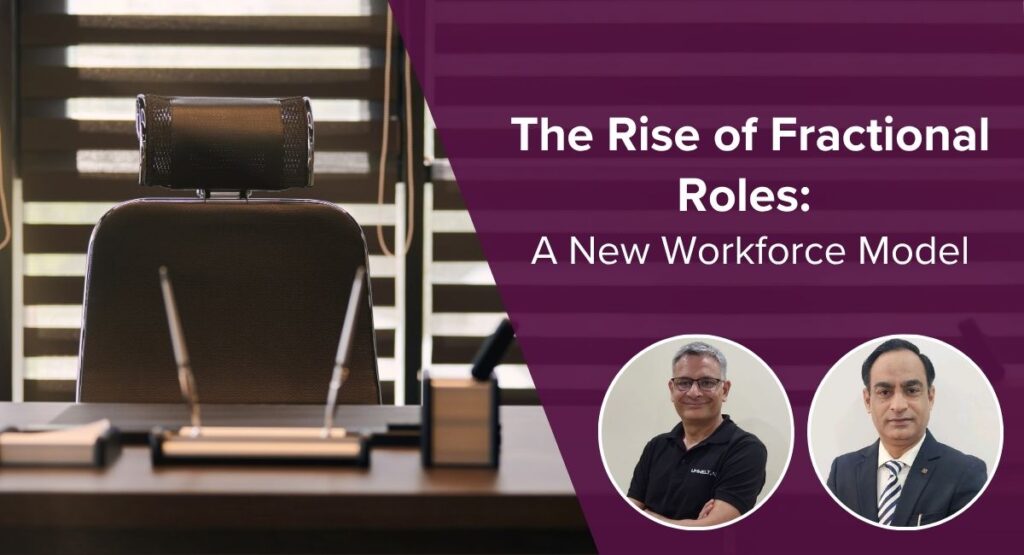
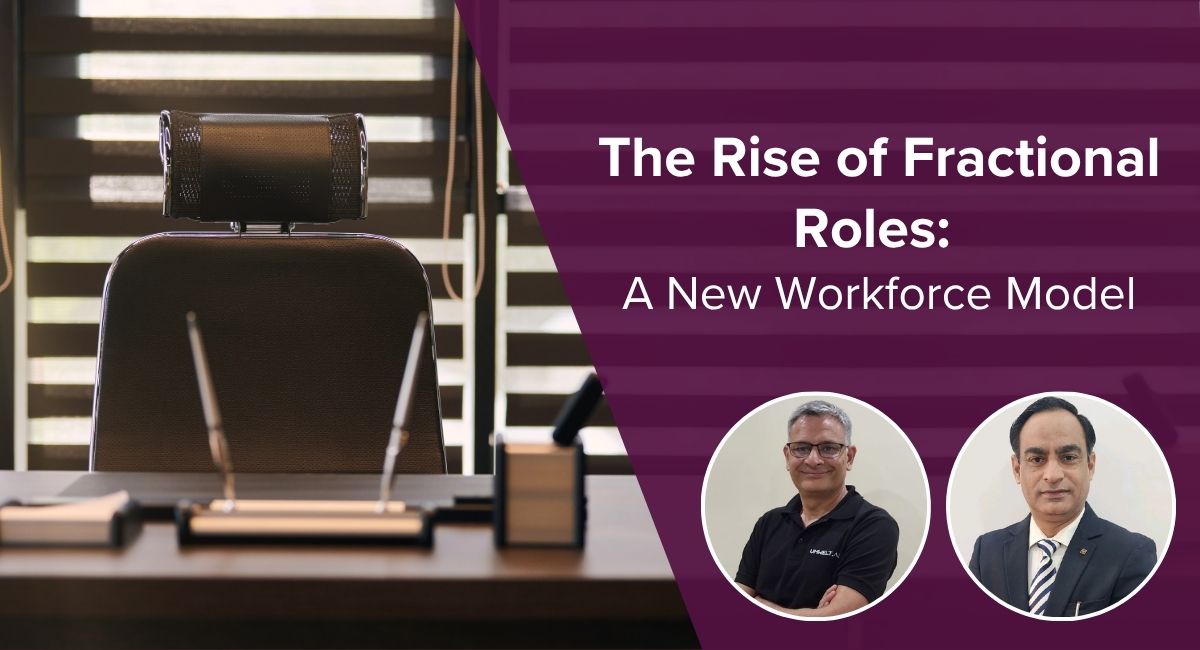
- “Companies are increasingly adopting fractional employees to access senior expertise without the cost of full-time hiring,” says Rakesh Kumar Sharma.
- “Fractional CXOs are called for high-priority, high-impact mandates. This allows them to contribute meaningfully without any bureaucracy,” explains Sunil Joshi.
The way organisations hire is changing. Not in the dramatic, headline-grabbing way of mass layoffs or hiring freezes, but in something quieter and perhaps more consequential
A growing number of companies are choosing not to hire full-time at all for certain roles. Instead, they’re bringing in experienced professionals on a part-time, strategic basis. They are bringing in people who work across multiple organisations simultaneously, contributing expertise without the cost or commitment of a permanent hire.
This is the world of fractional roles, and it’s growing faster than most HR leaders realise.
As per LinkedIn data, 17,000 professionals in India now identify as fractional executives on the platform. The number reflects a rapidly shifting mindset among Indian startups, SMEs, and mid-market firms.
What Are Fractional Roles, Exactly?
A fractional professional is a senior expert who works with multiple organisations in a part-time, strategic capacity, typically on a retainer basis. They’re not freelancers chasing project-to-project work, and they’re not consultants parachuting in with a framework and a slide deck. They sit somewhere in between the two; embedded enough to attend leadership meetings, influence strategy, and make decisions, but not tied exclusively to one employer.
The most common examples are fractional CFOs, fractional CMOs, fractional CHROs, and fractional CTOs. These are C-suite or near-C-suite professionals who offer their expertise to companies that need strategic leadership but aren’t yet ready, or willing, to fund a full-time executive salary.
What sets fractional work apart from consulting is the continuity and depth of involvement. A consultant typically delivers a defined output: an audit, a report, a recommendation. A fractional professional is part of the operating rhythm. They attend standups, manage teams, and sit in on board reviews, maintaining an ongoing, not transactional relationship.
Why Companies Are Adopting Fractional Talent
The appeal for organisations, especially in India’s startup and SME ecosystem, comes down to one core tension: the need for senior expertise and the inability—or unwillingness—to fund it full-time.
Rakesh Kumar Sharma, Founder & CHRO of OLYX Global HR, sees this dynamic play out regularly. “Companies are increasingly adopting fractional employees to access senior expertise without the cost of full-time hiring. Fractional roles help companies reduce fixed payroll costs while still benefiting from experienced professionals,” he notes, adding that the model is particularly attractive to startups and growing firms that want strategic leadership on demand.
Sunil Joshi, Fractional CHRO for AMP, frames it around how modern businesses actually operate. “Today, most start-up businesses are project-driven rather than role-driven. They need the agility to set up new functions, launch new markets—they need outcomes, not headcount.”
As per Joshi, there are three factors driving adoption of factional roles: access to high-quality CXO-level expertise for a few days a month, the inherent agility of the model, and the ability to test and scale based on evolving business needs rather than committing to a long-term hire upfront.
Sharma also points to an emerging driver that doesn’t get enough attention: workforce transitions. “A few multinational companies have already started adopting this practice in view of early retirement of their employees or due to maternity breaks taken by HODs,” he observes. His comments highlight that fractional hiring isn’t only about cost optimisation. Sometimes it’s simply about keeping critical functions running through leadership gaps.
Beyond cost, there’s a deployment speed advantage that resonates strongly in India’s fast-moving startup environment. Traditional C-suite hiring can stretch to six months or more. A fractional engagement, by contrast, can be activated in days, which matters enormously for a company navigating a funding round, a product pivot, or a compliance deadline.
This sentiment is echoed by Joshi, who states, “hiring full time roles is a long-term commitment with significant cost, fractional roles allow them to test & scale based on evolving needs.”
In the same vein, Sharma believes that fractional roles allow organisations to stay flexible and scale talent based on project or business needs. He adds that “the rise of remote work and the gig economy has made fractional talent more accessible and efficient for modern organisations.”
Why Professionals Are Choosing Fractional Careers
On the other side of the table, the professionals making this choice are doing so deliberately, and for reasons that go well beyond flexibility.
As per the Frak Conference, 72.8% of fractional professionals globally report 15 or more years of experience. This highlights that the fractional work is not a model people fall into early in their careers. It’s one they choose deliberately, at the peak of their expertise, when they have enough credibility to attract clients and enough experience to deliver without hand-holding.
For Sunil Joshi, the draw was clear from personal experience. “For me, one major reason has been flexibility. No 9 to 5 and Monday to Friday, location independence and work-life integration. At the same time, you can work across industries, geographies, and problem statements. In a full-time job, this is a miss: you are confined to your office and your role.”
He adds a dimension that often goes unspoken: the quality of the work itself. “Fractional CXOs are called for high-priority, high-impact mandates. This allows them to contribute meaningfully without any bureaucracy.”
Rakesh Kumar Sharma echoes the argument for autonomy. “Fractional roles provide better work-life balance and independence compared to traditional full-time employment. They allow professionals to leverage their expertise across different industries while increasing their earning potential,” he says.
For many, it’s ultimately a shift in how professional identity itself is defined. As Joshi puts: “Professionals are moving from careers defined by employers to careers defined by expertise and impact.”
Roles and Functions Where Fractional Work Is Growing
The presence of fractional roles is more prominent at certain levels of seniority and in certain industries than in others. Whether it is due to the demand for various expertise or increasing desire for flexibility, fractional roles are certainly on the rise in areas such as:
- Leadership: CHROs, CFOs, CMOs, and CTOs—remain the most common fractional engagements, particularly in Series A and Series B stage startups that have outgrown founder-led management but aren’t yet large enough to justify a full executive bench.
- Technology and product: Roles in these are seeing strong fractional demand as well, especially in companies that need senior product or engineering leadership during a specific build phase. A fractional CPO or CTO can help a company define its technology roadmap and stand up its first engineering team without becoming a permanent cost centre.
- Strategy and operations: Companies undergoing restructuring, market expansion, or post-merger integration are increasingly turning to fractional operators who have navigated these challenges across industries, rather than betting on a full-time hire who may have done so only once.
The Challenges HR Needs to Know About
Though fractional roles provide numerous advantages, they also pose some unique challenges for employers and employees alike. Despite the flexibility and expertise that fractional roles promise, the same advantages can often lead to other cons.
Cultural Integration.
A professional who is present two days a week can easily become peripheral to the organisation’s real decision-making, copied on emails but not in the room where it actually happens.
This is why cultural integration is often the first and most common point of friction, as Sunil Joshi highlights. “In a fractional role, integration with the company’s culture can be tricky; if not managed well, it can lead to gaps in alignment, communication, or ownership,” he says. The sentiment is echoed by Rakesh Kumar Sharma, who believes that fractional role holders may face limited integration with the company culture and internal teams.
Managing multiple stakeholders and time
Working for multiple employers as a fractional employee can be challenging to manage. It is not just time that fractional roleholders have to manage, but also expectations and priorities that come with their various roles.
“Managing multiple stakeholders, priorities and expectations could become demanding. It requires strong discipline, clear boundaries, expectation setting and time management,” Joshi notes. Sharma adds that organisations may also experience continuity gaps if fractional professionals aren’t consistently available at critical moments.
Confidentiality and conflicts of interest
A fractional CHRO working with two companies in the same sector is, in principle, exposed to sensitive HR strategies at both companies. Sharma flags this directly: “There can be confidentiality and conflict-of-interest concerns when professionals work with multiple companies.”
Income and brand stability.
“Earning potential is a key concern, as such positions are on fixed time and payment terms,” Sharma points out, yet another challenge, especially in terms of earnings. For professionals considering the transition, this is a real consideration. Fractional income can be significant, but it requires active pipeline management to sustain.
To be able to bag fractional roles requires a strict management of one’s personal brand, which can also be challenging. Joshi adds, “Success in the fractional model heavily depends on personal branding, networking and consistent delivery. You are required to consistently build and sustain your pipeline.”
What HR Teams Need to Do
If your organisation is bringing in fractional talent—or considering it—there are a few non-negotiables for making it work.
Start with a tight scope of work
The most common failure mode is ambiguity about what the professional is actually responsible for. Define deliverables, decision rights, and reporting lines clearly before day one. What can they approve? Who do they manage? What does success look like at 30, 60, and 90 days?
As Sharma puts it: “Clear expectations, communication, and structured contracts are essential to make the fractional model successful.”
Build inclusive communication frameworks
Add fractional leaders to the right channel, include them in relevant leadership meetings, and be deliberate about information sharing. If they’re only as informed as their two days a week allow, their contributions will reflect that.
Integrate them into real decision-making
A fractional CHRO who is consulted after decisions have already been made is functioning as a reviewer, not a strategic partner. For the model to deliver its full value, these professionals need a genuine seat at the table and the access that comes with it.
Invest in the legal foundation
Contracts for fractional engagements should clearly define the scope of work, IP ownership, confidentiality obligations, and conflict-of-interest boundaries. Given that India’s new labour codes, effective from 2025, continue to evolve around contractor relationships, getting proper legal guidance at the outset is essential.
In the End…
Fractional roles are not a workaround or a compromise. They represent something more fundamental: a shift in the relationship between talent and organisations. As Sunil Joshi frames it, “Organisations are moving from ownership to access of talent.”
This is not a minor operational adjustment. It’s a different philosophy of how work gets structured and how value gets created. For Indian companies, especially those navigating growth with constrained budgets and ambitious timelines, the fractional model offers something rare: strategic depth without strategic debt.
As for HR professionals, it presents both a mandate and an opportunity: to build the frameworks, contracts, and cultural conditions that make these engagements genuinely work.