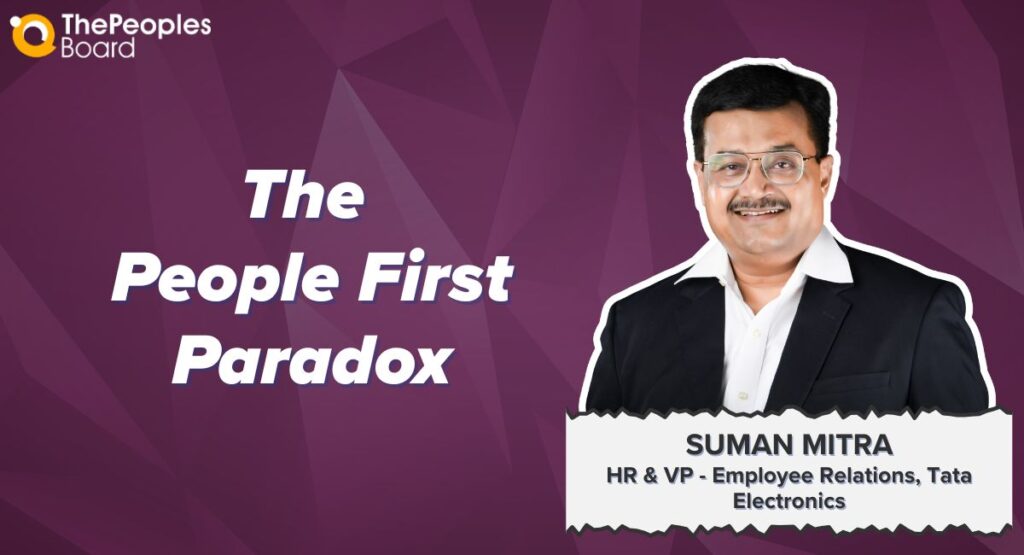
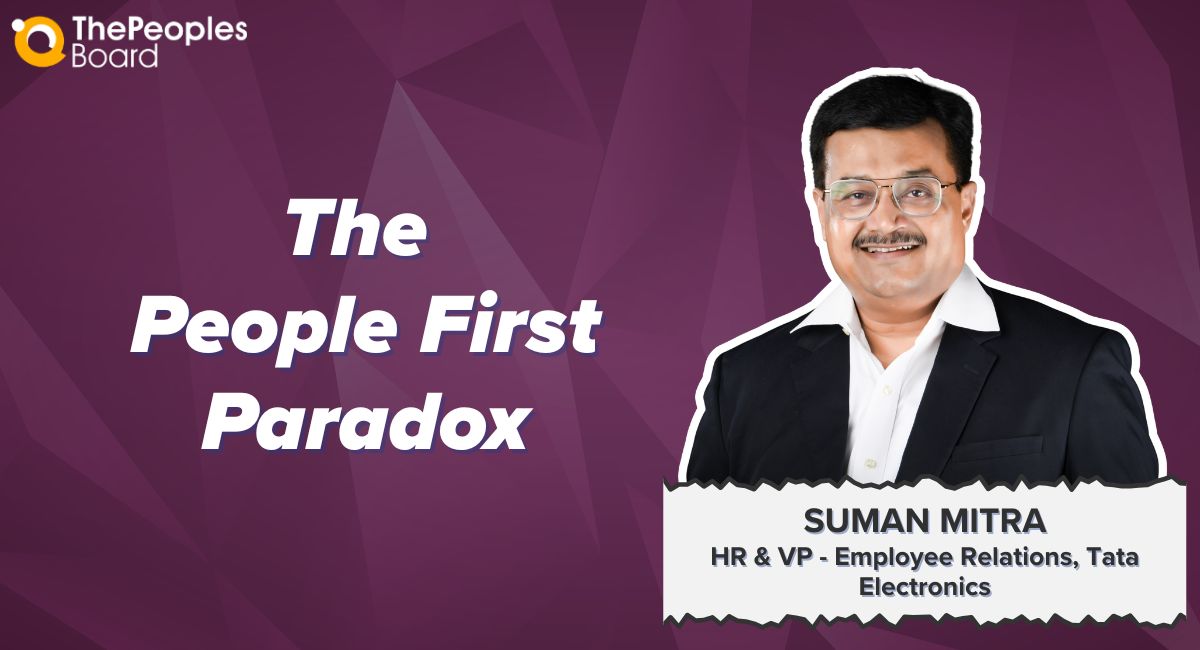

“People first” has become one of the most widely celebrated ideas in modern leadership. Across industries, organisations proudly declare that employees are their greatest asset. The logic is compelling: when people feel valued, supported, and empowered, they perform better, stay longer, and strengthen the organisation’s reputation. Indeed, many successful companies credit their growth to putting people at the centre of their strategy.
Yet the idea carries a quiet paradox. When empathy is misunderstood, when care replaces accountability, and when kindness is allowed to dilute standards, a people‑first philosophy can slowly transform from a strength into a business liability. The question is not whether people-first works—but under what conditions it works like Growth and Comfort never coexist.
When People First Works
Let me outline a scenario which many companies must have witnessed. Consider a mid-sized technology firm that intentionally designed its people-first culture with discipline. Leaders introduced flexible work hours, invested in wellness initiatives, and trained managers to lead with empathy. At the same time, they clarified expectations, strengthened feedback mechanisms, and reinforced performance accountability.
Within two years, voluntary attrition dropped significantly. Employee advocacy rose on social media, referral hiring increased, and customer satisfaction improved as engaged employees delivered better service. In this organisation, people-first succeeded because it was not a vague sentiment—it was a structured system. Care was paired with clarity, and empowerment was inseparable from responsibility.
Global companies offer similar proof. Southwest Airlines is often cited as a people-first success story. Frontline employees are trusted to make decisions that improve customer experience, but expectations around safety, service, and performance are unmistakably clear. The result has been strong culture, customer loyalty, and long-term profitability—even in turbulent market conditions.
Mr Garry Kelly, once CEO of Southwest Airlines, clearly said, “Our people are our single greatest strength and most enduring long-term competitive advantage.” Southwest Airlines treats its unions as full partners and has also declared that they expect their Union to have an intense loyalty to the company and a feeling of ownership. Result has a history of exceptional employee relations with only one 6-day strike since its inception.
Microsoft’s cultural reset under Satya Nadella provides another striking example. The company embraced empathy, psychological safety, and learning while simultaneously reinforcing performance through clear priorities, continuous feedback, and measurable impact. Employees felt supported but also challenged. Innovation accelerated, and business performance followed.
When People First Becomes a Liability
The risks emerge when people-first becomes a slogan rather than a system. In some fast-growing startups during the post-pandemic hiring boom, leaders embraced people-first values by offering unlimited leave, remote work, and minimal oversight. Initially, morale was high. But goals remained vague, feedback conversations were avoided, and poor performance went unaddressed.
When economic conditions tightened, organisations discovered uneven productivity, bloated teams, and a lack of readiness. Layoffs followed suddenly, damaging trust and employer brand. What was intended as kindness ultimately backfired. The issue was not compassion—it was the absence of rigour.
A common corporate pattern further illustrates the danger: the “indispensable underperformer.” Let me share one example without quoting the name of the company. In one large services firm, a senior employee was repeatedly shielded due to tenure and personal circumstances. Managers avoided difficult conversations in the name of empathy. Over time, teammates absorbed additional workload, resentment grew, and high performers disengaged or left. Care for one individual inadvertently harmed many others.
These failures reveal an uncomfortable truth: people-first does not mean avoiding discomfort. In fact, avoiding accountability creates ambiguity, and ambiguity erodes trust faster than honest feedback ever could.
People First in Manufacturing: Structured Trust
In manufacturing, people-first is often misunderstood as softness—a risky idea in environments defined by safety, quality, and tight margins. Yet some of the world’s most successful manufacturers demonstrate that people-first works precisely because it is disciplined.
Toyota remains the gold standard. On Toyota factory floors, line workers are empowered to stop production if they detect a defect. This reflects deep respect for employees, but it also comes with rigorous training, standardised work, and relentless problem-solving & lastly greater accountability. Empowerment and accountability are inseparable. The result is world-class quality and sustained operational excellence.
In India, Tata Steel offers a similar lesson. For decades, the company invested in worker housing, healthcare, and community development, long before such practices were standard. Employees developed extraordinary loyalty and pride. At the same time, Tata maintained uncompromising safety standards, productivity targets, and performance reviews. Care for people reinforced discipline rather than replacing it. They treat their Union as a partner, which they have shown to the world. Tata Steel Union created their own vision: “Partner in Progress” with clearly articulated missions.
By contrast, a mid-sized auto-components manufacturer offers a cautionary tale. In an attempt to modernise culture, leadership reduced supervision and delayed addressing absenteeism and quality issues, citing “trust” and “employee sensitivity.” Over time, defect rates increased, delivery commitments slipped, and high-performing workers grew frustrated. When strict controls were reintroduced abruptly, morale suffered further. The failure was not people-first, but people-first without clarity or consequences.
Lessons from Automotive and FMCG
The automotive industry reinforces the same pattern. Maruti Suzuki, after experiencing serious labour unrest earlier in its history, invested heavily in communication, skill development, and shop-floor engagement. Operators today are cross-trained, grievance mechanisms are formalised, and safety culture is emphasised. Yet production targets, quality metrics, and safety violations are treated with zero ambiguity. People-first lessons were institutionalised through systems, not sentiment.
Bosch in India, where I had the opportunity to follow & practice a strong People First approach that places employees at the core of its business strategy, recognising that long‑term success is driven by empowered, skilled, and engaged associates. The company invests heavily in learning and development through programs such as the Bosch Learning Company, future skills and Industry 4.0 initiatives, and structured leadership development programs.
Even when Bosch has done its restructuring in India due to business exigency, it had taken a People First approach by deploying generous voluntary retirement schemes with clearly and transparently articulating to its people with clear accountability and briefing them why restructuring is important for the business and how it is going to take care of its people. Together, these efforts create a culture of trust, respect, and continuous growth, reflecting Bosch India’s commitment to putting people first.
Tesla illustrates the inverse risk. In its early growth phases, relentless focus on aggressive targets led to burnout and high attrition. Leadership later recognised that ignoring human limits was itself a performance risk, prompting investments in safety, automation, and clearer role ownership.
The FMCG sector tells a similar story. Let me share the story of Hindustan Unilever, where I was a contributor in driving the People First strategy. Hindustan Unilever Limited demonstrates how people-first can strengthen resilience in all its operations. Through investments in safety, leadership development, and employee well-being—while maintaining strict production, quality, and compliance standards—HUL sustained supply continuity during major disruptions.
By contrast, regional FMCG firms that tolerated attendance issues and quality deviations in the name of compassion saw rejected batches rise, and capable employees leave. Empathy without enforcement proved unsustainable.
The Real Meaning of People First
Across industries, a consistent insight emerges: employees value fairness more than leniency. They want to feel respected, supported, and safe, but they also want clarity, growth, and accountability. Comfort without purpose breeds entitlement; performance without care breeds burnout.
The most effective organisations follow a simple but demanding principle: care deeply, manage clearly. They listen, coach and support, but they also set measurable expectations, address gaps early, and make tough decisions when necessary.
Ultimately, people-first is neither inherently virtuous nor inherently risky. It becomes a strategic advantage when paired with discipline, courage, and consistency. It becomes a liability when used as an excuse to avoid accountability.
Organizations that truly put their people first, they do so by respecting their employees’ potential and holding them accountable to it.
The People First approach is highly recommended. If any organisation or Individual decides to practice the People First approach, my recommendation to them will be to note that Empathy starts with understanding circumstances; accountability focuses on outcomes.
Therefore, it is important to be clear before being kind, give feedback early and often, coach first, act firmly if needed, apply standards consistently & equally without showing selective empathy, and normalise accountability as care.
In Short, Empathy builds trust. Accountability builds performance. Leadership requires both. The winning mindset is simple but demanding, with deep care. Act clearly. Decide firmly.