
- In 2014, he told the BBC, “The development of full artificial intelligence could spell the end of the human race… Humans, who are limited by slow biological evolution, couldn’t compete and would be superseded.”
- As indicated by the expert opinions, the organisations that will truly succeed in the AI era will not be those that deploy the most advanced agents, but those that redesign work with clarity, responsibility, and empathy.
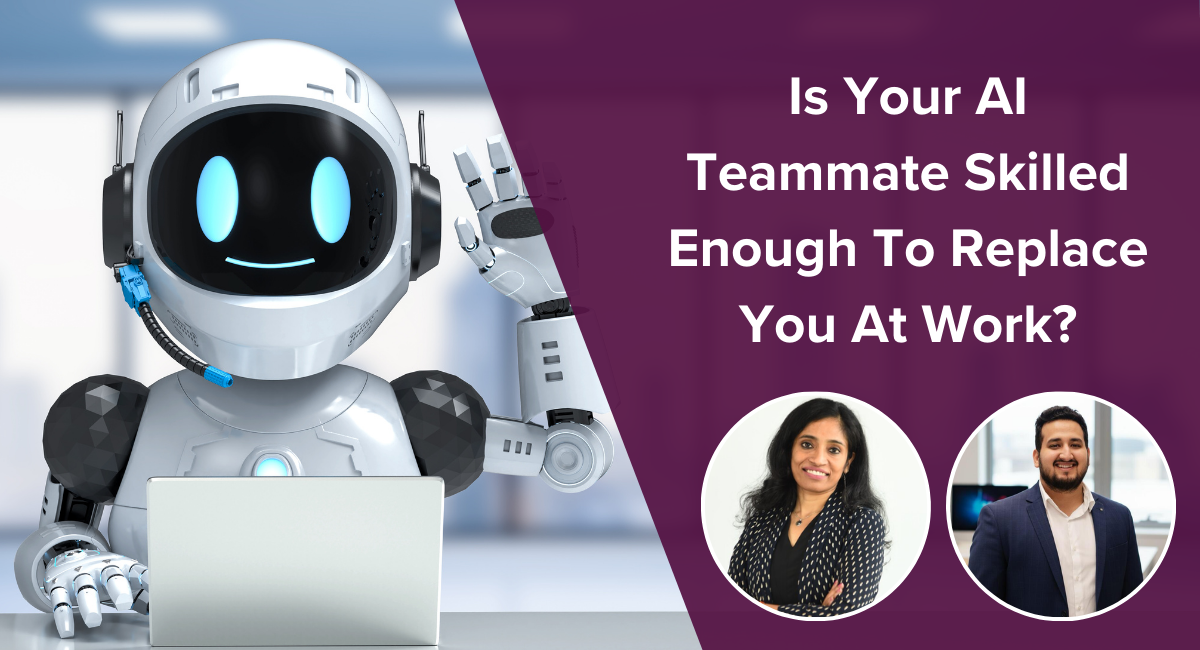
As India debates the readiness for artificial intelligence (AI) goals in the next five years, AWS asks its employees to treat AI agents as “teammates” instead of tools. Last year, the cloud services company argued that the next wave of productivity will come from AI agents, which will understand the context and act autonomously across workflows, reported People Matters.
However, the announcement was made by Pasquale DeMaio, vice-president and general manager of Amazon Connect, with a focus on the Las Vegas employees.
But how is that relevant for India?
As of April 2025, the company had about 3,465 employees in India. Plus, AWS works with some of the major private and public entities in India, including the likes of Ashok Leyland, Axis Bank, Bajaj Capital, HDFC Bank, Zoomcar, Healthify, Yellow.ai, Zepto, National Health Authority, Telangana State Government, Delhi University, among others.
But it isn’t just about AWS. Recently, LTIMindtree announced that it has deployed about 1,500 artificial intelligence (AI) powered ‘digital employees’ or agents across functions such as finance, infra operations, and customer service.
Interestingly, LTIMindtree also noted that every agent would be tagged with a human mentor who would be responsible for training and supervising. And, some of these agents may also be fired or retired if they don’t learn or perform well.
With such aggressive deployment of AI in the workplace, how far are we from being replaced by our artificial selves?
On this, Vipul Prakash, Founder and CEO, FireAI, said, “AI cannot replace human judgment, creativity, empathy, leadership, ethical reasoning, and contextual understanding. In fact, as AI takes over low-value work, the demand for high-value human roles will increase, roles that require strategic thinking, decision ownership, and domain expertise.”
However, the new trend of AI agents sparks fear about Stephen Hawking’s apprehensions about AI turning into a reality. In 2014, he told the BBC, “The development of full artificial intelligence could spell the end of the human race… Humans, who are limited by slow biological evolution, couldn’t compete and would be superseded.”
The thought of a super-brain like Hawking, who lived by technology, expressing such fear, naturally instils fear among common people.
But according to Prakash, “Stephen Hawking’s statement was not a warning against technology itself, but a warning against uncontrolled intelligence without human values. I believe that distinction is extremely important.”
He further added that AI, by itself, does not have intent, ambition, or morality. Humans design it, train it, and decide how it is used. The real risk is not AI becoming intelligent, but humans outsourcing responsibility, judgment, and ethics to machines without guardrails.
Further adding to this, Maya Nair, Executive Director, Grafton Recruitment, said, “The key difference is in control, especially in high-risk domains like defence, healthcare, and financial systems, humans must retain authority over critical decision-making; preventing AI from acting autonomously in such areas is essential to ensuring safety and accountability.”
But Can AI Perform Every Task Autonomously?
According to a Harvard Business Review report, Harvard Business School professor Karim Lakhani is of the view that just as the internet drastically lowered the cost of information transmission, AI will lower the cost of cognition.
What does that broadly mean?
AI is now making “thinking work” cheaper and faster. Tasks that earlier required human cognitive effort, such as analysing data, drafting content, interpreting patterns, screening resumes, or making predictions, can now be done by machines at scale and at very low cost.
For HR, it means that decision support, skill assessment, learning recommendations, performance insights, and even leadership coaching can be partially automated. The value of human employees will shift from routine thinking to higher-order judgment, creativity, empathy, ethics, and complex problem framing. Roles will evolve, not disappear, but expectations from talent will change rapidly.
Earlier, in an interaction with ThePeoplesBoard, Shantiprakash Motwani, senior data and AI leader, highlighted that some of the key roles existing in the industry, like delivery managers, product managers, data engineers, full-stack developers and test engineers, will significantly evolve with AI.
In terms of the context of replacing humans with AI, an Infosys report suggests that managing and mentoring people, decision-making expertise, planning, or creative work are the hardest to replace with AI. Characterised as knowledge work, these highly skilled and creative activities can include coding software, creating recipes or menus, writing promotional materials, etc.
“AI excels at well-defined activities, such as optimising travel routes, but humans still need to define the goals and interpret results. The solution needs commonsense checks,” the report further read.
So what now?
Given the current market scenario, the HR and mentors must make their workforce future-ready and AI-skilled, irrespective of the industry. But are AI-enabled employees or agents practical solutions for the long run?
Organisations such as AWS and LTIMindtree agree, but some organisations, on the other hand, believe in upskilling their existing employees with relevant AI skills, instead of replacing them.
Recently, NTT Data Corporation unveiled that it aims to upskill its Indian employees with AI to transform them into AI-native developers. Currently, the global IT company has 40,000 employees in the country, from where it offshores engineering resources.
In addition, the Indian Ministry for Labour and Employment signed an MoU with Microsoft to scale AI-led skilling and prepare India’s workforce for global opportunities. Microsoft also joined hands with Wipro to lead the AI adoption in India. Under this initiative, more than 25,000 Wipro employees will get upskilled in Microsoft Cloud and GitHub technologies through focused training and certifications, creating an agile and AI-fluent workforce.
Commenting on the need for a balanced approach, Vipul Prakash said that though AI cannot replace human judgment or understanding, it takes over low-value work, the demand for high-value human roles will increase, roles that require strategic thinking, decision ownership, and domain expertise.
Then what should be the right way to deploy AI?
As indicated by the expert opinions, the organisations that will truly succeed in the AI era will not be those that deploy the most advanced agents, but those that redesign work with clarity, responsibility, and empathy.
As noted by Vipul Prakash, “At FireAI, we see AI as an intelligence amplifier, not an autonomous decision-maker. The future is not about humans competing with AI; it’s about humans evolving with AI responsibly.”
Aligning with this thought, Maya Nair said, “The future of work is not a competition between humans and machines but a collaboration that leverages the strengths of both. Whether AI becomes humanity’s greatest ally or its most dangerous creation will ultimately depend on the choices humans make today.”
Seemingly, the workplaces of the future will not be defined by how human-like AI agents become, but by how ‘human’ organisations remain. Curiosity, ethics, empathy, and judgment will emerge as the true differentiators of leadership. In a world where machines can execute almost everything, the most valuable work left for humans will be to decide why, for whom, and at what cost.
As machines take over execution, humans will be expected to take ownership of decisions, of impact, and of consequences. HR will therefore move from managing performance to shaping purpose, from tracking productivity to enabling trust.