
Diwali season turns Indian offices into a ritual of boxes, bonuses and brand-stamped hampers. The gesture is meant to make the workforce feel valued, but what each employee gets, and why, often tracks hierarchy more closely than contribution. A permanent manager opens a dry-fruit box and a cash voucher.
The contract housekeeping staff who kept that same office running might receive soan papdi, or nothing at all. By the time appraisals roll around in March, many of those employees will remember exactly how the organisation treated them in October, long after the sweets are gone.
Who Gets What, and Why?
Festive gifting in India rarely follows one shared template. Spend tends to move along familiar fault lines: seniority, business unit, location, and employment status. A head-office associate in Gurugram and a warehouse associate in Hosur may both wear the same company lanyard, yet their Diwali experience often diverges sharply.
| Workforce Segment | Typical Diwali Treatment |
| C-suite and senior leaders | Premium hampers, cash bonus, personalised gifts, luxury brand vouchers |
| Mid-level permanent staff | Standard dry-fruit boxes, sweets, gift vouchers |
| Junior permanent staff | Basic hampers or small-value vouchers |
| On-roll contract staff | Varies by contract and business unit |
| Outsourced housekeeping and security | Depends on the contractor, often lower in value |
| Gig and platform workers | Rarely included in central gifting policy |
A survey of India Inc. employees conducted by AmbitionBox found that 43% of respondents received no festive perks at all, and 66% said they expected some form of recognition during the festive season. The gap between intent and experience is where the equity question begins.
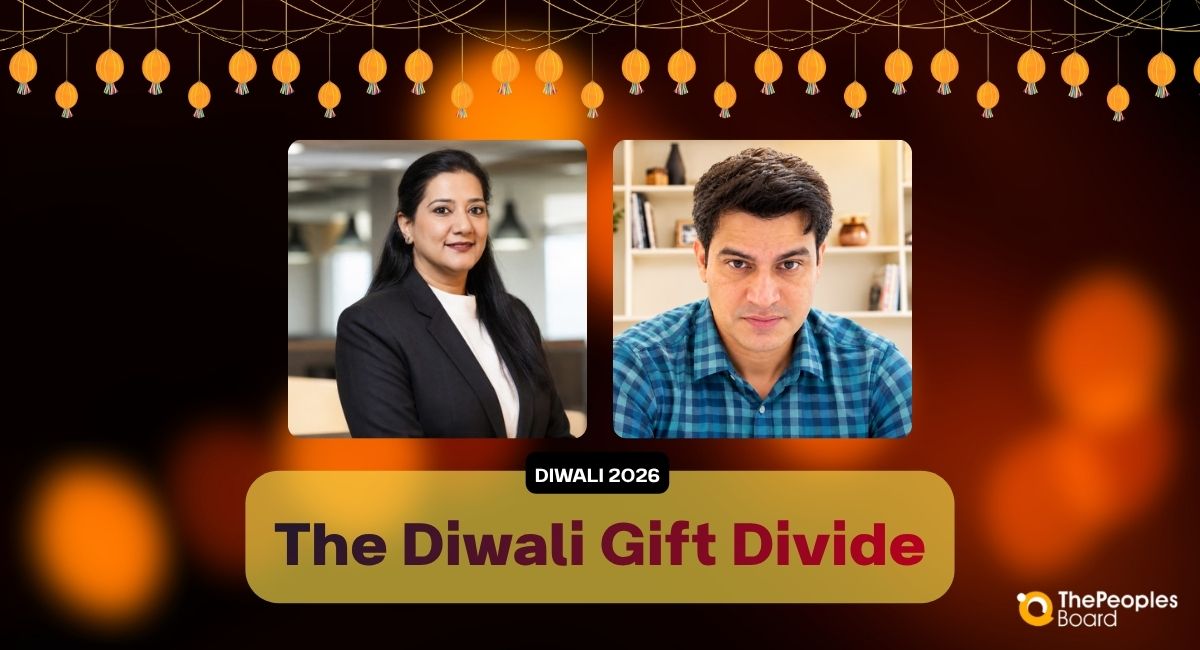
Jasleen Chaudhary, General Manager HR at Arietis Health, locates the design error in that split.
“Festive rewards should be viewed as an expression of appreciation rather than a reflection of an employee’s designation, hierarchy or compensation level,” she said. “Instead of creating differentiated gifts based on seniority or organisational levels, companies should consider a common baseline of appreciation for everyone, irrespective of their role, location or employment category.”
Her framing challenges the common assumption that a bigger budget means better recognition. Employees, she argued, don’t remember the monetary value of a gift. They remember how the organisation made them feel.
When a Gift Becomes a Question of Recognition
Once a gift reaches the employee’s hands, its value is rarely measured in rupees. Workers assess thought, usefulness, consistency, and whether the gesture extended to the people who kept operations running through the quarter.
Gig and outsourced contributors feel this sharply, since they carry much of the festive operational load and still sit outside the central gifting policy at most firms. The disparity mirrors the wider recognition gap between blue-collar and white-collar workforces that shapes Indian workplaces well beyond the festive window.
Ganesh Bhatt, Head of Human Resources Strategy & People Operations at BCFF, reads the gap through the lens of signalling.
“In my opinion, Diwali gifts and festive bonuses are not merely monetary benefits; they represent an organisation’s appreciation and recognition for the employees,” Ganesh explained. “When employees notice significant differences in the value or the nature of festive rewards without clear or transparent communication, it can create perceptions of inequality or exclusion.”
For Diwali 2025, Times of India found that the average corporate gift-hamper spend dropped from the ₹Rs 4,000–5,000 range to ₹Rs 1,000–2,000 at many firms, with the sharpest cuts applied to lower-tier and outsourced categories rather than the top. The recognition gap employees quietly track shows up long before the hamper is opened in who was on the gifting list at all.
Equity vs Equality: The Line HR Keeps Mistaking
Equal treatment and equitable treatment aren’t the same thing, and festive policy is where most companies blur the two. Equality says every employee gets the same box of sweets. Equity asks whether that same box carries the same meaning to a VP as it does to a cafeteria assistant. The harder question is whether a uniform low-value hamper counts as genuine recognition for the warehouse team that worked through the Diwali weekend.
Jasleen framed the distinction practically: “A common mistake is differentiating gifts based on hierarchy or seniority, which can create a sense of inequality.”Companies should adopt an inclusive, employee-centric approach, offer choices wherever possible and ensure that every employee feels equally recognised and appreciated.”
She also flagged the leadership blind spot: “Another oversight is designing festive initiatives from a leadership perspective without understanding what employees actually value. The biggest mistake is treating festive gifting as an annual HR activity rather than an opportunity to reinforce organisational culture.”
The equity test is simple. Would the gift feel like genuine recognition if the giver’s own role were reversed? If the answer depends on the receiver’s seat, the policy has slipped from recognition into ranking.
How HR Can Make Festive Rewards Fairer
Shifting from goodwill gestures to a defensible policy requires work before the hampers are ordered. A fair festive programme starts with who is in scope, moves through what everyone receives at baseline, and only then layers on recognition that scales with contribution rather than title.
Jasleen returned to the same test when asked how fairness should be designed into the programme. “Equity in festive rewards is not necessarily about spending the same amount on everything; it is about ensuring that everyone experiences the same level of respect, appreciation and belonging.”
Build the gifting policy around employment categories
Draw up a matrix of who is on the roster: full-time permanent, contractual, outsourced (housekeeping, security, canteen, drivers), gig and platform contributors, and interns. Decide what each category receives before anyone opens a vendor catalogue. A policy that starts with “what does the VP need” ends up with hierarchy embedded in the budget.
Name the groups that are usually invisible
Outsourced teams, delivery partners, warehouse night shifts, and gig workers who handled festive-season peak load rarely feature in the central gifting announcement. Including them deliberately and routing the gift through the contractor with a confirmation receipt is the single biggest fairness lever most Indian firms miss.
Lead with choice over uniformity
Multi-brand digital vouchers, regional artisan hampers, wellness packs, and curated experience bundles respect dietary (vegetarian, Jain, Halal), religious, and personal preferences across a split permanent-and-contract workforce. A single standard hamper that ignores a quarter of the workforce’s dietary rules signals carelessness, not generosity.
Treat delivery as part of the gift
A hamper that arrives on Day 1 of the Diwali week at the HQ office and on Day 4 at the Hosur warehouse teaches employees exactly where they sit in the organisation’s attention span. Logistics for remote, hybrid, and plant locations deserve the same planning weight as the hamper design itself.
Pair the gift with a recognition moment
A short note from the function head, a team-level Diwali huddle, or a call for the frontline teams during their shift lifts the gift from transactional to meaningful. The gesture matters more than the item value, and the data on employee memory supports that.
Publish the gifting policy internally
Transparency about what each category receives, and why, closes the perception-of-inequality loop that both experts flagged. Employees comparing hampers in the pantry is the expensive way for HR to find out the policy was unclear.
Run a short post-Diwali pulse
Five questions sent in the first week of November generate the evidence base for next year’s design. Without it, the same gaps repeat every October. Possible questions include:
- Did you receive your gift?
- Was the gift on time?
- Did the gift suit you?
- What would you change about the gift?
- Who else on your team should have received one?
Keep an auditable spend-and-coverage record
Note down not just rupees per hamper, but who was in scope, who was left out, and why. The record is the policy’s defence next year when a cost-cut proposal lands and someone has to decide which categories can bear it.
“I strongly believe that festive celebrations should be inclusive without any discrimination of employment categories,” Ganesh stated, offering a sharper read on the contract-worker question. “Contractual (gig workers) and frontline employees are equally important contributors to an organisation’s operational success, customer experience and business growth.” The value may vary with policy and budget, he acknowledged, but the gesture shouldn’t depend on employment nature.
In the End…
Festive gifts can’t substitute for respectful treatment, routine recognition, or a culture that holds up the rest of the year. What they can do is signal, in one visible moment, whether a company’s stated values match its practice. Firms that treat Diwali as an audit of their own fairness tend to design programmes that hold up under inspection. The ones that treat it as a line item tend to repeat the same gaps every October.
The task for HR teams planning the next festive cycle is straightforward. Running this year’s gifting roster against every employment category on the payroll, then naming the groups that were left out, surfaces the policy’s real logic. The answer says more about an organisation’s culture than any value statement on the website.
FAQs
Why is Diwali gifting in Indian offices considered unequal?
Gift value tracks hierarchy, location, and employment status. Senior staff get premium hampers; contract and gig workers often get little or nothing. An AmbitionBox survey found 43% of employees received no festive perks.
What’s the difference between equality and equity in festive gifting?
Equality means the same hamper for everyone. Equity means every employee feels equally respected and recognised, regardless of role.
Which employee groups are most often left out?
Outsourced housekeeping, security, canteen staff, drivers, warehouse night shifts, and gig or platform workers.
How can HR design a fairer Diwali gifting policy?
Map every employment category first, set a common baseline, offer choice, plan equal delivery across locations, and publish the policy internally.
Why does festive gifting matter beyond the festival?
Employees remember how they were treated in October well into appraisal season. The gift signals whether a company’s stated values match its practice.