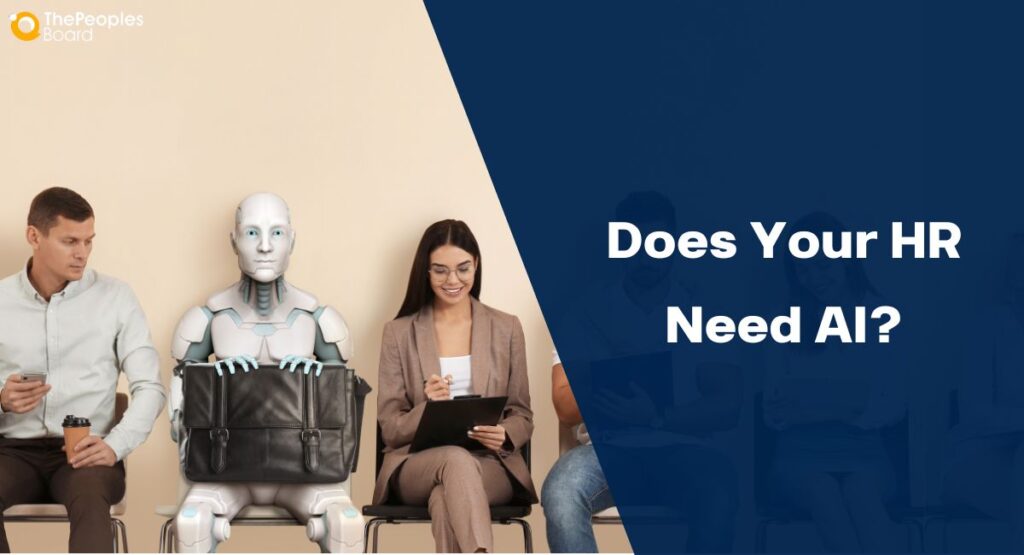
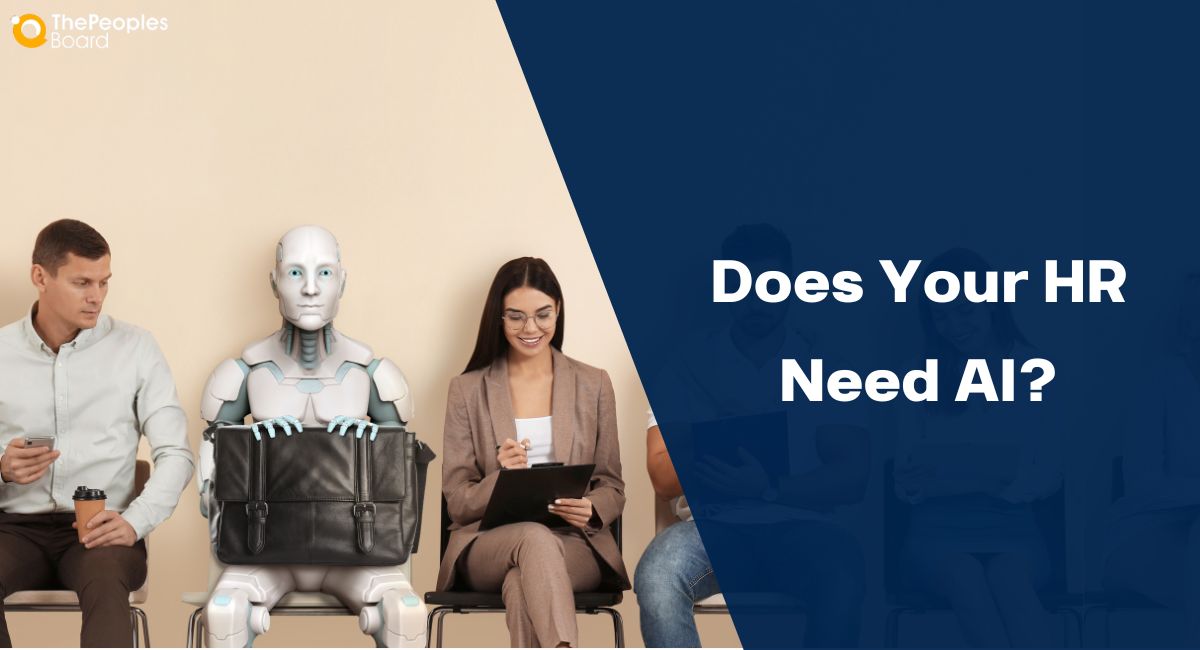

AI adoption in HR is no longer limited to large enterprises with deep budgets and dedicated tech teams. Mid-sized companies, fast-growing startups, and even traditional Indian businesses are now folding AI into everyday HR operations, often quietly and without much fanfare.
The real question for most HR leaders isn’t “Should we use AI?” anymore. It’s a more practical one: where is the team losing time, visibility, or efficiency, and which of those gaps can AI realistically close? Framing the decision this way moves it from a tech debate to an operations conversation.
A few misconceptions still get in the way. AI isn’t here to replace HR teams or make people redundant. The strongest implementations augment what HR already does well, take the busywork off the plate, and free up bandwidth for the parts of the job that actually need human judgment.
1. Your HR Team Is Buried in Repetitive Administrative Work
The signs are familiar. HR is manually screening resumes for hours, updating spreadsheets that nobody reads, and answering the same employee queries about leave balances and policy clauses week after week. The work gets done, but it eats into time that could go to higher-value priorities.
This is where AI delivers the fastest return. Workflow automation handles routine approvals and handoffs, HR chatbots field common employee questions instantly, and automated documentation and scheduling tools take care of the small administrative tasks that quietly consume the day.
2. Hiring Takes Too Long
When shortlisting drags, interview coordination slips, and good candidates drop off mid-process, the cost isn’t just one missed hire. It’s a steady erosion of employer brand and recruiter morale. Many HR teams know they’re slow, but feel powerless because application volume keeps climbing.
AI sourcing and matching tools surface relevant candidates faster, automated screening cuts through high-volume applications, and interview scheduling tools eliminate the back-and-forth that adds days to every hire. The combined effect is a hiring process that finally moves at the speed of the market.
3. Employees Wait Too Long for HR Support
If employees are waiting days for answers about leave, payroll, or policy, the HR inbox is overloaded, and employee experience scores are slipping, the function is operating in firefighting mode. Small queries pile up, urgent issues get buried, and trust in HR slowly erodes.
Self-service HR assistants resolve straightforward queries as soon as they’re asked. AI-powered knowledge bases give employees quick access to policy information without requiring a human in the loop, and ticket prioritisation systems ensure the questions that actually need HR attention reach the right person fast.
4. You Can’t Clearly Explain Why Employees Are Leaving
High attrition with unclear causes is one of the most uncomfortable problems in HR. Exit interviews yield inconsistent insights, managers react too late to disengagement, and leadership keeps asking questions that the function struggles to answer confidently.
Attrition prediction models identify flight risk early, sentiment analysis turns scattered feedback into clear signals, and trend identification across teams shows where the real problems sit. Instead of guessing, HR can point to specific patterns and intervene before another resignation lands on the desk.
5. Performance Reviews Feel Inconsistent or Biased
When different managers apply different standards, feedback quality varies wildly, and employees stop trusting evaluations, the review process is no longer doing its job. Worse, the data it produces becomes unreliable for downstream decisions on promotion, compensation, and succession.
AI provides structured review support that nudges managers toward clearer, more specific feedback. Performance trend analysis flags inconsistencies across teams, and bias detection tools highlight patterns in feedback language that managers themselves might not notice. The aim isn’t to automate judgment, but to make it more even-handed.
6. Learning & Development Feels Generic
Low training participation, one-size-fits-all programs, and employees who can’t articulate their growth path are all symptoms of an L&D function running on autopilot. The catalogue is full, but the relevance is thin, and engagement reflects that.
Personalised learning recommendations match content to each employee’s role, skills, and goals. Skill gap analysis shows where the workforce actually needs to grow, and AI-powered career pathing gives employees a clear sense of what comes next and how to get there. Participation usually follows when relevance does.
7. HR Decisions Depend More on Gut Feeling Than Data
If workforce analytics are limited, hiring and retention forecasts are best-guess exercises, and leadership routinely asks for insights HR can’t easily produce, the function is running on instinct. That works until the business scales or a board meeting demands real numbers.
Predictive analytics turns past data into forward-looking forecasts. Workforce planning dashboards give leaders a live view of headcount, costs, and skill distribution, and real-time HR reporting replaces the week-long scramble that used to precede every leadership review. The conversation shifts from opinions to evidence.
8. Managers Are Struggling to Handle Growing Teams
As teams expand, signs of burnout go unnoticed, visibility into engagement drops, and people-related decisions get delayed. Managers want to do right by their teams, but they don’t have the bandwidth or the tools to spot what’s happening across ten or fifteen direct reports.
Manager support tools surface the conversations and check-ins that need to happen. Employee sentiment tracking flags shifts in mood and engagement, and early warning systems catch burnout and disengagement before they turn into resignations. The manager isn’t replaced; they’re given a clearer view of their own team.
9. Compliance Tracking Is Becoming Difficult
Manual audit preparation, gaps in policy acknowledgements, and an ever-growing list of regulatory updates make compliance one of the most thankless parts of HR. Miss a step, and the consequences range from awkward to expensive. With India’s labour codes rolling out in phases, the load is only growing.
Automated compliance workflows track required actions and deadlines without manual chasing. Documentation monitoring flags missing or outdated records, and policy tracking systems ensure every employee has acknowledged what they need to. Audits stop being a quarterly panic.
10. HR Is Spending More Time Operating Than Strategising
When HR is constantly firefighting operational issues, there’s no real time left for culture work, workforce planning, or leadership initiatives. The function gets typecast as administrative, and a seat at the strategy table starts to feel out of reach.
AI shifts the balance. Automation of low-value tasks creates space, faster reporting and analysis make HR a credible partner in business conversations, and the team gets to focus on people strategy instead of process maintenance. That’s where HR’s real value sits, and it’s the work that finally gets visible.
In the End…
AI is most valuable in HR when teams are stretched, reactive, and data-poor. The signs are usually obvious once you look: too much manual work, slow hiring, frustrated employees, unclear attrition, inconsistent reviews, and decisions made without data. If three or four of those feel familiar, the case for AI is already in front of you.
The goal isn’t replacement. It’s augmentation. AI handles scale, pattern detection, and the repetitive work that drains HR teams, while people focus on the conversations, decisions, and judgment calls that genuinely need a human. The best implementations make HR more present, not less.
Successful adoption depends on three things: trust, transparency, and responsible implementation. Employees need to understand how AI is being used, leaders need to be honest about what the tools can and can’t do, and HR needs to set guardrails before rolling anything out. Get those right, and AI stops being a debate. It just becomes part of how the function works.
FAQs
How do I know if my HR team is ready for AI?
If your HR team is buried in repetitive admin work, struggling with slow hiring, unable to clearly explain attrition, or making people decisions without data, those are strong signals that AI can help. Most teams display three or four of these signs before they consider adoption, which is usually when the operational cost is already adding up.
Will AI replace HR professionals in India?
No. AI in HR is built to augment, not replace. It handles repetitive tasks like resume screening, query response, and report generation, which frees HR teams to focus on judgment-heavy work like culture, leadership conversations, and employee experience. The strongest implementations make HR more present in the business, not less.
What HR tasks can AI automate first?
The fastest wins come from resume screening, interview scheduling, answering common employee queries through chatbots, leave and policy automation, and basic HR reporting. These tasks are high-volume, rule-based, and consume disproportionate HR bandwidth, which makes them ideal entry points.
How long does it take to see results after adopting AI in HR?
Most teams see measurable impact within 3 to 6 months for routine automation use cases, such as faster hiring cycles and reduced query response time. Predictive use cases like attrition forecasting and workforce planning typically take 6 to 12 months because they require clean historical data.
Is AI in HR expensive for mid-sized Indian companies?
Not anymore. Many AI HR tools are now offered on subscription pricing with India-specific plans, and several HR tech vendors offer modular adoption, where companies start with one use case like recruitment or chatbots before expanding. Cost is rarely the real blocker now; readiness and change management are.
What are the risks of using AI in HR?
The main risks are bias in algorithmic decisions, data privacy concerns, and over-reliance on automated outputs without human review. These risks are manageable with clear governance: keep humans in the loop for high-stakes decisions, audit AI outputs regularly, and ensure employees understand how AI is being used.
Do Indian labour laws allow AI use in HR decisions?
Yes, Indian labour laws do not restrict AI use in HR, but recent guidance under the Digital Personal Data Protection Act, 2023 requires employers to disclose automated decision-making that significantly affects employees. With the new Labour Codes rolling out, HR teams using AI should ensure transparency, consent, and explainability are built into their processes.
Where should HR start if we want to adopt AI?
Start with one high-volume, low-risk use case, usually recruitment automation or an HR chatbot. Measure the impact for 90 days, build internal trust, and then expand into predictive use cases like attrition or workforce planning. Adoption fails most often when teams try to do too much at once.