

- AI continues to make headlines in India, as global tech giants invest heavily to build a future-ready workforce. But is India ready?
- Though AI has penetrated well into the workforce, clarity still lacks evidently. Amid such a scenario, HR to the CXOs is like what Krishna was to Arjun.
The enterprise-level adoption of artificial intelligence (AI) in the workplace emerged with high-voltage drama in India. From the fear of losing jobs to AI bots, to dealing with the skills gap for fair adoption, AI came with tidal changes in the Indian ecosystem.
However, as the debates slowly subsided, companies started investing in AI-related skill development and launching AI bots across functions. It is pertinent to note that major global tech giants, namely LTI Mindtree, Wipro, Microsoft, NTT Data Corporation and more, are reportedly looking at India as a key hub for AI talent.
Interestingly, recently, the Indian Ministry for Labour and Employment signed an MoU with tech major Microsoft. Under this agreement, the two sides will scale AI-led skilling and prepare India’s workforce for global opportunities.
Additionally, Microsoft has also joined hands with Wipro to lead the AI adoption in India. Under this initiative, more than 25,000 Wipro employees will get upskilled in Microsoft Cloud and GitHub technologies through focused training and certifications, creating an agile and AI-fluent workforce.
With such initiatives in process, the country seems to be slowly becoming a global AI talent and innovation hub.
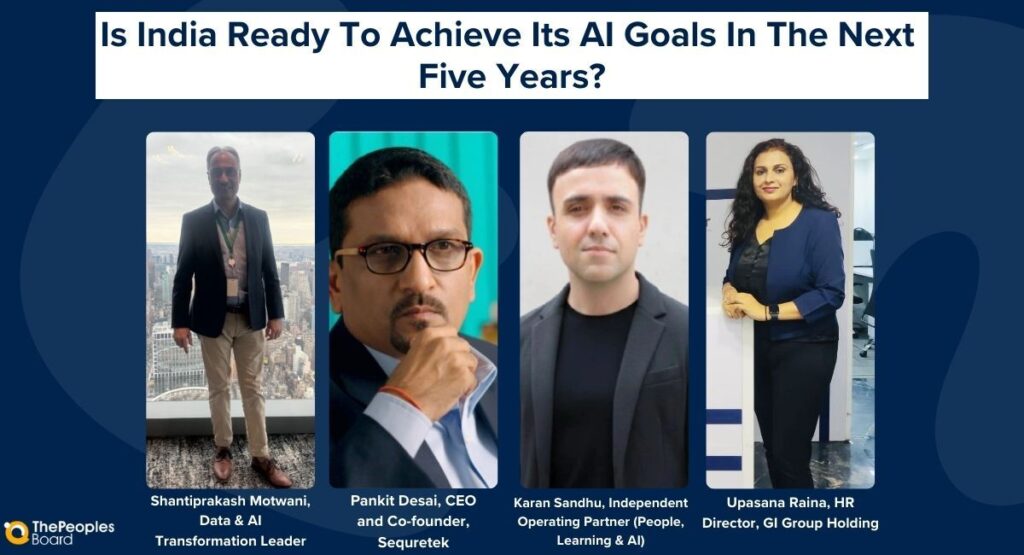
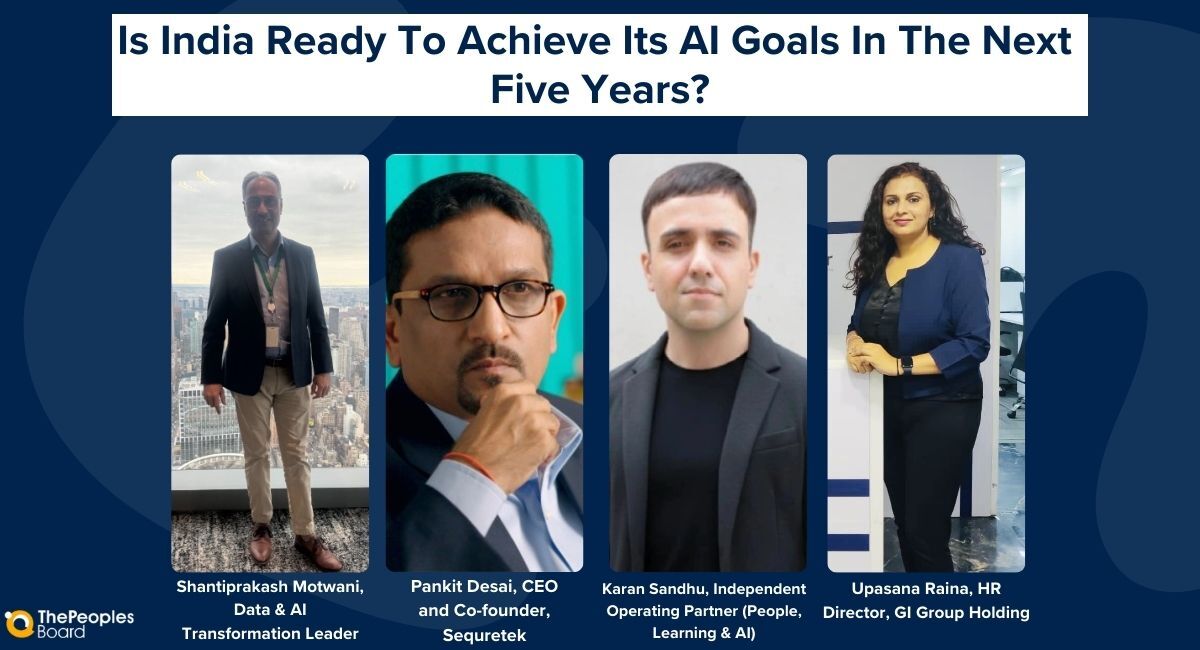
Shantiprakash Motwani, senior data and AI leader, highlighted, “In terms of AI skills, while the new roles like prompt / context engineers, knowledge graph specialists and AI Agent architects will emerge, some of the key roles existing in the industry like delivery managers, product managers, data engineers, full-stack developers and test engineers, will significantly evolve with AI.”
With the recent shift and inclination towards AI skills, India’s role in the global tech talent supply chain could be redefined. Under such circumstances, going ahead, jobs, skills, and the very nature of work will seemingly undergo a huge transformation. And, most importantly, at the centre of this shift will sit the HR leaders, tasked with preparing millions for an AI-first future.
What does that mean for India?
From outsourcing business operations to opening up GCCs and now working on AI skills, the Indian workforce has travelled a long way through the course of tech innovation. This evolution has now entered its next defining phase, where global organisations are no longer just leveraging India for scale, but are actively investing in the future-readiness of its talent.
In this direction, NTT Data Corporation recently announced that it will upskill all of its Indian workers with AI skills. The company has about 40,000 employees in the country.
While announcing the upskilling initiative, NTT Data Corporation’s Head of Global Generative AI, Kenji Motohashi, stated that to proceed with the plan, the company would leverage the country’s vast engineering talent pool to scale the GenAI capabilities for global growth.
This indicates that Indian engineers are no longer being viewed primarily as implementers of predefined systems, but as leaders in core global projects.
It also signals a shift in skill demand. The focus will move away from narrow technical execution toward higher-order capabilities, including:
- AI system design
- Prompt engineering
- Model governance
- Responsible AI
- Domain-specific AI application
This raises the bar for India’s talent ecosystem, pushing both professionals and employers to invest in deeper, more specialised AI skills.
But the bigger question is whether India is ready for it.
A recent study by KPMG found that 80% of private company CEOs in India are confident about their company’s growth prospects with an investment in AI. However, 38% of the CEOs marked that the future-skills gap between generations is one of the biggest barriers.
Such a skills gap may turn out to be a ‘bone in the throat’ for India’s AI plans.
“A lot of skills development has been ongoing in India around AI. But for a 2030 target, India isn’t there yet. To become an AI-ready workforce, role-based, deeper skill developments need to be initiated instead of going for the basics, which are easily accessible to all,” added Shantiprakash Motwani.
Aligning with the thought of more specialised skills, Karan Sandhu, Independent Operating Partner (People, Learning & AI) said, “Many companies and trainers are still beating around the bush. Once you are in a position to figure out what both internal and external stakeholders would like, you will be able to discover which area can be amplified by AI to at least meet or exceed the business needs. Depending on these needs, learning programmes need to be designed.”
So, how should HRs prepare for the future?
While the entire Indian workforce is hustling, HR leaders are at the epicentre of it. Drawing from Sandhu’s thoughts, designing the learning modules is a tricky business.
As time is short, ideally, HR leaders should be able to blend human judgment with AI-driven execution. But success comes only through rocky roads. Similarly, in a not-so-ready workforce, mass adoption comes with additional challenges, such as:
- Data and Governance
AI asks for datasets to function. In many Indian organisations, data sits in silos across departments, vendors, and legacy systems. This prevents AI pilots from scaling beyond isolated use cases and slows enterprise-wide adoption.
At the same time, privacy concerns and regulatory uncertainty make organisations cautious. With evolving data protection norms and unclear expectations around data localisation, accountability, and AI governance, companies often delay investments to avoid compliance risks.
Pankit Desai, CEO and Co-founder, Sequretek, said, “Bringing AI into your organisation offers benefits but introduces real cyber risks. Attackers may try to trick AI systems with prompt injection, leading to leaks or policy circumvention. Poorly secured APIs and weak permissions can expose sensitive data or systems. Third-party AI tools, if compromised, may introduce hidden threats.”
He suggested that it is important to monitor the outputs for odd behaviour and use AI “firewalls” to vet requests and responses
“Add human oversight for sensitive scenarios. Always vet third-party AI code, data, or models. Automated anomaly detection and comprehensive logging help respond swiftly to new threats. As your company explores AI, regularly assess each new connection and dependency—staying alert is essential to avoid security gaps,” Desai added.
In regulated sectors especially, the lack of clear guardrails leads to conservative deployment decisions, slowing India’s ability to move from AI experimentation to widespread, confident adoption.
- Workforce anxiety
The fear of job loss among employees, to AI bots is sadly real. Pertaining to this, they often disengage from reskilling initiatives and refrain from working with AI tools. This resistance shows up as low adoption, shadow workflows, and scepticism toward change, ultimately reducing the impact and speed of AI deployment.
This is a major cultural barrier that HR needs to address to prepare the workforce for the future.
Key Remedies to Stay on Track
To convert ambition into impact, India will need a coordinated approach across industry, government, and academia. Though AI has penetrated well into the workforce, clarity still lacks evidently. Amid such a scenario, HR to the CXOs is like what Krishna was to Arjun.
The challenges to overcome the hurdles may be multi-layered, but indicating some of the basic constraints, Upasana Raina, HR Director, GI Group Holding, said, “Fear of job displacement and lack of AI readiness can reduce engagement and productivity.”
She further added that HR can overcome these challenges through proactive change management, transparent communication, and by positioning AI as an augmentation tool rather than a replacement.
“Investing in continuous, role-based learning, partnering with external institutions, and embedding ethical AI governance into HR policies can mitigate risks. By promoting a growth mindset and inclusive skill development, HR can ensure a smooth transition toward an AI-ready workforce while maintaining trust and fairness,” Raina added.
Like the rest of the workforce, HR leaders are new to AI as well. They are learning as they design the modules. So, to develop a workforce with sound AI skills, they also need support.
The Indian Readiness For The Future
Businesses have robust plans around AI in India. Recently, LTIMindtree announced that it has deployed about 1,500 artificial intelligence (AI) powered ‘digital employees’ or agents across functions such as finance, infra operations, and customer service.
However, as the industry experts indicate, India is yet to mature in the application of AI at a large scale. Being one of the few countries with a higher youth population ratio, if fostered well, India may be the new hub for global AI talent.
This will position the country not just as a place where technology is executed, but where AI systems are architected, tested, and scaled.
But a strong base of understanding the desired business outputs to map the skills accordingly is the first stepping stone. This shift would enable startups and established companies alike to develop AI solutions that address both domestic needs and global challenges.



