
What are two major factors driving job transitions in India?
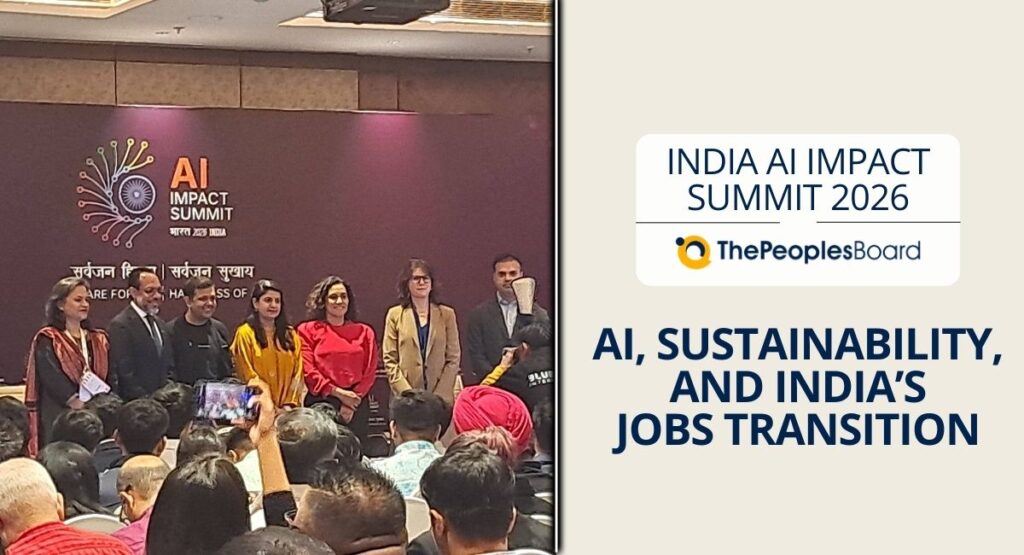
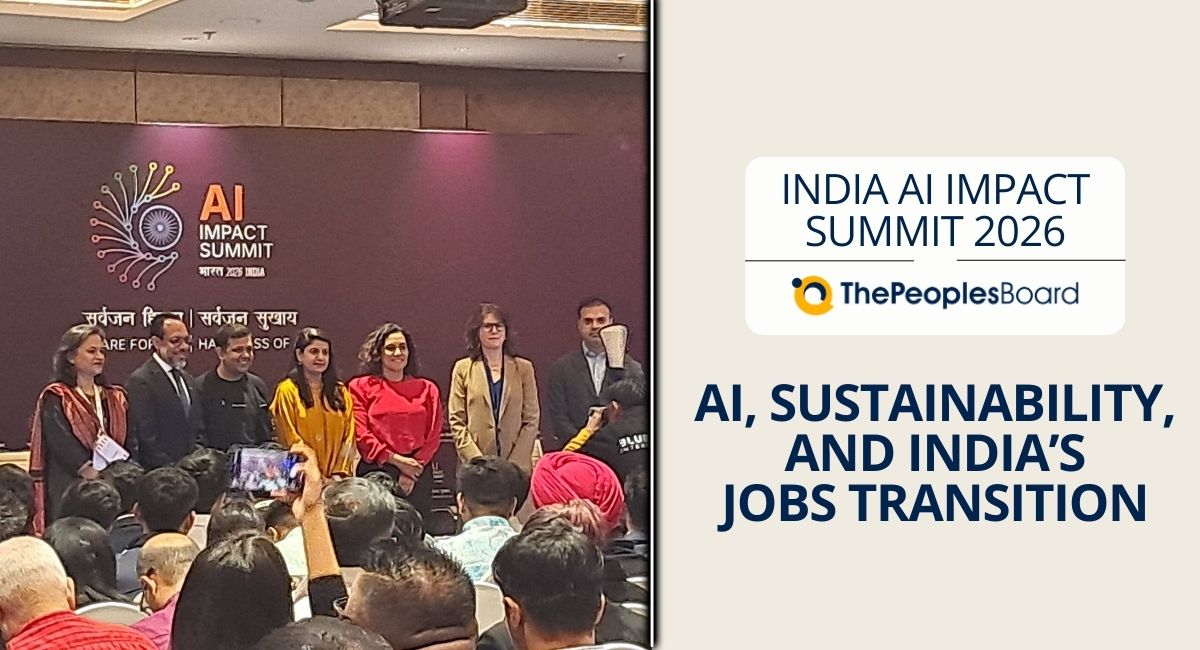
As per Aditi Jha of LinkedIn India, it’s both Climate Change and the AI Revolution. The “Reskilling for Tomorrow: AI, Sustainability, and India’s Jobs Transition” session discussed the growing need for green skills and the imperative of reskilling for learners of today to live in the world of tomorrow.
Where many industries are wondering whether skills are keeping pace with technology and other changes, the green industry is in high demand. Jha pointed at LinkedIn data to highlight how:
- Green hiring is growing at over twice the rate of green skill growth
- Green skills are becoming core business skills
- People with green skills are being hired way faster than those without
She highlighted this growth in green skills demand and the skilling to illustrate what can happen when skills and policies align. With data electricity growing by 12% since 2017, Jha emphasised the resource implications of AI use.
But how can AI be used for sustainability? By taking its help to optimise efficiency, thereby increasing energy savings. To create a future workforce that won’t be divided between tech and climate, the training systems today need to align with the growing green needs.
In the panel moderated by Dr Arunabha Ghosh from the Council on Energy, Environment and Water (CEEW), the topic of reskilling with sustainability and people in mind was further discussed. Nirmit Parikh from Apna Jobs and Bluemachines AI remained firm that with AI being deployed across sectors, the technology is solving the coverage problem by acting as a multiplier.
Pragya Misra, Head of Strategy and Global Affairs for OpenAI in India, added that OpenAI’s aim is to benefit humanity through AI. She emphasised that AI should not be built for India but with India. What AI can do is transformational, breaking language barriers in the future. They help distribute support and information across all geographies in India, explained Misra
JustJobs Network’s Sabina Dewan warned about the possible implications of the pace and change in skills that AI is bringing, noting that we are not prepared for it, especially our educational institutions.
Dr Claire Melamed from the UN Foundation took the point further, highlighting that job transition data often focuses on the macro level, failing to account for how individual lives are changing. Most data focuses on young people and how innovation will help them. We need to take into account the cost of transition, she explained, along with its benefits.
While discussing migration, Dewan also pointed out that people make job decisions locally, but conversations about AI job transitions are not happening locally. If even a small number of formal jobs are affected and become fewer, it impacts all.