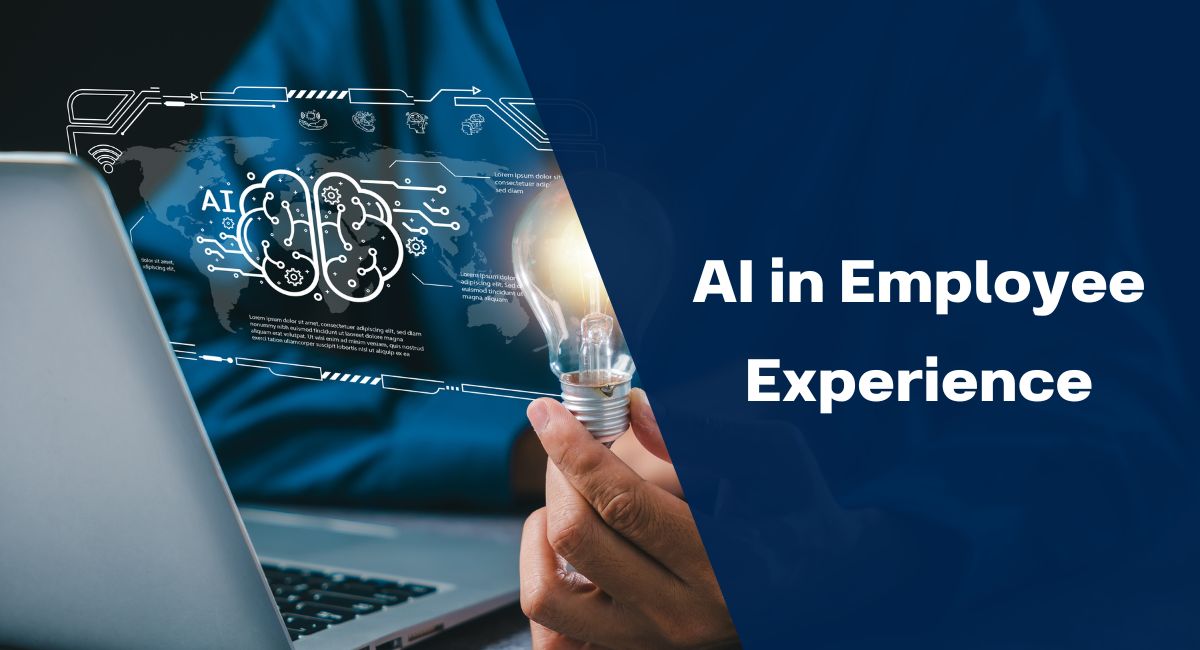

Globally, 44% of HR teams use AI-based sentiment analysis tools to measure employee morale in real time. The numbers mark a genuine shift in how organisations think about employee listening, from periodic surveys and focus groups to always-on, AI-powered feedback intelligence.
The question at the centre of this shift isn’t whether AI belongs in employee listening. It clearly has a role. The more useful question is: what does AI do well, what does it miss, and what does that mean for how Indian organisations design their listening strategies?
Getting that distinction right is what separates teams that use AI to improve culture from those that use it to generate reports that no one acts on.
What AI-Driven Employee Listening Actually Means Today
AI-driven employee listening refers to the use of artificial intelligence, primarily natural language processing (NLP) and predictive analytics, to continuously collect, interpret, and act on employee feedback, rather than at fixed survey intervals. The category includes sentiment analysis, pulse surveys, and attrition prediction, each addressing a different dimension of how employees feel at work.
Sentiment Analysis Engines
Sentiment analysis tools use NLP to analyse text responses from pulse surveys, performance reviews, and communication platforms such as Slack or Microsoft Teams, where data collection is enabled.
The output is typically a dashboard that surfaces themes, flags shifts in tone, and identifies teams or functions where sentiment is declining. What used to take an HR analyst several days to process manually can now be completed in minutes, at any scale.
Pulse Surveys and Always-On Feedback
Annual engagement surveys have increasingly given way to weekly or monthly pulse checks. These shorter, lower-friction feedback loops generate rolling data across the employee lifecycle.
Employee listening has evolved from annual census surveys to continuous feedback ecosystems that capture sentiment at critical moments, such as during onboarding, after a reorganisation, or following a leadership change. AI identifies recurring themes faster than a human team can, surfacing patterns that might otherwise take a quarter to emerge.
Attrition Prediction Models
According to Deloitte’s 2024 HR Tech report, companies using AI-driven employee sentiment analysis platforms can spot disengagement up to 40% faster than those relying on manual reviews.
Attrition prediction models draw on signals like engagement score trends, manager feedback frequency, internal mobility patterns, and productivity data to assign a flight risk score to individual employees. The intent is to shift retention from reactive to proactive, enabling HR teams to intervene before an employee decides to leave.
Why Organisations Are Investing in AI Listening
The business case for AI listening in India is rooted in a real and pressing challenge: understanding why employees are leaving, when salary hikes are clearly no longer sufficient on their own.
The Retention Reality
According to the foundit Appraisal Trends Report 2025, 86% of Indian professionals plan to change jobs, even though 74% received salary increments in the FY24–25 cycle. Even among employees who received 20% or more in raises, the intent-to-switch figure held at 86%.
The signal is consistent: compensation is necessary, but no longer sufficient. Organisations need to understand what employees actually want, and AI listening is one of the tools being deployed to find out.
India’s overall attrition rate has been declining steadily, falling from 18.7% in 2023 to 16.2% in 2025, the lowest in five years, according to Aon’s Annual Salary Increase and Turnover Survey. However, the sector-level gaps remain wide. E-commerce sits at 28.7%, IT averages around 25%, and professional services at 25.7%. For HR leaders in these sectors, better listening tools have a direct bottom-line case.
The AI Adoption Context
India’s workforce is among the most enthusiastic adopters of AI-powered tools globally. According to the EY 2025 Work Reimagined Survey, 62% of Indian employees use GenAI at work regularly. With this, India leads the global ‘AI Advantage’ index with a score of 53 against a global average of 34. 86% of Indian employees say AI positively impacts their productivity.
Similarly, A Deloitte survey across Asia Pacific found that 83% of Indian employees actively engage with GenAI, the highest rate across 13 countries surveyed. This context matters specifically for AI listening.
Employees at most mid-to-large Indian organisations already interact regularly with AI-mediated systems. The cultural friction around AI-powered feedback tools is, in many cases, lower in India than in markets with slower adoption curves.
The Scale Argument
For an HR function operating across large, geographically distributed workforces, manually reading and interpreting continuous feedback at scale isn’t feasible. Infosys, TCS, Wipro, and thousands of mid-sized Indian companies employ people across multiple cities and time zones.
AI-powered tools reduce HR workload in feedback analysis by up to 50%, allowing teams to redirect time from processing to action. That efficiency argument is real, and it’s part of why investment in these tools is accelerating.
Where AI Works Well in Employee Listening
In several specific applications, AI-powered listening delivers capabilities that traditional methods can’t match, particularly around scale, speed, and pattern detection.
Pattern Recognition at Scale
When a company runs a survey with 10,000 open-ended responses, AI processes all of them. It can identify the teams consistently using language associated with unclear direction. It can also flag if complaints about a specific type of issue are rising in a particular geography.
AI can also find correlations between early burnout signals and specific functions, team sizes, or tenure ranges. These are the kinds of quiet structural patterns that only become legible at scale, and scale is precisely what AI enables.
Speed and Frequency of Insight
Real-time dashboards replace quarterly reports. If a restructure triggers a shift in sentiment within a team in Bengaluru, an AI system can surface that signal within days. Timing matters: an HR intervention at the moment of distress lands differently from one launched six weeks later, after the quarterly review is compiled.
Leaders can now access real-time dashboards showing engagement trends, turnover risk scores, and sentiment analysis, rather than waiting for static reports delivered after surveys close.
Surfacing What Isn’t Being Asked
AI can also identify trends that organisations wouldn’t think to look for, correlations between internal mobility gaps and flight risk, for instance, or a pattern where team size predicts recognition scores.
These hidden signals sit in the data but require AI to make them visible. That early-warning function is arguably where listening tools create the most value: not confirming what HR already suspects, but flagging what they haven’t yet considered.
Where AI Has Limitations
Understanding what AI listening doesn’t do well is equally important for designing a strategy around it. Knowing where the technology might fail allows the company to have failsafes that can compensate for these limitations.
The Signal vs. Meaning Gap
AI reliably detects what is being expressed. The gap is in understanding why. Sarcasm, irony, cultural indirectness, and contextual cues all present challenges for NLP models.
An employee who writes “management here is really something else” could be expressing admiration or quiet frustration. In such a case, the model’s interpretation will be shaped by its training data, which in most cases reflects Western, English-language communication patterns.
The signal-versus-meaning gap is particularly relevant to anything nuanced: ambivalent responses, diplomatically worded criticism, and feedback softened by context. AI reads the words. Meaning often lives in what’s around them.
Disengagement That Doesn’t Surface in Data
Some forms of disengagement are invisible to algorithmic systems, particularly what practitioners have begun to call “quiet cracking.”
Employees in this state show up, perform adequately, give unremarkable survey responses, and are preparing to leave internally. Productivity metrics haven’t moved. Pulse survey scores are neutral. The data doesn’t flag a problem. But in three months, a resignation arrives.
The emotional fatigue that precedes this state rarely announces itself in a feedback loop. It tends to live in conversations, body language, and the kind of contextual information a manager picks up, not in text responses to a five-point scale.
Absence of Organisational Context
AI models don’t carry institutional memory. They have no knowledge of the reorganisation that happened 18 months ago, the collective grievance from a pay freeze, or the loss of a trusted senior leader that shifted team cohesion.
Data interpreted without organisational history can produce technically accurate outputs that are contextually misleading. Patterns that look like one thing but mean something entirely different.
The India-Specific Context: Culture and Communication Norms
Several characteristics of Indian workplace communication create specific considerations for AI listening tools, considerations that don’t automatically apply in markets where these tools were originally designed.
High-Context Communication
Indian workplace culture tends toward high-context communication: feedback is often softened, hierarchy shapes what gets said and how, and conflict is typically expressed indirectly rather than stated plainly.
An employee with genuine concerns about a manager may rate that manager as “adequate” on a five-point scale, not because they lack an opinion, but because the cultural and professional norms around direct criticism are different.
A 2025 IDC Data and AI Impact Report found that despite India’s high GenAI adoption rates, Indian organisations have, on average, 8% less trust in GenAI than the global average. That trust gap shapes how candidly employees engage with AI-mediated feedback systems, and lower candour means lower signal quality.
Survey Response Patterns
When employees are uncertain about how feedback will be used or whether it will actually remain anonymous, the responses tend toward the neutral. This isn’t unique to India, but it interacts with cultural communication norms in ways that can systematically affect data quality.
AI systems trained primarily on Western datasets may interpret the absence of strongly negative feedback as broadly positive sentiment, when in fact it reflects something more complex.
Training Data Considerations
Most major AI listening platforms were built on English-language, Western-context data. When these models process the hedged, context-layered communication patterns common across India’s linguistic and regional diversity, they’re working with a less reliable reference frame. This doesn’t make the tools unusable, but it does make calibration and human interpretation more important, not less.
The Objectivity Question
One of the more persistent assumptions in AI-powered HR is that algorithmic outputs are, by definition, more objective than human judgment. The reality is more complicated. AI systems carry the biases of the data they were built on, and the dashboard that feels neutral is still a product of choices made during model design, training, and deployment.
Bias in Training Data
AI models reflect the data they were trained on. AI bias in HR algorithms has been detected in 36% of systems tested, spanning language bias, cultural bias, and historical patterns inherited from prior HR data.
“It’s crucial to remember that AI itself isn’t immune to bias. If the data used to train AI models is skewed, such as historical hiring patterns or performance reviews, it can unintentionally reinforce those biases,” Anjan Pathak, CTO and Co-founder of Vantage Circle.
78% of employees globally expect transparency in AI-driven HR decisions, a standard that most organisations have yet to articulate clearly, let alone meet. Employee listening systems are not exempt from this challenge, and treating their outputs as neutral is a methodological risk.
The Complementarity Question
A more structural consideration: as AI dashboards become more accessible, there’s a natural tendency to consult them more and schedule human conversations less. The dashboard answer is faster, always available, and feels objective.
The risk isn’t that AI listening is unreliable; it’s that it becomes a substitute for the qualitative conversations it was designed to inform. Data can identify where to look. It can’t replace what’s found by actually looking.
Privacy, Trust, and Employee Perception
How employees perceive an AI listening programme shapes its effectiveness. A tool that employees trust produces candid data. One they’re suspicious of produces carefully managed responses, which is, in many ways, worse than no data at all.
This perception dynamic is especially relevant in India, where workplace stress is already elevated, and the line between organisational listening and individual monitoring isn’t always clearly drawn.
The Monitoring Perception
When AI tools scan communication platform data, analyse writing patterns, and flag individual employees as flight risks based on behavioural signals, employees have a legitimate question about the scope of what’s being collected.
The line between structured listening and ambient monitoring can be unclear — and employee perception of that line affects how honestly they engage with feedback programmes.
Research consistently links high-surveillance environments to elevated stress: employees in high-surveillance settings report stress levels of 45%, compared to 28% in low-surveillance settings. This dynamic is relevant for AI listening design. tools that feel like monitoring can reduce the candour they’re intended to capture.
Regulatory Context
India’s Digital Personal Data Protection Act, 2023, establishes a framework for the collection, processing, and use of personal workplace data.
For organisations deploying AI listening tools that interact with employee communications or behavioural data, understanding the Act’s implications and communicating clearly to employees about what is and isn’t being collected is both a compliance and a trust consideration.
Balancing regulations and ethics with sentiment analysis requires transparency about surveillance, open communication, and an understanding of the realities of the world and of privacy.
Attrition Prediction: Capabilities and Cautions
In the age of AI, predicting attrition is one of the key advantages that a company can bank on. Employee churn prediction models powered by AI have helped reduce voluntary turnover by up to 18% when implemented effectively.
As per Salarybox, replacing an employee in India can cost between 40% of the annual salary for frontline roles and 200% for managerial and specialised positions, making reducing attrition a priority for companies.
That said, attrition models have limits in the explanatory layer. A model can flag elevated flight risk. It typically cannot distinguish between an employee who’s leaving because of career stagnation and one whose personal circumstances have changed, or one whose single unresolved grievance would take a short manager conversation to address.
In other words, though the prediction is often accurate, the interpretation still requires human judgment.
Data released by Astrotalk in December 2025 revealed that career-related anxiety rose by 50% in 2025. “Is AI going to take my job?” was apparently the single most common question on the platform.
In environments where employees are already anxious about AI’s role in performance evaluation, the introduction of AI monitoring tools, if not clearly communicated, can increase rather than reduce the underlying disengagement that the tools are trying to surface.
Designing an Effective AI Listening Strategy
Knowing what AI listening does well and where it falls short is only useful if it informs how organisations actually build their programmes.
The gap between companies that get real value from these tools and those that generate dashboards no one acts on usually comes down to a few design decisions, around the role AI plays relative to human judgment, how listening channels are combined, and how transparently the programme is communicated to employees.
AI as a Signal Layer, Not a Conclusions Layer
The organisations getting the most value from AI listening are those that treat it as a first layer of signal, not a final layer of conclusions. AI identifies where to direct human attention: which teams are showing early signs of stress, which themes are rising within a particular function, and where the engagement trend line has shifted.
What those signals actually mean is determined through human conversation, manager check-ins, skip-level discussions, and stay interviews.
Combining Listening Channels
Effective listening strategies in 2025 combine quantitative signals from AI tools with qualitative input from structured conversations, one-on-ones, focus groups, exit interviews, and stay interviews. India’s EY Talent Health score of 82, the highest across 29 markets globally, is anchored in culture, trust, and empowerment, not in data infrastructure alone. That score is a useful reminder of where engagement actually originates.
Transparency as a Design Principle
How AI listening tools are introduced and communicated directly affects their effectiveness. Employees who understand what’s being collected, how it will be used, and what protections are in place tend to engage more honestly with feedback channels. Transparency here isn’t just good governance, it’s a precondition for useful data.
The Manager’s Role
Managers remain the primary listening infrastructure in any organisation. No AI system replaces the relational context built in a one-on-one, the reading of a team before a difficult announcement, or the judgment call about when a struggling employee needs development support versus a different kind of conversation. AI listening tools work best when they’re informing and equipping managers, not working around them.
In the End…
AI has a genuine and growing role in employee listening. The tools available in 2025 offer real capabilities: scale, speed, pattern detection, and early warning signals that were simply not accessible through traditional survey methods. For Indian organisations managing large, distributed, and highly mobile workforces, those capabilities have clear practical value.
The more useful question isn’t whether to use AI in listening, but how to use it well. What AI measures with increasing precision is the pattern of what employees express. What it can’t yet reliably provide is the why behind those patterns, the organisational context, the cultural nuance, and the individual circumstances that turn a data point into a decision.
The combination that works is AI for breadth and speed, and human judgment for depth and meaning. The signal is in the data. The understanding is in the following conversation.
If employees feel safe enough to be honest, AI listening becomes genuinely powerful. If they don’t, more sophisticated tools don’t close that gap; only trust does.
FAQs
What is AI-driven employee listening?
AI-driven employee listening uses natural language processing and predictive analytics to continuously collect, interpret, and act on employee feedback from surveys, performance reviews, and workplace communication platforms, rather than relying on periodic annual surveys.
How accurate is AI in measuring employee sentiment?
AI is accurate at detecting patterns and shifts in what employees express, but has limitations in interpreting sarcasm, cultural indirectness, and hedged feedback. Studies show AI bias in 36% of HR systems tested, meaning human interpretation remains essential for reliable outcomes.
Can AI predict employee attrition?
Yes. AI attrition prediction models use engagement trends, manager feedback frequency, internal mobility, and productivity signals to assign flight risk scores. When implemented well, these models have helped reduce voluntary turnover by up to 18%.
What are the limitations of AI in employee listening for Indian workplaces?
Indian workplace communication tends to be high-context, with feedback often softened by hierarchy and indirectness. AI tools trained on Western datasets may misread neutral or diplomatic responses as positive sentiment, reducing signal quality unless calibrated for local nuance.
Is AI employee listening legal in India?
AI listening programmes must comply with India’s Digital Personal Data Protection Act, 2023, which governs the collection and processing of personal workplace data. Organisations must communicate clearly to employees about what data is collected and how it’s used.
Does AI replace HR managers in employee engagement?
No. AI works best as a signal layer that identifies where to direct human attention. Managers remain the primary listening infrastructure, providing the organisational context, relational judgment, and qualitative interpretation that AI dashboards cannot.