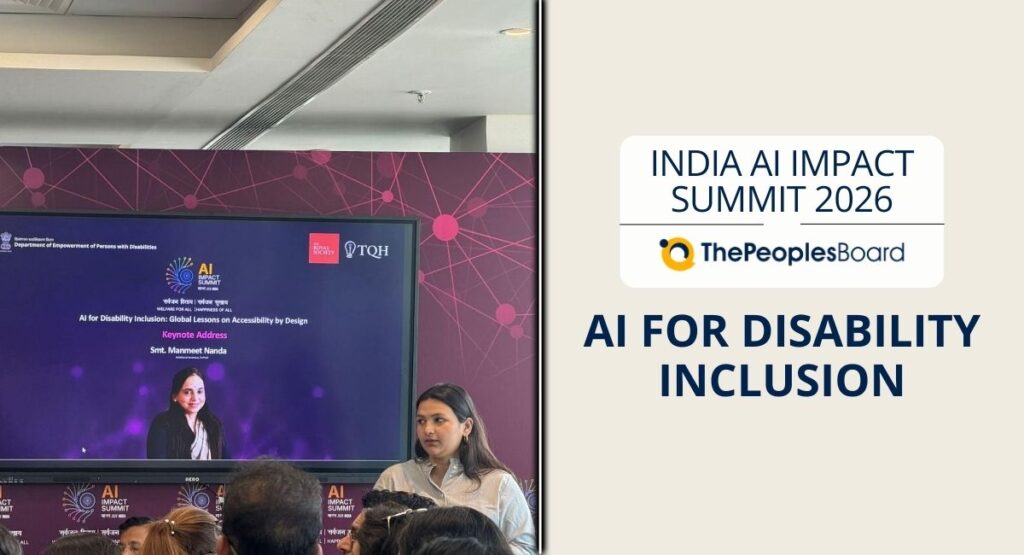
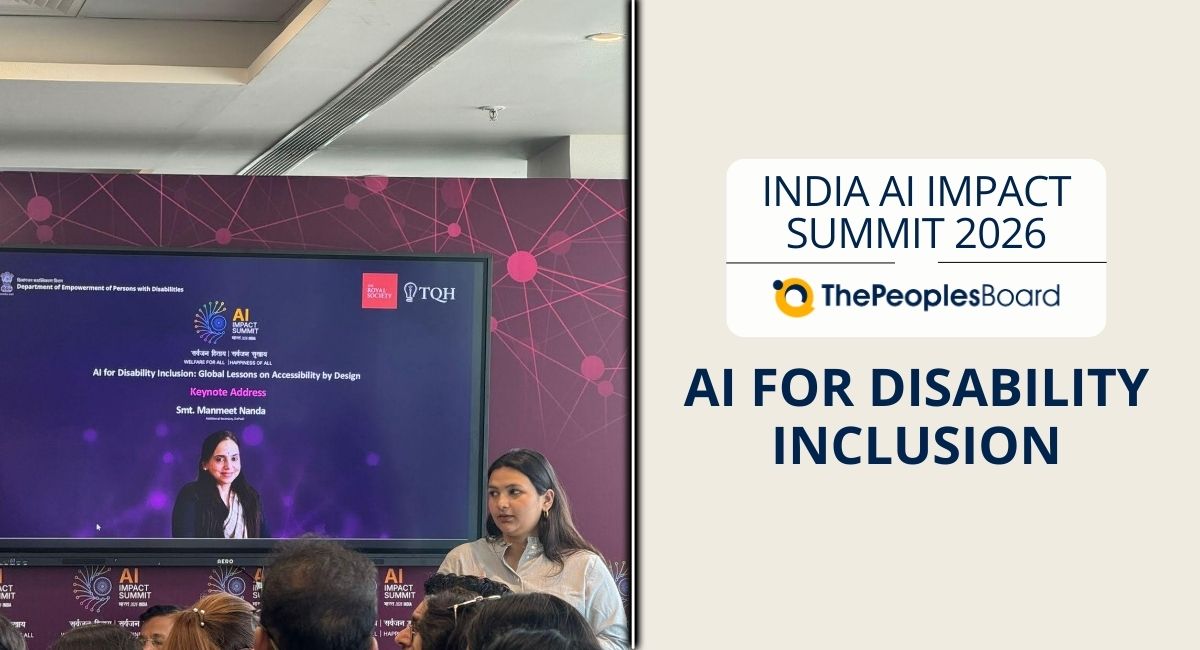

“AI for Disability Inclusion: Global Lessons on Accessibility by Design” was a session that shed light on the different stages of life and learning where disability accessibility and inclusion are needed.
This talk of accessibility, as per Manmeet Nanda from the Government of India’s Department of disability, becomes even more imperative when even statistics become hard to acknowledge due to the obvious disparity.
She especially mentioned how the World Health Organisation (WHO) claims that India is home to about 200 million Persons with Disability (PwDs). India’s latest numbers on the matter, which date back to the 2011 census, put the Indian PwD population at about 2.68 million people.
What remains undisputed is the need for assistive technology for PwDs, especially in workplaces and educational institutions. While AI is perhaps set to revolutionise how assistive technology works, there is also the concern that algorithmic exclusion may lead to “automating the discrimination.”
This is why, in her address, Nanda emphasised the need for creating guidelines that are both enforceable and acceptable. She also highlighted how assistive technology needs to be standardised to make it affordable for all.
Royal Society’s Work for PwD
The session included a presentation from Professor Alison Noble, The Royal Society (UK), who talked about the continuing barriers for PwD inclusion, including cost, availability, and lack of trained assistors, among other issues.
This is where she emphasised the need for including PwDs in the creation of assistive technology to make it truly usable.
Include, Access, and Improve, these are the three principles that The Royal Society believe is necessary for creating technology that can truly elevate the options available to PwDs.
For this, Noble recommended to
- Transform disability data collection
- Recognise smartphones as assistive technology
- Embed co-design from day one.
“The less I notice the assistive technology, the better,” said one PwD user from the UK. For this, designing with the disabled people remains the key.
Transformation in Assistive Tech
How far has assistive technology come in recent years? Dr Andrew Fleming, British Deputy High Commissioner to Kolkata, explained how, in the 70s, when he was in classrooms, his Dyslexia and Dyspraxia had remained undiagnosed and hampered his learned.
But now, he emphasised, his son, who has Dyslexia and ADHD, can use AI-based assistive technology that has helped boost his independence, confidence, and reading comprehension.
Meta’s Agustya Mehta, who has helped create several AI-based assistive tech, emphasised that the best way to build accessible technology is by doing so with those who will actually use it.
Talking about the possible bias in the training data, he agreed that a model is only as good as its training data, which he believes will motivate the builders to remove bias from the training data. He also believes that there is an economic incentive attached for companies to reduce the bias in their training data.
With tech made to keep PwDs’ needs in mind, working experience can transform and allow their skills to shine through. Amar Jain, a visually impaired lawyer, shared how AI has helped with Information Access and Environmental Access.
That said, Jain acknowledged that the lack of an inclusive technology dataset has hampered accessibility in the past, referring to how eKYC technology initially did not work for people with visual disability, prompting him to raise the issue with the Supreme Court.
The government is also using technology to help PwDs, emphasised Mr Tukharam Mundhe, Ministry of Disability, Maharashtra. He talked about the Divyagan Sahay portal launched by the Maharashtra government, providing end-to-end solutions to PwDs
Minister Mundhe shared how, since November 7, 2025, the portal has received 5,000 grievances, mostly pertaining to discrimination and lack of accessibility in services. These grievances, he stated, have been dealt with at a swift pace of 5 days
On the topic of employability of PwDs, Mehta stated that while the common narrative is that AI will automate every job and will reduce jobs, he thinks AI will actually help many people participate in the job market.
AI, Mehta emphasised, will help break down artificial barriers that have held people back previously who have always wanted to work but haven’t been able to due to said barriers
To promote further inclusion of PwDs in all spheres, especially the private sector, The Accessibility Coalition (TAC) was launched. TAC is a group of disability organisations dedicated to promoting inclusivity across sectors and geographies in India.