
Independence Day invites a familiar reflection on the freedoms a nation has won. Yet the freedoms that shape daily life increasingly play out somewhere less ceremonial: the desk, the shop floor, the video call that runs past 8 PM. For a working population that spends the bulk of its waking hours on the job, the question of what liberty means at work has quietly become as pressing as any constitutional one.
The idea has moved a long way from its earlier meaning. Workplace freedom in 2026 is rarely about simply holding a job or drawing a wage. Employees now want autonomy over how they work, the safety to speak without penalty, fair access to growth, and the ability to switch off after hours. Employers, meanwhile, have to weigh those expectations against output, accountability, and cost. The tension between the two is where the real definition is being written.
From Economic Freedom to Workplace Freedom
Freedom at work used to mean access to work at all. For decades after Independence, the achievement was employment itself, a formal job with a fixed wage in an economy where those were scarce. Liberalisation, the software boom, and the arrival of global capability centres changed the arithmetic, and the workforce that emerged began to ask for more than a paycheque.
That shift shows up in the numbers. India’s labour force participation rate for people aged 15 and above stood at 59.3% in 2025, with female participation at 40.0%, according to the Periodic Labour Force Survey. The same survey records that 44.4% of women outside the labour force cite childcare and home-making as the reason, a reminder that access to work and freedom within it remain unevenly distributed. Getting more people into jobs is one project; giving them agency once they are there is another.
“The meaning of workplace freedom has evolved significantly over the years. In today’s dynamic and diverse workplace, it is less about flexibility alone and more about creating an environment where organisations and people continuously evolve together,” states Hetal Bhatt Shah, who has led people transformation across business turnaround, hypergrowth, and scale-up environments.
That framing moves the conversation past perks and toward a mutual relationship, where the employer builds the conditions for growth, and the employee brings ownership to meet them. Workplace freedom has evolved from having access to employment to having agency inside it.
The Pillars of Workplace Freedom
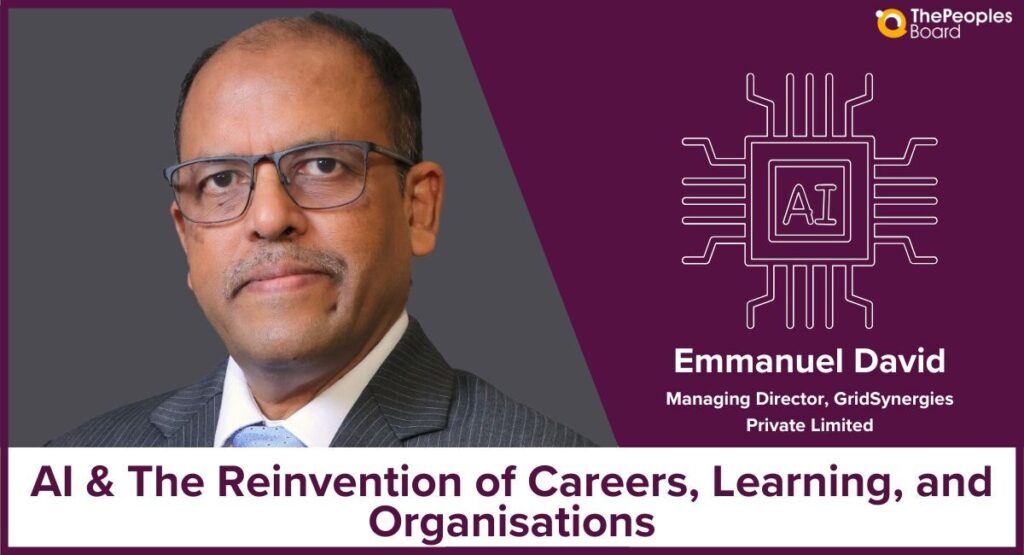
Freedom at work is not a single thing but a cluster of related expectations, each with its own logic and its own friction points. Before breaking them apart, it helps to fix what they share, because the pillars below all rest on the same foundation. Mukund Sagar, talking about leadership for the next generation of managers, locates that foundation in a single idea.
“True freedom in our offices and factories is not a matter of letting everyone do exactly as they please. Heaven forbid! That would be chaos. No, real freedom is something far more beautiful. It is the presence of absolute clarity and deep, heartfelt trust,” Mukund explains.
Autonomy without clarity becomes chaos, and clarity without trust becomes surveillance; the pillars work only when both hold at once. The dimensions below overlap in practice, yet separating them shows where Indian organisations have moved forward and where they still stall. Each also carries a live debate that HR leaders are being asked to settle.
Freedom to Choose
Choice over how and where work happens has shifted from a perk to a baseline expectation. Employees now assess flexible arrangements, internal mobility, and skills-based paths as core to whether a job is worth taking, not as bonuses layered on top of pay.
The open question for HR is whether flexibility has now become an entitlement that employers cannot claw back, even as several large employers push for a fuller return to office. Once a freedom is granted, taking it away reads as a demotion, whatever the business case. Readers weighing this can explore how flexible work arrangements are defined and structured in practice.
Freedom to Speak
The freedom to disagree without fear is what separates a healthy culture from a compliant one. Psychological safety, whistleblower protection, and a genuine feedback culture determine whether employees raise problems early or stay quiet until those problems become crises.
As per Hetal, “Organisations have the responsibility to create an environment where people feel trusted, included, and empowered to contribute beyond their defined roles. Equally, employees have a responsibility to embrace continuous learning, adaptability, and ownership as business priorities continue to evolve.”
The freedom to speak, in other words, is only real when both the invitation and the response are genuine. A workplace that asks for candour but punishes it teaches employees to stay silent faster than any policy can teach them to speak.
Freedom to Work Without Fear
No other freedom holds if an employee does not feel physically and psychologically safe at work. Protection from harassment and discrimination, and a reporting mechanism people actually trust, form the floor on which every other expectation rests. India codified much of this floor through the Sexual Harassment of Women at Workplace (Prevention, Prohibition and Redressal) Act, 2013, widely known as the POSH Act.
Compliance on paper, though, is not the same as safety in practice. Internal Committees exist across most large employers, yet under-reporting remains common, and the gap between a policy and a culture of dignity is where HR earns its keep. Extending that dignity beyond gender to caste, disability, and other lines of difference is the unfinished part of the work. Freedom here means an employee can report a violation and expect to be believed and protected, not managed out.
Freedom to Disconnect
The right to switch off has become the most contested freedom of the digital workplace. Always-on messaging, hybrid schedules that blur home and office, and the expectation of instant replies have made burnout a structural problem rather than an individual failing. The debate over whether disconnecting should be a legal right or an organisational choice is now live in Parliament through the Right to Disconnect Bill.
Mukund argues the deeper fix is cultural, and names the boundary leaders most often trample. “Honour Their Private Lives: Respect the sacred boundaries of home and family, showing your people that you value them as whole human beings,” he emphasises.
Whether disconnection arrives by statute or by policy, the burnout it addresses is already measurable, and the cost of ignoring it shows up in attrition long before it shows up in law.
Freedom to Grow
Career development is one of the clearest expressions of freedom at work. Access to learning, fair performance evaluation, internal mobility, and promotion decisions that reward contribution rather than proximity all determine whether an employee feels their future is in their own hands. When growth stalls or feels rigged, autonomy in every other area starts to feel hollow.
Hetal points out that the real crux is helping people see past the edges of their own role. “When people understand the ‘why’ behind business decisions, they collaborate differently, make better decisions, and contribute with greater ownership,” she says. ”That is when empowerment translates into stronger business performance.”
Growth, framed this way, is not a benefit an employer dispenses but a freedom that compounds into stronger performance. The mechanics of upskilling and reskilling are central to delivering it.
Freedom to Be Yourself
The freedom to bring an authentic self to work is the newest and most personal dimension. Inclusion across gender, caste, disability, neurodiversity, and sexual orientation determines whether employees spend energy performing acceptability or spend it on the job itself. This is where policy and lived experience most often diverge.
Indian employers have made visible moves, from LGBTQ+ inclusion policies at firms like Tata Steel and Godrej to accessibility commitments and neurodiversity hiring programmes across the technology sector. The harder measure is whether an employee can disclose a disability, a caregiving load, or an identity without quietly paying for it in assignments or advancement. Inclusive leadership is the difference between a diversity statement and a workplace where difference is genuinely unremarkable.
What Employees Want in 2026
Employee expectations have consolidated around agency, trust, and meaning rather than pay alone. Across younger professionals entering the workforce and experienced talent weighing their next move, the priorities have converged in ways that reward employers willing to rethink the old bargain. The Randstad data quantifies the shift, but the texture behind it is worth naming.
What surfaces repeatedly is a preference for work that connects to a larger purpose, management that trusts rather than monitors, and communication that is transparent about the business. Fair pay remains essential, but it now sits alongside mental wellbeing, flexible career paths, recognition, and continuous learning rather than towering over them.
| What Employees Prioritise in 2026 | What It Looks Like in Practice |
| Meaningful work | Clear line of sight from daily tasks to business outcomes |
| Trust-based management | Autonomy over method, accountability for results |
| Transparent communication | Openness about strategy, performance, and decisions |
| Mental wellbeing | Realistic workloads and genuine right to switch off |
| Flexible careers | Internal mobility and skills-based movement |
| Fair pay and recognition | Equitable compensation plus timely acknowledgement |
The reframing employees are asking for maps almost exactly onto how Mukund describes the balance between autonomy and accountability.
“How do we give our people the wings to fly while still ensuring the work gets done?” asks Mukund. “The secret lies in shifting our focus from watching the clock to celebrating the results.”
Moving from monitoring effort to rewarding outcomes is close to what the survey data describes employees asking for. The thread running through the employee engagement conversation is that trust, not surveillance, is what sustains it.
Is Indian Legislation Keeping Pace?
Law is catching up to modern workplace expectations, but unevenly and with visible gaps. Some protections are firmly codified, others sit in unpassed bills, and the biggest structural change in decades has only just begun to take effect. The direction of travel is toward more worker protection, though the pace varies sharply by issue.
The POSH Act, 2013 gave workplace safety a statutory backbone, and the Maternity Benefit (Amendment) Act, 2017 raised paid maternity leave from 12 to 26 weeks while mandating crèche facilities at establishments with 50 or more employees. Paternity leave, by contrast, has no private-sector mandate at all; the Paternity and Parental Benefit Bill, 2025 remains a private member’s proposal, and the Right to Disconnect sits in the same uncertain queue.
The most consequential development is the rollout of the four Labour Codes, made effective from 21 November 2025, which consolidate 29 older laws and fold maternity protection into the Code on Social Security, 2020 while extending social security toward gig and platform workers.
The pattern is telling. Where law has moved, it has expanded freedom meaningfully; where it has stalled, employers are left as the de facto policy-setters. That places much of the responsibility for modern workplace freedom not in Parliament but in HR functions and leadership teams.
What HR Leaders Can Do
Workplace freedom is shaped as much by culture as by statute, which puts HR leaders at the centre of it. Legislation sets a floor, but the lived experience of freedom, whether an employee feels trusted, heard, and able to grow, is built through everyday managerial practice. The practical moves below turn abstract principle into something employees can actually feel.
Mukund frames the single change that underpins all of them. “If you want your people to feel genuinely free, deeply respected, and truly empowered, you must make one foundational change: Shift from a culture of permission to a culture of absolute trust.”
- Replace monitoring with trust: Move managers from surveillance to clear goal-setting, judging outcomes rather than hours logged or messages answered.
- Build genuine voice mechanisms: Create channels where dissent carries no penalty, and act visibly on what surfaces so employees see that speaking up changes something.
- Strengthen manager capability: Equip frontline managers to coach rather than command, since the manager relationship shapes freedom more than any company-wide policy.
- Support flexibility with clarity: Pair flexible arrangements with explicit expectations, so autonomy does not slide into ambiguity about what good work looks like.
- Review policies against lived reality: Audit whether POSH mechanisms, leave policies, and inclusion commitments function in daily practice rather than only on paper.
- Measure experience over engagement scores: Track how employees actually experience trust, safety, and growth rather than relying on a single annual engagement number.
Real transformation, as Hetal puts it, is not a trade-off between the business and its people but a way of moving both at once.
“In my experience, sustainable transformation happens when organisations create the conditions for business success and people growth to evolve together,” Hetal reveals. “That is what builds resilient organisations that are ready for the future.”
Freedom at work is not a concession to employees at the expense of the business; handled well, it is the mechanism through which the business performs. Leaders who treat retention strategies as a byproduct of trust rather than a separate initiative tend to find both improve together.
In the End…
Independence Day marks freedoms secured by law and struggle. Freedom at work, this article has argued, is secured differently: not once, but daily, through the choices leaders make about trust, voice, safety, and growth. The law will keep moving, sometimes fast and sometimes barely at all, but the workplace an employee actually experiences is built closer to home.
HR leaders and managers heading into the next planning cycle can start with a short, honest audit. Pick the six pillars above and ask, for each, whether an ordinary employee in the organisation would say the freedom is real or merely stated. Where the answer is “stated,” name one concrete change, a policy rewritten, a manager coached, a monitoring habit dropped, and put a date on it.
Freedom at work is not won in a mission statement. It is designed, one deliberate decision at a time, and the people best placed to design it are already inside the building.
FAQs
What does workplace freedom mean in 2026?
Workplace freedom in 2026 goes beyond holding a job or drawing a wage. It means having agency inside employment: autonomy over how and where work happens, the safety to speak without penalty, protection from harassment, fair access to growth, the right to switch off after hours, and the ability to bring an authentic self to work. It rests on clarity and trust working together.
What are the pillars of workplace freedom?
There are six overlapping pillars: freedom to choose, freedom to speak, freedom to work without fear, freedom to disconnect, freedom to grow, and freedom to be yourself.
Is the right to disconnect a legal right in India?
Not yet. It currently sits in the Right to Disconnect Bill under discussion in Parliament rather than enacted into law. Until it passes, switching off after hours is largely an organisational choice set by employers.
When did India’s four Labour Codes come into effect?
They became effective on 21 November 2025, consolidating 29 older laws, folding maternity protection into the Code on Social Security, 2020, and extending social security toward gig and platform workers.
What do employees want most from work in 2026?
Agency, trust, and meaning rather than pay alone: meaningful work, trust-based management, transparent communication, mental wellbeing, flexible careers, and fair pay with timely recognition.