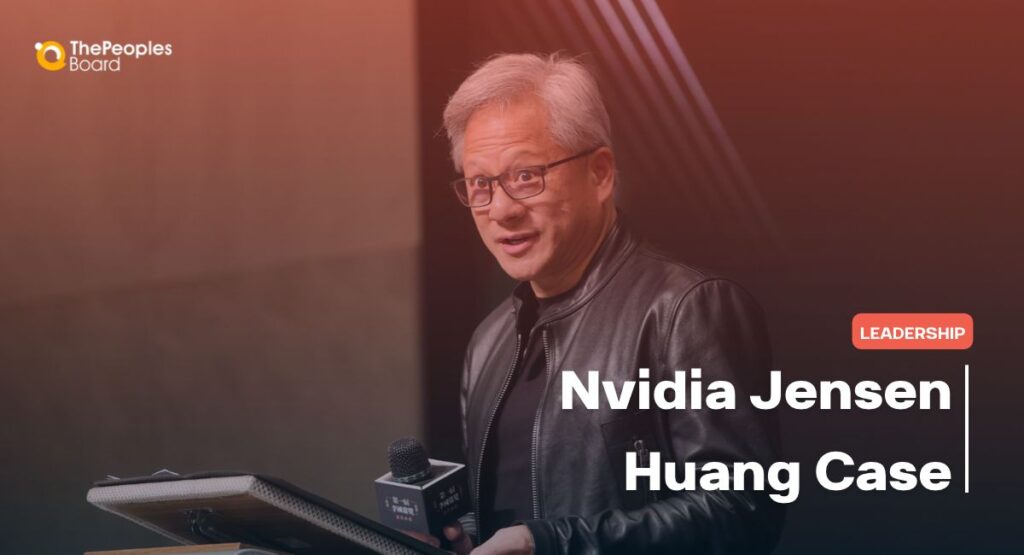
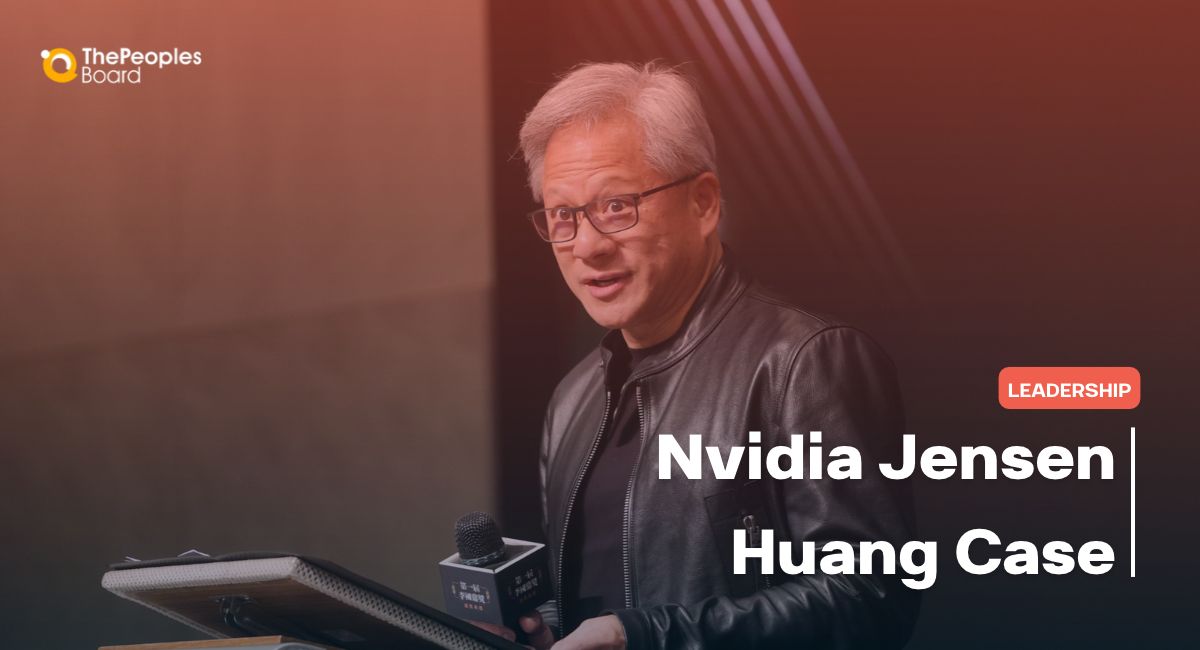

Jensen Huang admitted on November 8, 2026, to an extramarital affair, apologised to his family in a memo to Nvidia staff, and said he would cooperate with the board’s independent investigation. Within hours, Nvidia’s directors announced that a committee of independent directors, working with outside counsel, would examine reporting that a foreign intelligence effort had targeted their founder-CEO.
A shareholder lawsuit followed within two days. Three days after the admission, The New York Times reported a second relationship, this one with an Nvidia vice president who reported directly to him. The story is no longer about a marriage. It is now about whether a company whose culture, strategy, and valuation have been welded to one person can hold together if that person is forced to step away.
What a Week of Disclosures Added Up To
The chronology matters because it compressed what is usually a years-long governance arc into about one hundred hours. The sequence also explains why the board has had to act in public rather than behind closed doors, and why HR and compliance teams across markets are re-reading their own CEO conduct policies this week.
| Date (2026) | Event |
| Nov 4 | Three US House lawmakers request a closed-door briefing with Huang on espionage-linked reporting |
| Nov 8 | NYT reports the foreign-intelligence angle; Huang admits the affair to staff; Nvidia board opens an independent investigation |
| Nov 9 | Huang withdraws from the ElevenLabs Summit and other speaking engagements |
| Nov 10 | Shareholder lawsuit filed, accusing Nvidia of concealing the affair |
| Nov 11 | NYT reports a second affair, this time with a vice president who reported to Huang |
Why a Personal Scandal Becomes a Culture Problem
There is a comfortable line HR teams repeat: what a leader does in private is private, and what they do at work is the company’s business. The Nvidia story collapses that line. Each of the overlaps should be familiar to any Indian board or CHRO that has watched a founder-led crisis before.
The reported second relationship is with a direct report, shifting the question from marital fidelity to Nvidia’s own anti-harassment and conflict-of-interest policy. The foreign-intelligence allegation puts national security regulators in the room alongside family lawyers. The shareholder lawsuit reframes nondisclosure of personal conduct as a potential corporate disclosure failure. In most CEO scandals, two of those three never surface in a single week. Here they arrived together.
“I owe my family and all of you an apology,” Huang wrote in the staff memo obtained by Axios, before adding: “Leading Nvidia is the privilege of my life. I am fully committed to Nvidia and will work to earn back your confidence.”
The letter is written in the voice of the culture Nvidia has built around him. That is also why it is risky. When “the founder” and “the firm” are indistinguishable, the only culture test that counts is what happens when the founder isn’t there to carry it.
Lessons for Indian HR and Boards
Indian boards have their own case file to draw from. BharatPe stripped its co-founder Ashneer Grover of all positions in March 2022 after a PwC-led governance review flagged financial irregularities estimated at over Rs 50 crore, a resignation the company’s own statement called the product of “misdeeds”.
Infosys, Byju’s, and several listed IT services firms have each worked through their own founder or CEO episodes. The through-line is that India’s governance regime, from Section 166 of the Companies Act, 2013 to Regulation 17(5) of the SEBI LODR, already requires listed boards to adopt a code of conduct for directors and senior management. The gap sits between adoption and enforcement. The Nvidia week is a prompt to close it.
Treat the CEO Conduct Clause as a Live Document
Code of conduct documents at most Indian listed companies are drafted once and affirmed annually. That is a compliance posture rather than a governance one. The SEBI code expects the board to act on a breach rather than simply file the affidavit, and the Nvidia independent-director committee is a reminder that the structure only works when directors actually use it.
HR should run a quarterly review of the clauses covering related-party conflicts, consensual relationships at senior levels, and external disclosures, with sign-off from the chair of the nomination and remuneration committee and a clear escalation path to the ethics function inside HR.
Build Succession Readiness in Advance
A founder-led firm is one phone call away from a vacuum. The Nvidia board has not set a public timeline for its investigation and cannot publicly discuss a successor without triggering further share-price risk. Indian companies with concentrated promoter leadership face the same exposure.
A credible ninety-day interim leadership plan, named inside the boardroom and refreshed every year, is cheaper than the share-price hit of improvising one in week two of a scandal. The same logic applies below the CEO, which is why TPB’s take on succession planning for senior HR roles belongs on the board’s agenda too.
Keep HR Visible on the Governance Agenda
Boards tend to treat HR as reporting into the agenda rather than sitting on it. That changes when a scandal involves a direct report, as the Nvidia reporting now suggests. Indian ICCs created under the POSH Act, 2013 are often the first institution inside a company to see a leadership problem, and the metrics boards should track on POSH include complaints involving C-suite respondents, retaliation risk, and settlement patterns.
India’s 2026 Edelman Trust Barometer puts the country’s Trust Index at 74, the third-highest among 28 markets, with 83% of insular-minded Indian employees still placing trust in “my CEO”. That trust is an asset, and it is the first thing to burn in a CEO scandal. Protecting it is a board responsibility.
In the End…
A culture built around one person can absorb a bad quarter, a missed product, even an activist investor. What it cannot absorb easily is the discovery that the person at the centre is contested. Indian boards should use the Nvidia week for unglamorous homework: pull the code of conduct off the intranet and read it as if a breach had been reported this morning, name the interim CEO in writing even if the envelope stays sealed, and ask HR what it has seen, in confidence, that the board has not. Leadership failure is rarely dramatic. It shows up as a slow erosion of what employees believed about who was in charge, and whether anyone was watching.