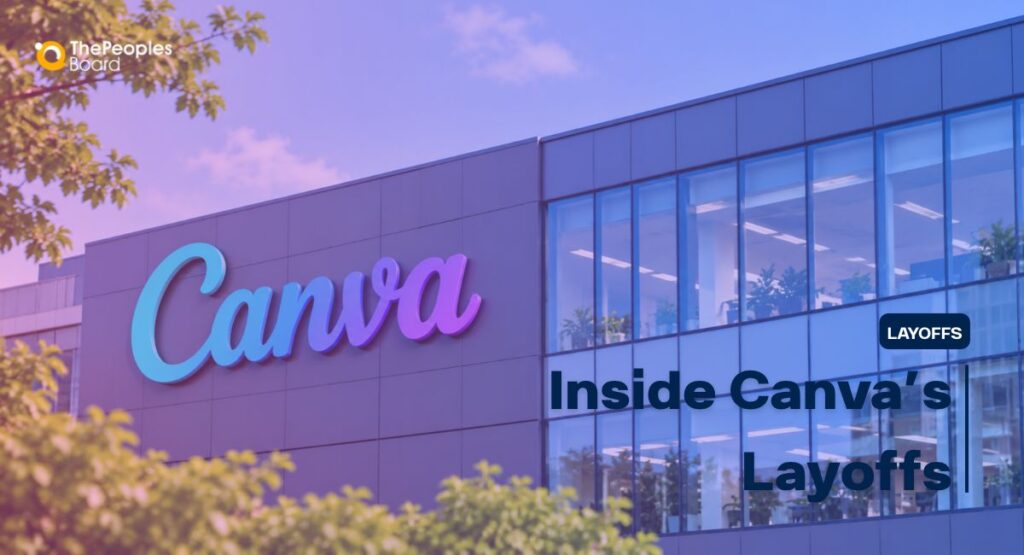
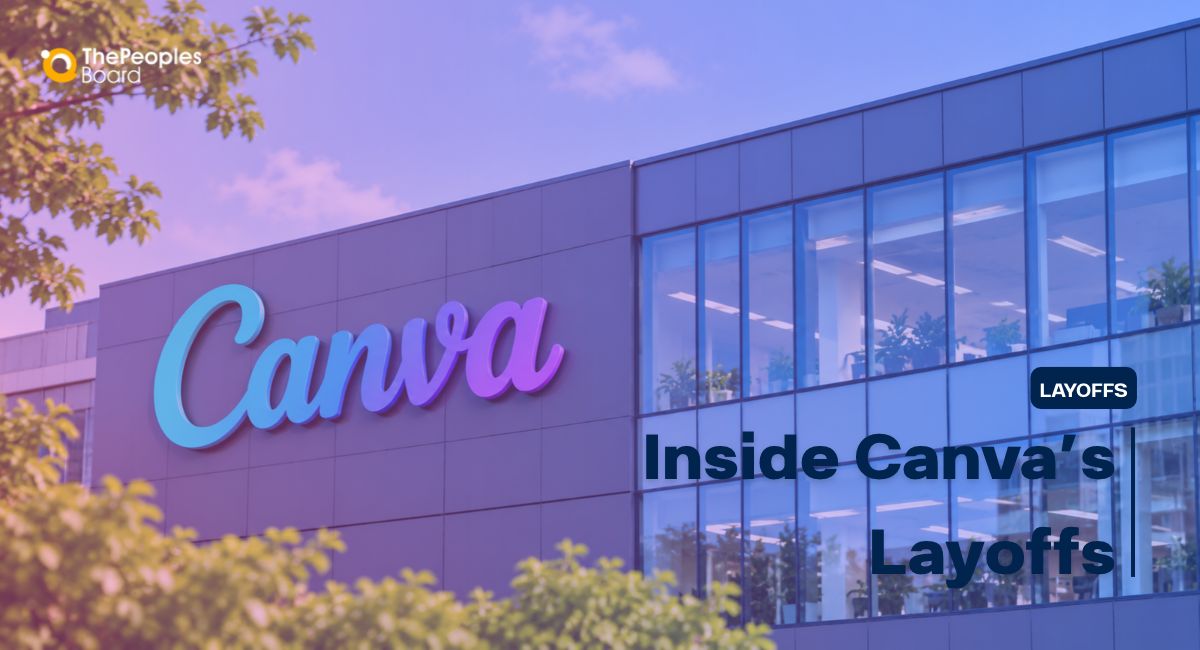

Canva told 1,271 employees on 3 November 2026 that their jobs were being cut. That’s 22% of the Sydney-based design company’s global workforce, and the largest single workforce reduction in its 13-year history. What’s unusual is the reaction.
Within hours of co-founder and CEO Melanie Perkins’ LinkedIn post, HR leaders, VCs, and even laid-off employees were praising how the company had gone about it.
The reaction traces to the severance package, which reads less like a layoff memo than a goodbye bonus. Six months of salary, a year of healthcare, a MacBook to keep, a $10,000 grant for anyone wanting to start something new, and a direct email line to Perkins herself for hiring leaders with roles to fill. One Sydney-based founder called it “a master-class in how to handle layoffs.” Few Indian tech employers who cut staff in the past 18 months have come close.
What’s Inside the Package
Canva’s note to departing employees, published on the company newsroom and shared via Perkins’ LinkedIn, lays out a support plan well past the usual severance template. It covers money, equipment, and the harder-to-quantify parts of finding the next job.
| Category | What Canva Offered |
| Base severance | At least 6 months of salary, regardless of country |
| Equity | 1-year vesting cliff removed for employees who joined within the past 12 months, so recent hires still leave with shares |
| Healthcare | 1 year of continued health coverage |
| Equipment | Keep the company-issued MacBook |
| Career support | 1-on-1 coaching, résumé review, interview prep, meetings with senior Canva leaders |
| Networking | 1 year of LinkedIn Premium, plus an opt-in alumni talent directory shared with external hiring teams |
| Entrepreneurship | A $10,000 grant for anyone starting a company, project or community initiative |
Perkins also shared her personal email in the post and invited hiring leaders to contact her directly about open roles. It was a practical ask, not a performative one. Within a day, her comment thread had turned into a crowdsourced job board of recruiters and founders listing open roles.
Why the Industry Is Calling It a Masterclass
Generosity alone doesn’t explain the reaction. Pair the money with a tone most tech CEOs don’t manage in a layoff memo, and the response starts to make sense. Perkins didn’t hide behind restructuring jargon.
She called the move “the hardest decision we’ve made in Canva’s history” and acknowledged, in the same breath, that growth had slowed for the first time in a decade and that “success in our first chapter doesn’t guarantee success in the next.”
Honesty mattered because Canva could have framed the cuts as a clean AI pivot story. The company is preparing for a potential IPO after years of spending on AI-powered products, and some eliminated roles overlap with tasks its own tools now automate. Perkins chose instead to name the slowdown, own the decision, and spend the rest of the memo on what departing people would get.
How This Compares to Indian Tech Layoffs
Set against the last 18 months of Indian tech layoffs, the Canva package stands out even more. TCS, which announced in July 2025 that it would cut around 12,000 jobs under a restructuring tied to AI and skills gaps, rolled out severance packages ranging from six months to two years’ pay depending on tenure. Senior employees with over 15 years of service also got outplacement support.
TCS’s story carried a shadow side Canva’s hasn’t. Employees reported being pressed to resign on the spot in in-person HR meetings. One viral Reddit post alleged HR assault during a severance conversation.
TCS CHRO Sudeep Kunnumal pushed back publicly on the “layoff target” framing, telling staff the company would “evaluate everyone.”
Amazon India’s October move, which may have affected 800 to 1,000 India-based roles under a global restructure, followed the quieter pattern instead: short email notices, notice-period pay, silence past the legal minimums.
Hexaware, Ola Electric, Air India, and ICICI Bank have each announced cuts this year, most of them pegged to statutory retrenchment compensation under the Industrial Disputes Act, 1947. A real gap sits between what Indian labour law requires and what the Perkins memo offered, and it shows up in how the news reads to employees on the receiving end.
In the End…
Canva’s package doesn’t change the fact that 1,271 people lost their jobs in a single announcement, and LinkedIn praise won’t pay anyone’s November rent. What it does change is the reference point. Any Indian HR head writing or revising a separation policy in the next quarter will have to answer why 6 months of salary, 12 months of healthcare, and a $10,000 seed grant is “too generous” when a globally scaled design company just set that as its baseline.
A useful exercise for people and culture teams is straightforward: open the current separation policy, place it next to the Perkins memo, and mark where the biggest gaps sit before the next downturn forces the question.