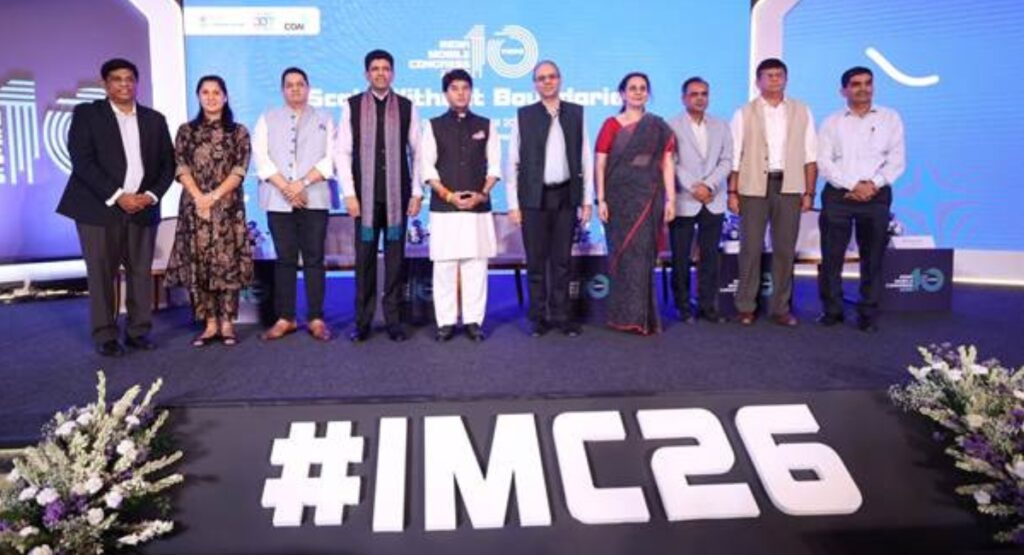
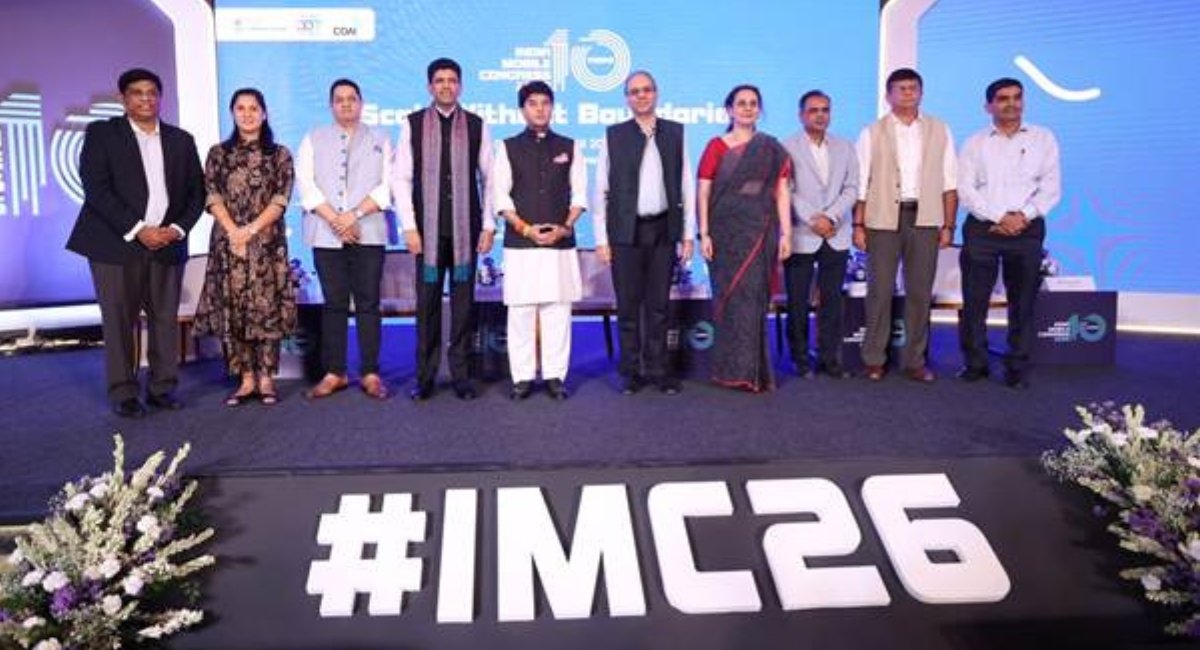

India’s telecom equipment manufacturing push has created 36,000 jobs under the Production Linked Incentive (PLI) scheme, Union Communications Minister Jyotiraditya Scindia said on 30 July 2026, as the government unveiled plans for the country’s first Telecom Manufacturing Zone in Gwalior, Madhya Pradesh.
Speaking at the curtain-raiser for India Mobile Congress (IMC) 2026, Scindia laid out the scheme’s returns so far: 36,000 jobs in telecom manufacturing, ₹6,000 crore in investment, ₹1.2 lakh crore in sales and ₹25,600 crore in exports. He cast the numbers as evidence that India is moving from a service-led economy toward a product-led technology hub.
“The world has long known about Special Economic Zones. Now it will hear about Telecom Manufacturing Zones,” Scindia said, describing the Gwalior facility as a new chapter for the sector.
The Gwalior zone marks the headline announcement. The Department of Telecommunications (DoT) and the Government of Madhya Pradesh have signed a Memorandum of Understanding for Phase I, envisioning a dedicated, plug-and-play ecosystem for telecom equipment makers, data centres and chip manufacturers, backed by both central and state support.
The jobs figure lands against a fast-moving digital backdrop. Scindia said nearly 50 crore people are already connected to 5G, with the rollout completed in two and a half years on ₹4.5 lakh crore of capital expenditure and more than 5 lakh towers installed. Reliance Jio and Bharti Airtel have led the deployment, followed by Vodafone Idea, with state-owned BSNL expected to begin commercial 5G services. The government wants 100 crore people on 5G by 2030.
For India’s workforce, the manufacturing angle matters most. A dedicated zone bundling equipment, data centres and chips signals demand for a deeper talent pool in hardware, semiconductors and telecom engineering, areas where India has historically imported both product and skill. Minister of State Chandrasekhar Pemmasani framed the next decade as a shift from Digital India to Intelligent India, powered by 6G, AI, quantum communications and satellite technology, all of which carry their own hiring implications.
The wider ambitions will be on display in October. IMC 2026, themed “Scale Without Boundaries,” runs from 7 to 10 October at Yashobhoomi in New Delhi and is expected to draw more than 1.5 lakh attendees and over 300 exhibitors from more than 100 countries. What to watch next is how quickly the Gwalior zone converts policy intent into on-ground hiring, and whether the 36,000-job figure climbs as Phase I takes shape.