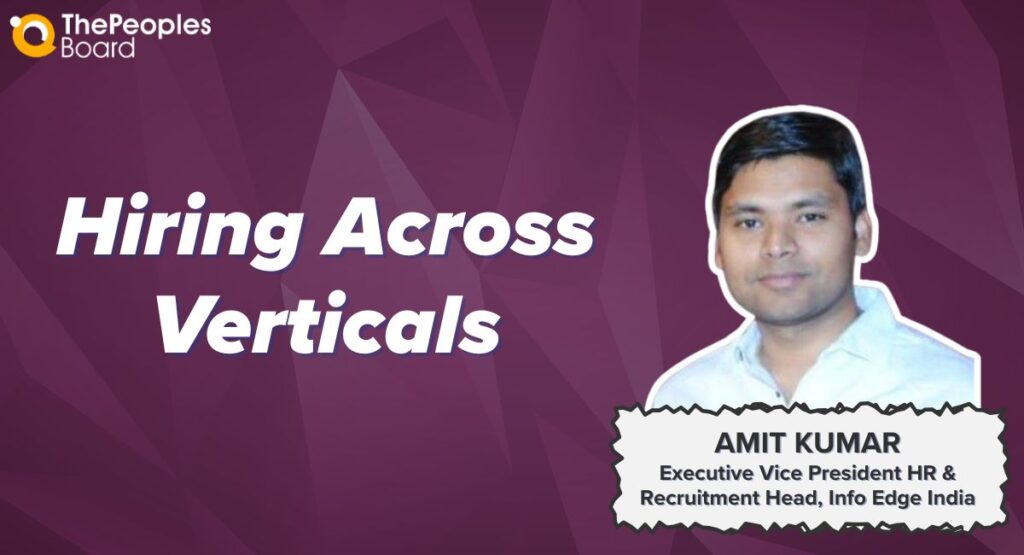

We love templates in hiring. They make life feel simpler.
Same title, familiar brand names, a neat competency grid, and a JD copied from the last successful hire—it all creates a sense that we’re in control.
The problem is that this comfort is often an illusion.
On paper, “Head of Product” or “VP Engineering” looks universal. In reality, the same title can demand a completely different mix of judgment, risk appetite, and working style depending on whether the person is in a digital‑first product company, a services‑heavy business, a marketplace, or a legacy enterprise. When we presume those roles are interchangeable, we are quietly setting up both the candidate and the business for disappointment.
That’s why hiring has to be driven by business context, not by templates. A serious recruiter doesn’t stop at “same title, similar company.” Recruiters should start by asking a more uncomfortable question: in this specific business, at this stage, what does success actually look like?
Two companies in the same domain can be playing very different games—one is chasing growth at all costs, another is trying not to break what already works; one is selling to digitally native customers, another is dealing with highly relationship‑driven ecosystems. A role that thrives in one of these worlds may not even survive in another if we use the same hiring lens.
Context changes the role more than the title
One of the biggest mistakes in cross‑vertical hiring is assuming that a role has a fixed definition just because the title is the same.
Take a product leader. In one company, this person is expected to unlock new revenue, experiment with pricing, and move key metrics every quarter. In another, the same title is really about keeping operations stable, ensuring clients get what was promised, and making sure nothing breaks in a complex legacy system.
The underlying business model too quietly shapes how we should assess people. In a product‑led set‑up, we look for digital fluency, comfort with experimentation, and the ability to use technology as a growth engine. In a service‑led environment, we pay far more attention to process thinking, customer & stakeholder management, and disciplined execution.
This is why years of experience, big brands, and title matching are such poor predictors of success when the business context shifts. They look reassuring on the CV. They don’t tell us how someone will behave in a very different environment. If we strip away jargon, the product‑led versus service‑led distinction is really about where value is created.
In a product‑led environment, the product is the main driver of acquisition, adoption, and retention. The leader is expected to obsess about user journeys, funnels, and scale. They are constantly asking: what do we ship next, what do we measure, and how do we remove friction?
In a service‑heavy business, the same title often plays a different game. The product or platform exists to support delivery. The real value is created in how teams execute, how custom the solution is, how well we coordinate across internal and external stakeholders, and how reliably we meet expectations.
Both models can be successful. They simply reward different instincts.
So our interviews should reflect that. For product‑driven roles, we need to test commercial thinking, comfort with experimentation, and the ability to work with imperfect data. For service‑oriented roles, we should focus more on how candidates bring order to chaos, handle tricky stakeholders, and build repeatable ways of working.
When domains quietly change the job
These differences become even clearer when we look at actual domains, without turning them into heavy case studies.
Think of any high‑value, slow‑moving category where decisions take time and trust is central—such as property purchase or large capital purchases. Products in these spaces don’t just “convert users”; they need to support discovery, work with intermediaries, and build confidence across multiple parties. A product leader coming in from a purely high‑velocity, self‑serve digital context will find that the pacing, the sales cycles, and the signals of success are all very different.
Now think of a product that sits deep inside internal workflows—for example, HR Tech. Here, the real battle is in workflow design, adoption and integrations. Success is less about “launching features” and more about whether teams actually change how they work. A leader used to consumer‑style environments may underestimate how much of the job is change management and user adoption.
In both situations, domain is not just a nice label. It changes what “good” looks like. The point is not that we only hire people who have done the exact same thing before. It’s that we test whether they can understand a new domain deeply enough and adjust their choices accordingly.
What really separates a strong hire from a safe one
When we strip away the buzzwords, three things tend to separate strong hires from safe but misaligned ones.
First, business model fit. Has this person worked in environments like ours—product‑led, service‑led, marketplace, heavily regulated—and do they actually enjoy that rhythm? Someone who has grown up in high‑scale product environments might feel constrained in a slow-moving enterprise product setup.
Third, learning agility versus domain depth. Younger, product‑heavy businesses often value curiosity and speed of learning over decades in one niche. Mature or regulated environments lean more on experience, pattern recognition, and judgement. Our job is to be honest about which bias our business genuinely needs right now, not what sounds impressive on a JD.
How we, as recruiters, need to adjust
This is where we either become real partners to the business or remain CV‑forwarders.
Our job is not to “match titles and compensation bands.” Our job is to translate business strategy into real role expectations. That begins with a different kind of conversation before we even open a requisition:
- What problem are we trying to solve?
- Where is this business in its journey?
- Who is the primary customer?
- What will we call success one year after this person joins?
If that foundation is vague, the shortlist will be misleading.
Interview design also needs a rethink. A standard competency checklist rarely tells us whether a product leader or business head has the instincts for the specific environment; it only tells us that they’ve seen similar situations somewhere else. If the questions don’t reflect our reality, the answers won’t either.
The next step is the harder one: resetting hiring‑manager expectations. Many mis‑hires start with wonderfully broad briefs—“we want a strong product person from a top company”—and painfully narrow expectations once the person joins. Somewhere in between, someone in the recruitment team has to step in and say, “If this is the outcome you want, this is the kind of profile you’re actually describing—and here are the trade‑offs that come with it.”
For HR leaders and recruiters, the core message is straightforward: hiring should not start with a job title; it should start with the business problem and the outcomes we expect this role to own. Once that is clear, everything else—skills, experience, domain knowledge, even personality fit—can be designed around it.
The only question is: in our next senior hire, will we reach for the familiar template again—or pause long enough to design the role around the reality of the business?