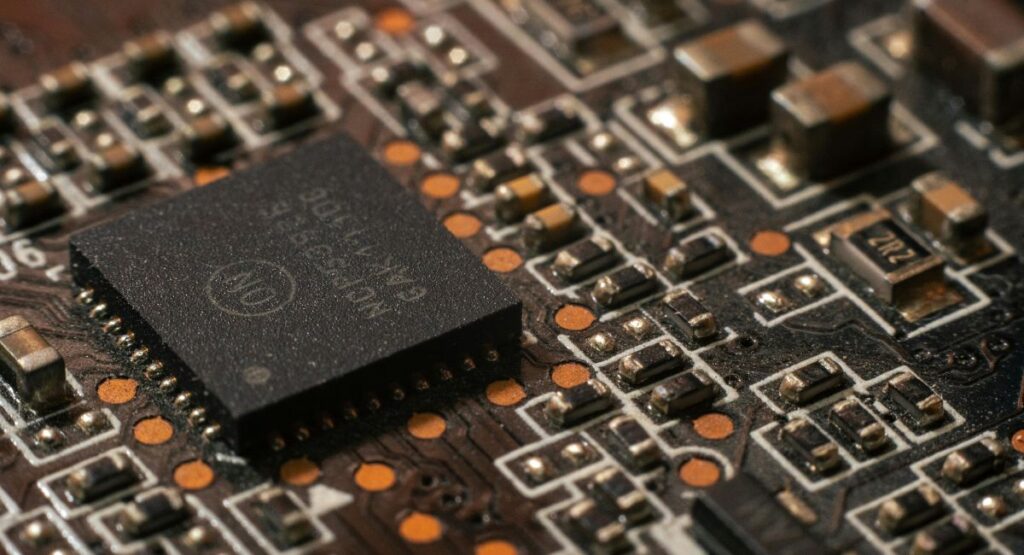

The Delhi government has begun drafting a dedicated semiconductor policy aimed at establishing the national capital as a hub for chip design, research and development, and allied high-technology activities, Chief Minister Rekha Gupta announced on April 19, 2026.
The draft “Delhi Semiconductor Policy” is being positioned as Delhi’s contribution to India’s broader semiconductor mission, which targets meeting 70–75% of the country’s semiconductor demand domestically by 2029. The policy will focus on semiconductor design, intellectual property creation, research and innovation, and manufacturing-enabling activities such as assembly, testing, marking, and packaging (ATMP), along with outsourced semiconductor assembly and testing (OSAT).
Speaking on the policy’s intent, Chief Minister Rekha Gupta said the semiconductor sector has become a critical pillar of the global economy, national security, and technological sovereignty, and Delhi aims to ensure structured and balanced development of this high-value industry through targeted policy support. She added that the policy is aligned with the Prime Minister’s vision for Atmanirbhar Bharat and will create high-quality job opportunities in chip design, semiconductor research, and advanced manufacturing segments.
Officials said the policy will include both financial and non-financial incentives, such as subsidies, infrastructure support, and measures to lower operational costs. It will also encourage industry-academia partnerships to build skills and prepare a workforce for semiconductor roles, with dedicated training programmes and targeted skilling initiatives in the pipeline.
Delhi is expected to position itself as a hub for fabless semiconductor companies, research-driven startups, and ATMP/OSAT operations rather than competing for fabrication plants, which require significantly higher capital investment. The policy is expected to be finalised after consultations with industry stakeholders, experts, and academic institutions in the coming months.
The move comes as India continues to expand its semiconductor footprint after the pandemic exposed vulnerabilities in global chip supply chains. States including Gujarat, Karnataka, Tamil Nadu, and Uttar Pradesh have already announced dedicated semiconductor and electronics policies over the last two years, and Delhi’s entry into this space signals growing state-level competition for chip design talent and investment in India.