
Highlights:
- Hours vs. outcomes isn’t a binary choice. Most Indian organisations sit somewhere in between.
- “Many leaders have grown up in systems where ‘putting in the hours’ was the only way to signal ambition and loyalty. That conditioning carries forward,” says Sulbha Kaushal Rai, Chief People Officer, RenewBuy.
- “If I look back five years, performance was more aligned with effort-based indicators, attendance, long working hours, and task completion within functional silos,” says Vijay Prakash Pandey, Head – HR & Administration, Arjan Impex.
Ask two managers at the same company how they measure performance, and you might get two very different answers. One tracks output: deals closed, projects delivered, problems resolved. The other pays attention to something harder to name: who’s in the room, who responds fast, who stays late.
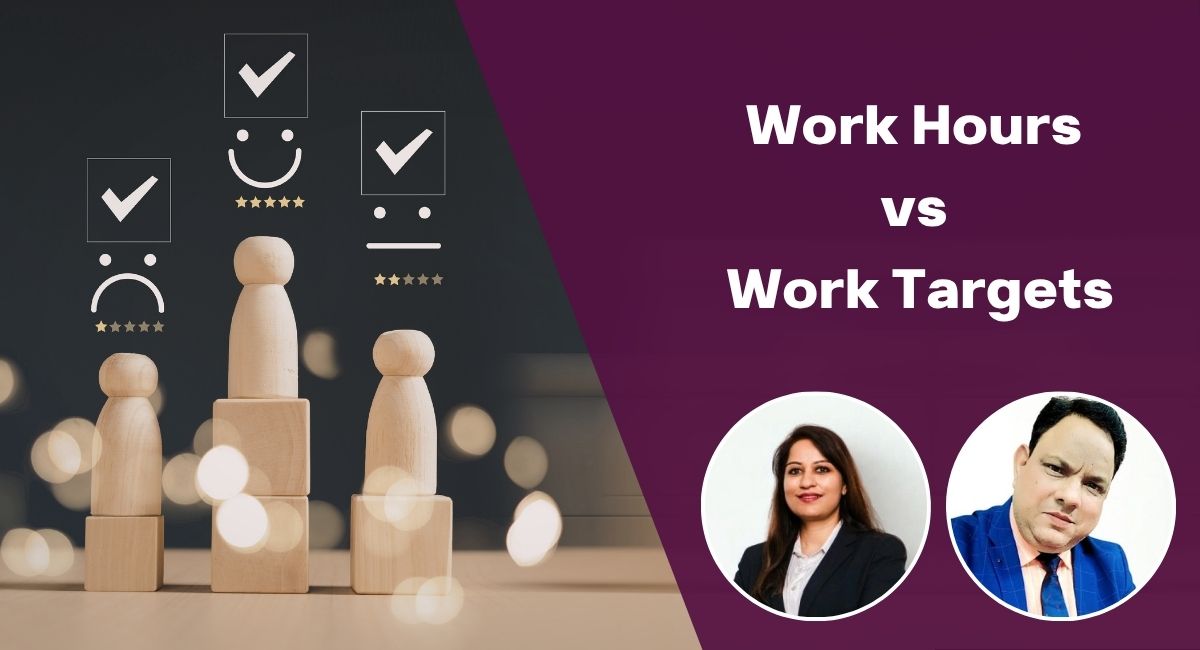
This brings up the question: are we measuring what people do, or how long they appear to be doing it?
In most Indian workplaces, the honest answer is somewhere in between. Hours remain a default signal of commitment. Outcome-based frameworks are now gaining ground, especially in tech, financial services, and startups.
Why Hours Became the Default Performance Metric
Time-based performance measurement didn’t emerge arbitrarily. It has a logic rooted in the history of work itself.
In manufacturing and industrial settings, the relationship between time and output is direct. A production line running for eight hours yields more than one running for four. Shift coverage matters. Attendance is operationally meaningful.
Sulbha Kaushal Rai, Chief People Officer at RenewBuy, makes this point directly: “In roles that are transaction-heavy, real-time, or customer-facing, like customer support, claims processing, or certain operational workflows, time-based metrics still matter. Turnaround time, availability, and responsiveness are integral to the role itself.
Even in knowledge-based roles, hours carry some signal. Collaboration, client responsiveness, institutional knowledge transfer, and mentorship are all things that happen in real time, often informally, and they require presence.
“However, even in these roles, time should not be the only metric,” Sulbha warns. “It should be balanced with quality and outcome indicators like resolution effectiveness, customer satisfaction, and accuracy, because you’re dealing with fundamentally different value creation models.”
The Case for Outcome-Based Performance Management
The argument for measuring what people deliver, rather than how long they work, is most compelling in roles where the work itself is cognitive, creative, or project-based.
“In our organisation today, good performance is clearly defined as the ability to consistently deliver against agreed Key Performance Indicators, contribute to business outcomes, and demonstrate ownership and accountability in one’s role. It is a combination of what is achieved and how it is achieved, balancing results with discipline, collaboration, and adherence to processes,” says Vijay Prakash Pandey, Head – HR & Administration, Arjan Impex.
At its core, outcome-based performance means evaluating employees on what they achieve against defined goals, not on hours logged. The two most common frameworks are OKRs (Objectives and Key Results) and KPIs (Key Performance Indicators). OKRs set ambitious quarterly objectives with measurable key results. KPIs are more granular and function-specific: revenue per sales rep, support resolution time, and delivery accuracy in operations.
The appeal of these models is straightforward. Clearly defined outcomes create accountability. They also remove at least some of the subjectivity that creeps into performance evaluations when “dedication” or “attitude,” often proxies for visibility, are the implicit criteria.
Vijay also notes the direction of change in his own organisation: “If I look back five years, performance was more aligned with effort-based indicators, attendance, long working hours, and task completion within functional silos. Over time, we have consciously shifted towards an outcome-driven framework where productivity, efficiency, cost optimisation, and timely delivery are the key benchmarks.”
This kind of deliberate shift, not overnight, not ideological, but gradual and grounded in operational reality, is probably the more common story in Indian organisations than either the “we’ve always been outcomes-focused” or the “we’re still stuck in the hours mindset” narratives suggest.
When Hours and Targets Both Matter
There are roles where time-based measurement remains genuinely necessary. Customer support, healthcare, manufacturing operations, and front-line financial services are functions where availability and responsiveness are part of the value delivered.
A support team that doesn’t cover peak hours fails its users. A hospital ward that’s understaffed between 2 AM and 6 AM creates clinical risk regardless of how strong individual nurses’ quarterly targets are. In these roles, shift coverage, response time, and physical presence aren’t legacy thinking; they’re operational requirements.

Outcome-based models also carry their own risks when implemented poorly. Targets that are set without adequate resourcing create a different kind of pressure, one that looks more modern but may be no less damaging.
When goals are disconnected from what employees can actually control, or when they’re designed primarily to justify downsizing rather than to measure genuine performance, the model fails. And when targets are tied too tightly to individual compensation, employees often sandbag, setting achievable goals rather than stretching toward what would actually be impactful.
Sulbha identifies measurement gaps as a structural challenge beneath this: “Defining outcomes requires robust systems, data discipline, and clarity of roles, which many organisations are still evolving. When you can’t measure output cleanly, you default to measuring input.”
This is a practical limitation, not a moral failing. Building outcome-based performance frameworks takes time, investment, and organisational maturity. Simply declaring that performance will now be measured by targets, without the systems to track them credibly or the managerial capability to set them meaningfully, creates confusion rather than clarity.
Hybrid Work and the Performance Management Gap
The shift to hybrid and remote work added urgency to this conversation, but it didn’t resolve it.
What it did expose was how much of traditional performance management had been built on proximity. Managers who had long equated visibility with engagement found themselves without that signal. Some responded by building new outcome frameworks. Others responded with monitoring software, mandatory video check-ins, and virtual presence requirements, all of which recreate the logic of presenteeism in a digital environment.
India’s adoption of hybrid work remains uneven. Tech, financial services, and media companies have largely formalised flexible arrangements. Manufacturing, retail, healthcare, and government continue to operate on traditional attendance models; not because they’re behind, but because the nature of the work requires it.
Even within sectors where hybrid is practised, the infrastructure that makes it work with clear goals, trust, asynchronous communication norms, and calibrated feedback is often still developing.
“Managers need to unlearn the belief that visibility equals productivity,” says Sulbha. “In supervision-led models, control comes from seeing people: their presence, their activity, their responsiveness. But outcome-based models demand a shift from managing effort to managing intent and impact.”
The harder change isn’t technological or structural. It’s about what managers are comfortable with.
“What makes this hard is not capability, but trust,” explains Sulbha. “Many managers are uncomfortable defining clear outcomes, because it forces sharper thinking: what exactly does success look like, and how will I measure it without relying on activity as a proxy?”
Vijay notes a parallel shift in his own context: “From a tools perspective, organisations have adopted more structured and transparent systems, ranging from digital MIS dashboards to project tracking platforms, which enable real-time visibility of performance. These tools have reduced dependency on physical supervision and brought in greater data-driven decision-making.
“However, the more critical shift has been in mindset,” Vijay further notes. “There is now a stronger focus on trust and accountability. Managers are expected to define clear deliverables and timelines, and employees are given the autonomy to execute. The role of a manager is gradually evolving from monitoring to mentoring.”
Having spent years in the manufacturing industry, Vijay has witnessed firsthand how the definition of “good performance” has shifted over time:
“This transition has been particularly important in a manufacturing environment, where alignment between planning, execution, and delivery directly impacts business performance. Today, we place greater emphasis on measurable outputs, cross-functional coordination, and continuous improvement rather than just individual effort.”
The Indian Reality: Culture, Compliance, and Structural Constraints
Any honest conversation about performance measurement in India has to account for the structural diversity of the Indian workforce.
A Springer report notes that almost 85% of India’s workforce works in informal businesses. For daily wage workers, piece-rate contractors, and informal employees, the hours-versus-targets debate is largely a formal-sector conversation. The frameworks being discussed here, such as OKRs, KPI dashboards, and continuous feedback loops, are primarily relevant to organised-sector employment, which remains a minority of total employment.
Vijay offers a grounded perspective from manufacturing: “In manufacturing setups, we cannot completely detach from time-bound operations. Therefore, the approach is to strike a balance, ensuring operational requirements are met while discouraging unnecessary extensions of working hours.”
“Ultimately, the goal is to build a culture where performance is respected for its impact, not the number of hours invested. This not only improves productivity but also enhances employee engagement and long-term sustainability,” he adds.
Even within the formal economy, the picture is varied. Startups in Bengaluru, Gurugram, and Hyderabad have largely adopted OKR-style frameworks, shaped by the global tech culture they operate within.
Traditional enterprises, family businesses, and PSUs tend to blend attendance-based compliance with annual KRA (Key Result Area) reviews that often serve more of a documentation function than a genuine developmental one. Neither approach is monolithic.
The compliance landscape adds another layer. Existing labour law, primarily the Factories Act, caps manufacturing workers’ hours at 48 per week. But for white-collar knowledge workers, there is no statutory limit on working hours, so cultural norms and organisational practices fill the regulatory vacuum.
The four Labour Codes, once fully operationalised across states, will consolidate and update these rules, but their implementation timeline remains state-dependent and uneven.
Hustle Culture and the Manager’s Dilemma
The cultural dimension is perhaps the most persistent. India’s “hustle as virtue” narrative, which is amplified periodically by high-profile leaders. Infosys Founder N R Narayana Murthy calling for a 70-hour workweek and L&T chairman SN Subrahmanyan advocating for 90 hours highlight how normalised extreme hours are as a signal of ambition.
This creates a real dilemma for HR leaders trying to shift their organisations toward more sustainable performance cultures. Changing policy is relatively straightforward. Changing what gets informally rewarded is much harder.
“In many Indian workplaces, especially in high-growth or sales-driven environments like BFSI, effort is visible, outcomes are often delayed. So time becomes the easiest signal of commitment,” says Sulbha. She expands on the effect of this legacy mindset: “Many leaders have grown up in systems where ‘putting in the hours’ was the only way to signal ambition and loyalty. That conditioning carries forward.”
But can this behaviour be unlearned? A work mindset that has persisted for years and focuses on an easy-to-measure metric can be hard to let go of. As per Sulbha, real unlearning can come only when managers understand one concrete fact:
“You don’t manage people by watching them work. You manage them by making the work unambiguous. Until that clarity comes in, managers will keep defaulting to supervision, because ambiguity makes control feel safer than accountability.”
How HR Can Move Beyond the Hours Mindset
It is not just managers who struggle to measure performance beyond time. For many employees, it is hard to let go of the strong cultural narrative that equates “hustle” and long hours with commitment.
Apart from personal learning, companies and HR can also play a significant role in ensuring that hours do not become synonymous with performance.
“As HR leaders, our role is to gradually shift this mindset without disrupting operational discipline,” shares Vijay. “We do this by clearly defining performance metrics that are outcome-based and measurable. When expectations are well-defined, it naturally reduces the emphasis on time spent and increases the focus on results delivered.”
Vijay also emphasises the importance of leadership behaviour in facilitating this cultural transition within the company.
“When senior leaders prioritise efficiency, planning, and work-life balance, it sets a strong precedent across the organisation. We also sensitise managers to avoid rewarding presenteeism and instead recognise productivity and innovation.”
The Mindset Shift Organisations Need
Shifting completely to an outcome-based model is not completely feasible for many reasons. Apart from cultural differences and legacy mindsets, there is often an underlying question of trust that companies struggle with.
“In distributed sales and operations environments, there’s an inherent fear: ‘if I don’t see them working, are they really working?’” explains Sulbha. However, she also warns of the downsides of a model that focuses on time over outcomes: “it rewards endurance over effectiveness, and eventually drives burnout and mediocrity.”
Sulbha explains that “organisations that are breaking this pattern are the ones that are investing in clear KRAs, real-time dashboards, and manager capability building. Because outcome-based culture is not a policy shift, it’s an operating system change.”
What Should Define Performance Today?
There isn’t a single answer, and that’s probably the most useful thing to say.
For knowledge-intensive and creative roles, outcome-based models are likely to produce more accurate performance signals and better alignment between individual effort and business value.
For operations, service, and care roles where availability is part of the deliverable, time-based metrics remain operationally meaningful, even if they need to be supplemented with quality indicators.

The more important question for most organisations isn’t “hours or targets?” It’s whether the measurement approach they’ve chosen is actually well-designed, honestly applied, and contextually appropriate for the roles it covers.
Sulbha offers a practical principle for navigating performance equity across different role types:
“Standardise the philosophy, not the metrics.
- For outcome-driven roles (like sales): measure impact (revenue, conversion, productivity per RM)
- For process-driven roles: measure efficiency + quality (TAT, accuracy, customer experience) “
Additionally, Sulbha emphasises the need to ensure clear goal sheets, transparent measurement systems, and Consistent consequence management.
“Equity doesn’t mean identical metrics,” she explains. “It means fairness in how performance is defined, measured, and rewarded relative to the nature of work.”
What tends to cut across all roles is the quality and clarity of the measurement itself, whether goals are well-defined, whether feedback is timely and honest, whether performance conversations are developmental rather than punitive, and whether the system as a whole creates accountability without eroding the psychological safety that makes honest work possible.
In fact, the transition is already happening across many industries. Many companies have started to adopt a model that considers both time and outcomes, evaluating each without making either a sole indicator of performance.
Vijay draws on his work within the manufacturing industry to provide an example: “In our context, even though core operations remain plant-driven, the principles of outcome-based performance have been extended across functions. Regular reviews, shorter performance cycles, and continuous feedback have replaced the traditional once-a-year appraisal approach.”
How Indian Organisations Can Make the Transition
For organisations looking to move toward more outcome-oriented performance cultures, the practical challenges are worth taking seriously.
- Start with role clarity, not framework selection: The choice between OKRs and KPIs matters less than whether roles are clearly enough defined for any metric to be meaningful. Without role clarity, outcome-based models create a different kind of ambiguity.
- Build managerial capability alongside the framework: Outcome-based performance requires managers who can set meaningful goals, have calibrated feedback conversations, and distinguish between underperformance and under-resourcing. Most Indian managers have been promoted for individual performance, not for coaching capability. The investment in people has to accompany the investment in systems.
- Use data to track work products, not proxies for presence: Dashboards that track project completions, resolution rates, and delivery quality provide a more accurate picture than those that track login times or message response times. The former measures performance; the latter measures availability.
- Create space for honest performance conversations: Outcome-based cultures work best when employees can flag unrealistic targets before they miss them, and when managers can acknowledge when goals were set incorrectly without it becoming a failure narrative. That kind of psychological safety is built slowly and can be eroded quickly.
In the End…
The hours-versus-targets debate tends to get framed as a choice between the old way and the right way. The more useful framing is probably different: both approaches are trying to answer the same question: whether this person is contributing meaningfully to the organisation.
Both have conditions under which they work, and conditions under which they fail.
“Performance management today is less about control and more about clarity, alignment, and accountability,” says Vijay. “As organisations evolve, HR must play a proactive role in driving this transition, ensuring that systems, leadership practices, and culture are all aligned towards sustainable and outcome-oriented performance.”
What India’s workplaces are navigating right now is less a philosophical debate and more a practical one. The demand for measurable accountability, from investors, boards, and leadership teams trying to run leaner organisations, isn’t going away.
The organisations that navigate this well won’t necessarily be the ones that pick a side. They’ll be the ones that ask, seriously and specifically, what they’re trying to measure about each role, and then build the systems, habits, and conversations that make that measurement credible.
That’s harder than either defending the 9-to-5 or declaring it obsolete. But it’s the more honest work.
FAQs
Should performance be measured by hours worked or targets achieved?
For knowledge-intensive and creative roles, outcome-based frameworks like OKRs and KPIs tend to produce more accurate performance signals. For customer-facing, operational, or care roles where availability is part of the value delivered, time-based metrics remain relevant. Most organisations benefit from a hybrid model that matches the measurement approach to the nature of the work.
What are the most common outcome-based performance frameworks used in India?
The two most widely used frameworks are OKRs (Objectives and Key Results) and KPIs (Key Performance Indicators). OKRs set ambitious quarterly goals with measurable results; KPIs are more granular and function-specific. For example, revenue per sales rep, support resolution time, or delivery accuracy. Startups and tech companies in Bengaluru, Gurugram, and Hyderabad have largely adopted OKR-style frameworks, while traditional enterprises often use KRA (Key Result Area) reviews.
Why do many Indian workplaces still rely on working hours as a performance metric?
Hours-based measurement has deep roots in manufacturing and industrial settings, where time and output are directly linked. Even in knowledge roles, hours carry some signal; collaboration, mentoring, and client responsiveness happen in real time. Beyond function, there’s also a cultural dimension: India’s “hustle as virtue” narrative, periodically amplified by high-profile leaders, has normalised long hours as a proxy for commitment and ambition.
What are the risks of outcome-based performance models?
When poorly implemented, outcome-based models can create pressure without support, particularly when targets are disconnected from what employees can actually control, or when goals are set without adequate resourcing. There’s also the risk of sandbagging, where employees set easily achievable goals rather than meaningful ones. Building a credible outcome-based culture requires role clarity, managerial capability, and robust measurement systems, not just a policy change.
How does hybrid work affect performance measurement in India?
Hybrid work exposed how much traditional performance management was built on proximity. Managers who equated visibility with engagement found themselves without that signal. Some built stronger outcome frameworks; others replicated presenteeism digitally through monitoring software and mandatory check-ins. India’s hybrid adoption remains uneven, tech and financial services have largely formalised flexible arrangements, while manufacturing, retail, healthcare, and government continue on traditional attendance models.
What role does HR play in shifting organisations away from hours-based performance cultures?
HR plays a critical role in redesigning measurement frameworks, building managerial capability, and modelling the right behaviours from leadership. This includes clearly defining outcome-based metrics, sensitising managers to avoid rewarding presenteeism, and ensuring senior leaders publicly prioritise efficiency and work-life balance over hours logged. The shift is less a policy change and more what one HR leader in this article calls “an operating system change.”