


The hospitality industry saw a major setback during the pandemic period. Since then, the industry has not just overcome the challenges, but also seen a hike in the employment rate. But how have skills requirements changed over time in the Indian hospitality sector?
But the more interesting question is that while all the industries are undergoing tech adoption with a major focus on AI, how is an industry which is highly human-driven coping with such market changes?
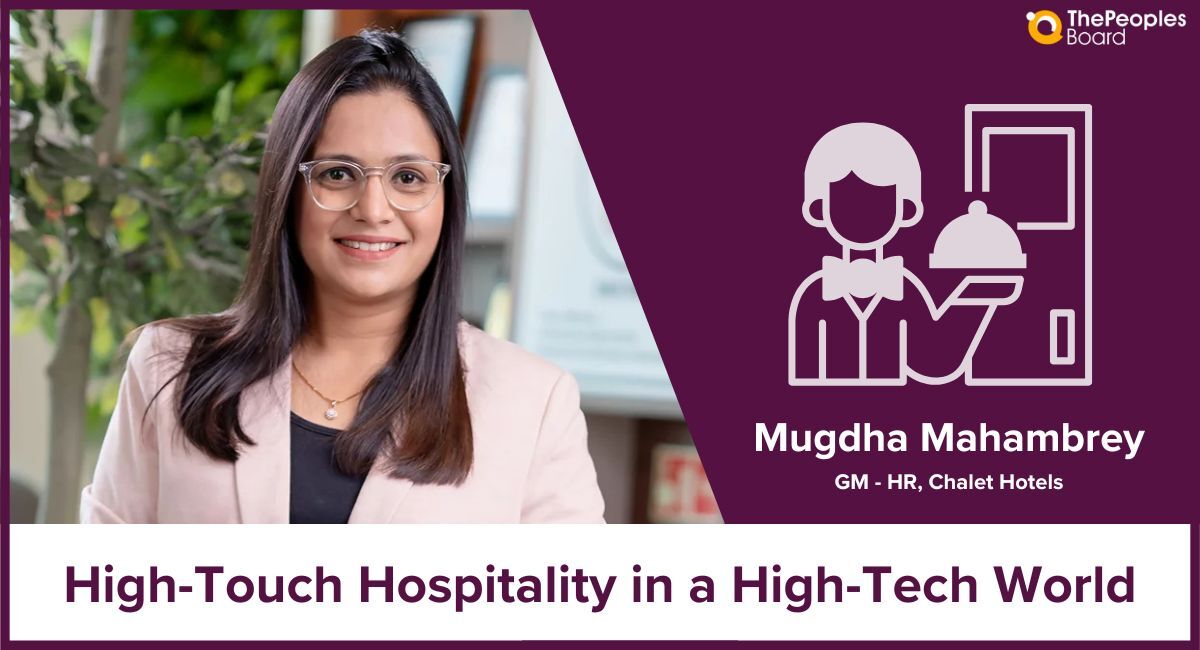
Mugdha Mahambrey, General Manager of Human Resources at Chalet Hotels, has answered these questions in this interaction with ThePeoplesBoard.
With a background in talent management and team oversight, she has cultivated capabilities in HR and training. Her experience includes directing human resources functions and contributing to employee development initiatives.
Before Chalet Hotels, Mugdha served as Head of HR (Resorts Division) at Mahindra Holidays. During her tenure at Marriott, she progressed from Manager, Human Resource & Training to Director, Human Resources, demonstrating career advancement within the lodging and resorts industry. Her work history includes roles at Suites By Carlson as Human Resource Assistant & Manager, and at Taj Hotels in Human Resources, contributing to HR functions within the hospitality sector.
On that note, let’s take a look at what she has to say about the evolving HR trends in the hospitality sector.
- How has the hospitality industry evolved since the setback during the pandemic?
The hospitality industry has made a remarkable recovery since the pandemic, and the industry’s post-pandemic evolution has been defined by a stronger focus on people, capability, and culture. With the sector recording 5.9% employment growth in H2 FY26, we’re seeing a workforce that returns with new expectations around purpose, growth, and wellbeing.
HR has shifted from traditional manpower planning to building agile talent models, emphasising multi-skilling, digital comfort, and continuous learning to meet the rising demand for personalised guest experiences.
We’re also seeing a clear move toward responsible and inclusive people practices, mirroring the industry’s broader sustainability agenda.
- In a people-centric industry, what role do leadership skills play in driving business resilience and guest experience?
In our industry, leadership skills directly shape business resilience because they shape people. Leaders who demonstrate empathy, adaptability, and clarity of purpose build teams that stay engaged even in volatile conditions. When leaders put people first, they create trust, loyalty, and a culture where associates feel empowered to go beyond the script.
This is what ultimately translates into personalised guest experiences and those memorable “wow” moments that no technology can replicate. In a competitive market, it’s these human-led experiences—driven by strong, emotionally intelligent leadership—that sustain performance and differentiate brands.
- What people-management skills do first-time hotel managers struggle with the most today?
First-time hotel managers often find it challenging to lead cross-generational teams, especially when expectations and communication styles differ sharply between Gen Z, millennials, and seasoned associates. They also struggle with integrating new technologies into day-to-day operations while still maintaining the human touch that hospitality demands.
Another emerging gap is engaging and retaining Gen Z talent, where issues like mutual “ghosting” during the hiring process reflect deeper communication and expectation mismatches.
From experience, the skills they need most are structured coaching, confidence in giving and receiving feedback, and real-time decision-making. Targeted mentorship and open feedback loops help them build these capabilities quickly—transforming first-time managers into confident, people-first leaders.
- What is the current workforce trend in the hospitality industry?
The sector is seeing strong hiring momentum, with workforce demand up 5.9% in H2 FY26. Frontline and guest-facing roles are leading this surge, especially across Tier-2 markets, which have rapidly become talent hotspots due to expanding hotel development and better connectivity.
At the same time, the industry continues to manage 25–30% attrition, driven by intense competition and shifting employee expectations. Government skilling initiatives like Skill India, along with company-led learning and development programs, are helping build a more stable, inclusive, and future-ready talent pipeline across both established and emerging markets.
- From a recruiter’s lens, what are the top skills that hospitality organisations are prioritising today?
From a recruitment standpoint, we’re prioritising a blend of sharp commercial skills and authentic service behaviours. Revenue management capability, digital proficiency with tools like CRM and AI, and a strong understanding of sustainability are now essentials.
Above all, we look for genuine empathy in guest interactions—that human touch that elevates experiences. This combination of technical acumen and heartfelt service orientation is what empowers teams to consistently exceed guest expectations and drive business outcomes.
- Since a larger part of this industry is highly human-oriented, does the current trend of tech in the workforce fit in this sector? If yes, where?
Absolutely—technology fits in seamlessly as a complementary enabler in our human-oriented industry. AI-driven tools like chatbots and CRM systems help personalise communication, while IoT and automation strengthen operational efficiency in areas like housekeeping, maintenance, and guest service workflows.
Crucially, tech doesn’t replace the human touch—it frees up our frontline teams to focus on what truly differentiates hospitality: intuitive, heartfelt guest interactions that build lasting emotional connections.
- How is this industry managing to balance between tech and human resources?
The industry is striking this balance by upskilling teams to work confidently alongside technology while using people analytics to deploy talent where they add the most value. Tech is increasingly streamlining back-of-house operations—from scheduling to maintenance—so that humans can remain the core of front-line service.
This thoughtful integration ensures technology boosts efficiency and consistency, while our people continue to deliver the emotional intelligence, intuition, and warmth that define true hospitality.
- In what areas is Chalet Hotels Group using tech?
At Chalet Hotels, we are integrating technology across both guest-facing and people-facing functions to enhance efficiency and elevate experiences. On the operations side, we use IoT for real-time asset and facility monitoring, mobile platforms for seamless team and guest communication, and AI-driven forecasting to strengthen revenue and demand planning. We’ve also implemented contactless check-ins, digital payments, and smart room solutions, many of which were accelerated post-COVID.
On the HR front, we’ve embraced HR chatbots and HR tech platforms that streamline recruitment, automate routine queries, support onboarding, and provide employees with quick access to policies, leave, and payroll information. Together, these technologies simplify processes, improve safety and efficiency, and—most importantly—free our teams to focus on delivering the warmth, intuition, and service excellence that define Chalet Hotels.
- In the global picture, where does the Indian hospitality industry talent stand?
Indian hospitality talent ranks strongly on the global stage—known for its warmth, work ethic, multilingual ability, and service excellence. What’s equally powerful is how quickly our teams are advancing in digital tools, revenue management, and new-age hospitality skills through programs like Lakshya. At Chalet, this progress is clearly visible, and it enables our people to compete confidently worldwide and represent India with distinction.
- How does people analytics work in this sector?
People analytics in hospitality turns workforce data into practical insights—predicting attrition risks, optimising staff scheduling, measuring the impact of training, and spotting early signs of burnout. It also plays a big role in easing day-to-day operations by helping managers deploy the right people at the right time and streamline workload distribution.
At its heart, people analytics blends data with empathy—using insights to strengthen career growth, improve well-being, and enable leaders to make thoughtful, people-first decisions.
- In your current role, what are the most critical people decisions hospitality leaders are having to make today that were not as relevant a few years ago?
Today’s leaders are making people decisions that reflect a very different workforce reality. We’re deciding how to integrate gig-economy talent into a traditionally full-time model, how to use AI responsibly in recruitment and learning, and how to design organisations that actively prevent burnout, not just respond to it.
We’re also putting far greater emphasis on mental health, psychological safety, and authentic DEI, because our teams now serve far more diverse global travellers. And finally, leaders must rethink career mobility and skill pathways to meet the expectations of a younger, purpose-driven workforce.
In short, the biggest shift is that people’s decisions today require as much empathy and foresight as operational rigour—and that balance is shaping the future of hospitality leadership.
- With high attrition and burnout being long-standing challenges in hospitality, what has genuinely worked in improving retention and engagement on the ground?
At Chalet Hotels, we ensure every individual feels like a full and valued member of the organisation by embedding fairness, dignity, inclusion, and growth into every stage of the employee lifecycle. From values-led, bias-free hiring and belonging-focused onboarding to accessible growth pathways like StepUp, Relaunch, Lakshya, Udaan, I-LEAD, and I-GROW, every employee—regardless of role—receives equal opportunity to develop and thrive.
Our culture of inclusion embraces women leaders, LGBTQ+ employees, Persons with Disabilities, and outsourced staff as integral members of the Chalet family. Continuous learning through KRC Workspace, open communication platforms, meaningful recognition, and holistic wellbeing initiatives further strengthen connection and trust. Above all, we create an environment where every person feels seen, respected, supported, and empowered to reach their highest potential—because we believe great workplaces are built on humanity as much as performance.
Looking forward…
Indian hospitality is no longer choosing between human touch and digital efficiency; it is learning to design work where both coexist. As the industry moves forward, its long-term strength will depend not on how quickly it adopts tools, but on how thoughtfully it uses them to build trust, dignity, and continuity for the people who bring hospitality to life every day.


