
- For startups, the objective is not merely to accelerate work, but to make it deeply personal, so that each individual’s moments that matter are recognised automatically and in real time.
- Some startups are reaping the benefits of consistently investing in employee health and observing positive signs across engagement, retention, and talent branding.
Startups often do wonders that a large organisation may not even think of. As startups are fresh and new in the business, they have no examples or failures to follow, which makes their minds open and curious to try out even the craziest ideas.
This applies to their HR policies also. For example, while bigger companies called their employees back to offices in the post-pandemic period, some startups continued to operate remotely.
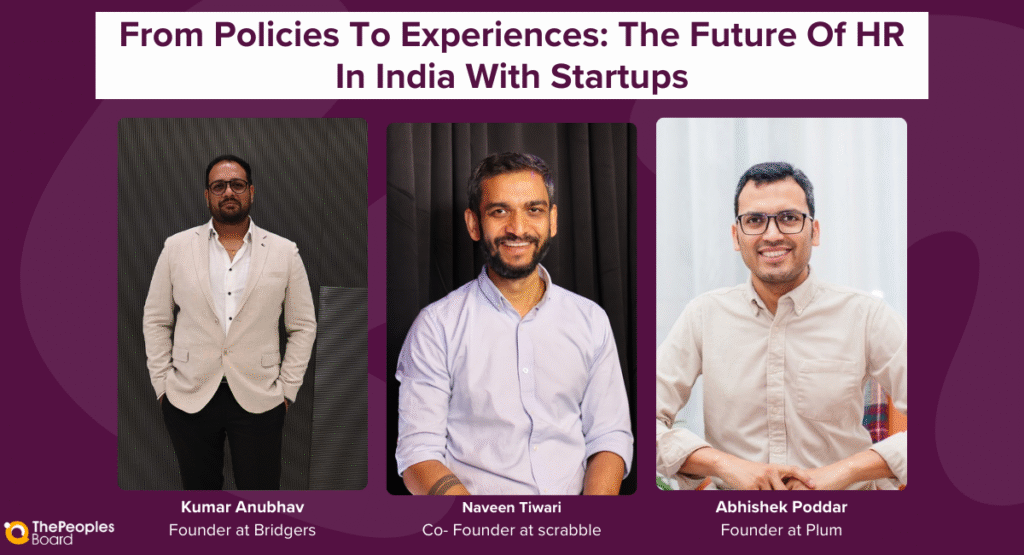
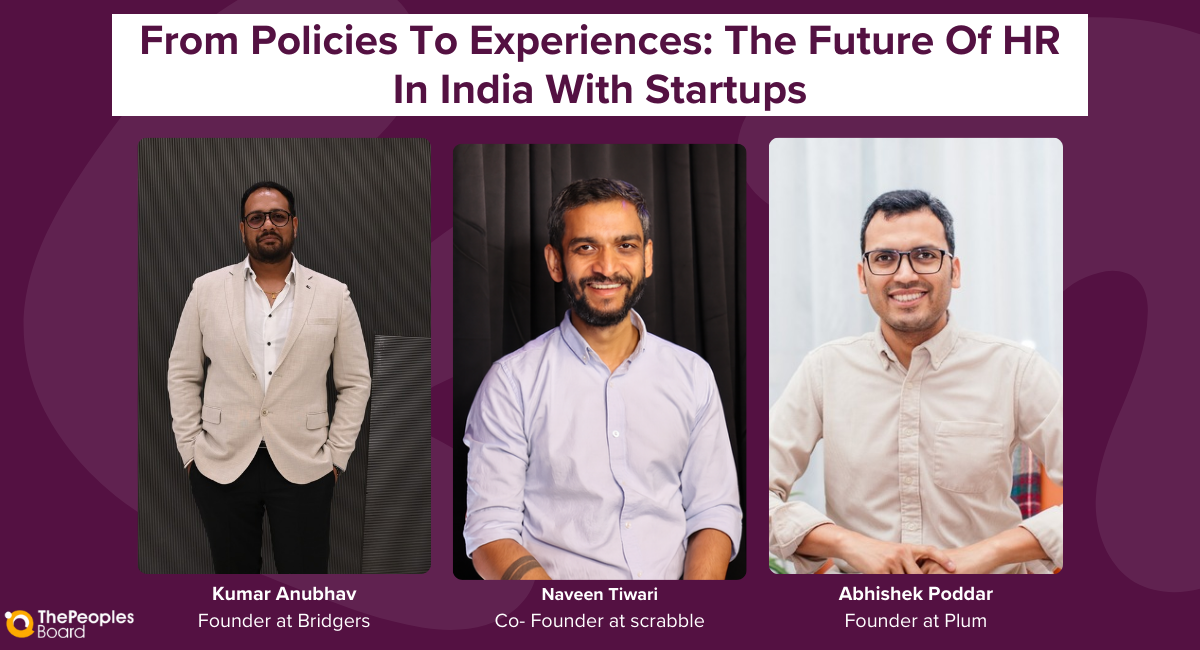
Public relations startup Bridgers, founded by Kumar Anubhav, works remotely with employees from across India. About the remote setting, the founder said that the obvious benefit is the air of independence in the workspace, as the employees are free to work from anywhere as long as the work is being completed.
Kumar Anubhav further added, “Team expansion and generating employment in various cities of India can also be met in a WFH scenario, giving the organisation diversity in its workforce. It not only enables the organisation to have the best team for the company from various parts of the country, but it also helps employees to find employment while residing in their hometowns.”
Startups aren’t just innovating, but also showing new ways to work and expand beyond the Tier-1 boundaries.
Further, commenting on the evolving workplace trends among the Indian startups, employee benefits company Plum’s co-founder Abhishek Poddar said, “Before the pandemic, many startups viewed health benefits as a cost, rather than an investment. In the years following the pandemic, companies shifted this mindset and began investing in these benefits not just because it was a compliance requirement, but also because employee expectations were evolving in a competitive market.”
These startups are reaping the benefits of consistently investing in employee health and observing positive signs across engagement, retention, and talent branding. As a result, over the last few years, Plum has seen some of its startup clients, such as CoinCDX, Khatabook, Postman, etc, proactively approach with requirements above and beyond basic health insurance.
“Companies are seeing us not just as service providers, but as consultative partners in their employee health strategies, he further added.
On that note, let’s take a look at some innovative employee workforce management strategies adopted by some major Indian startups:
- Fintech startup Razorpay, in 2022, came up with the policy of Family Assurance Benefits Policy, which covers the employees and their family members. This comes into effect in case of an unfortunate event of a team member’s demise. Under this Razorpay offer, the following support is provided to the family members of the deceased employee:
- 3X of the Last drawn annual CTC (Cost to company)
- Accelerated vesting of all unvested ESOP units (Applicable only if ESOP was allocated)
- Prorated 100% Variable pay for the current Performance cycle
- Prorated Gratuity for the tenure at Razorpay
- Continuation of medical insurance coverage for the rest of the policy term in the financial year for the nominees as per the Group Medical Cover policy.
“Losing a family member is never easy. While families grieve the loss of a loved one, the stress of how they would manage their lives (financially) further on also dawns upon the family members. We desire to help them in every way possible and this initiative is a move towards creating a work culture that cares and values team members and their families alike,” Razorpay’s policy document read.
- Meanwhile, food aggregator startup Swiggy offers extended maternal support under which, after 26 weeks of maternity leave, mothers can opt to work from home for up to a year. In addition, the company provides financial support for the newborn, child insurance, and maternity expenses for biological and commissioning parents.
- Yet another groundbreaking Indian startup, Meesho, in 2022, announced its Boundaryless Workplace Model. As the name suggests, Meesho allows its employees to choose where they want to work, irrespective of the location. Under this policy, the ecommerce startup would also set up satellite offices at locations with higher talent density.
In addition, Meesho happens to be at the forefront of non-judgmental workplaces, as it introduced a 30-week gender-neutral parental leave policy, gender reassignment leave, and a 10-day reset and recharge policy.
With such mind-boggling ideas, startups are ideally in a position to play with experiments and imagination.
As a result, what is unfolding across the Indian startup ecosystem is not a temporary workaround, but the early blueprint of a new HR ecosystem that larger organisations may soon learn from.
And, larger organisations don’t just mean the private entities, but also public service broadcasters like Prasar Bharati. Last year, the broadcaster revised the ex gratia lump sum compensation scheme for its employees recruited after October 5, 2007, who pass away on duty.
Under the revised policy, the faimily of an employee on duty who dies due to accidents or terrorist activity will receive an amount of Rs. 25 Lakh, while that of those who pass away due to border skirmishes or action against militants, terrorists, etc, will receive an amount of Rs. 35 Lakh instead of Rs. 5 Lakh and Rs. 7 Lakh respectively.
Such policies go beyond strengthening employer branding. These build trust within the workforce and, even amid uncertainty, become a critical factor in helping startups retain their people.
What are the key challenges?
It is only natural for HR to evolve with time, regardless of industry. Yet larger organisations may argue that their long-standing, tried-and-tested policies offer greater stability and reliability. On the other hand, uncertainties and speed are critical to startups. Also, startup employees are frequently required to multitask, leaving little room for rigid or slow-moving policy frameworks.
Commenting on this, Naveen Tiwari, Co-Founder, Scrabble, expressed that during the preliminary stages, the key challenge is to deal with the compliance risks across state borders and inconsistent practices, as the policies haven’t yet been imbibed in the startup’s culture.
“As per a recent survey, as many as 63% of Indian startups were found to be lacking in formal HR systems. This only leads to more frustration and attrition, and instead, having a designated HR person to ease out onboarding to initial adjustment issues faced by new joiners always helps to ensure a steady pace,” Tiwari added.
In addition, fostering teamwork and a shared culture in virtual settings of a dynamic workforce remains a constant struggle, even with the use of online collaboration and virtual team-building tools.
On this, Kumar Anubhav said that a challenge in a remote workplace is ensuring the quality and driving teamwork, as employees have to be self-driven to meet the organisation’s goal; we can only push them to an extent.
So what is the remedy?
A very interesting model noticed among the Indian startups is the no-cabin and no-hierarchy model. The intent is to flatten power distances and encourage faster, more honest communication across levels.
But how is it helpful?
Indeed Employer Guide suggests that when employees of all levels share a working space, such as cubicles separated by glass partitions, it increases transparency. The visibility can help employees to be productive and accountable.
Further, strong brand ethos, team bonding, and transparency on the part of the organisation go a long way, shared Kumar Anubhav.
Further, Tiwari suggested that it is always good to keep a lean organisational structure, source talent that can work with minimal supervision, design clear and brief onboarding processes and ensure that fundamental legal safeguards are in place, including POSH, PF, and ESI. “The culture a start-up is building plays a significant role in this, reflected in flexible work hours and everyday code of conduct,” he added.
The Future Of Work With Startups
As noted by Anubhav, for a team to work effectively, every employee needs respect, growth, and a favourable working environment. It’s up to the organisation to provide an environment where people feel wanted and respected – once they feel the same, work will take care of itself.
In short, for startups, the objective is not merely to accelerate work, but to make it deeply personal, so that each individual’s moments that matter are recognised automatically and in real time.