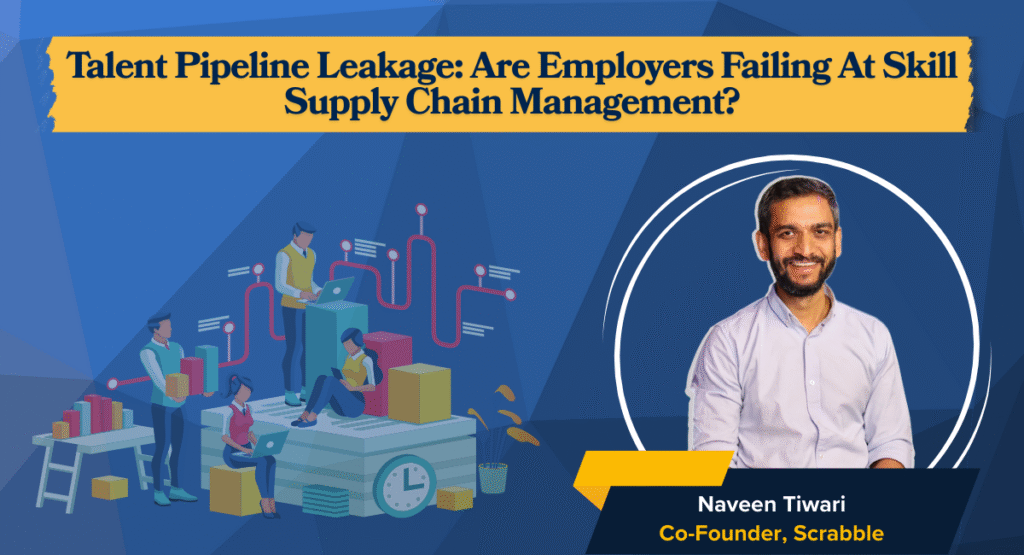
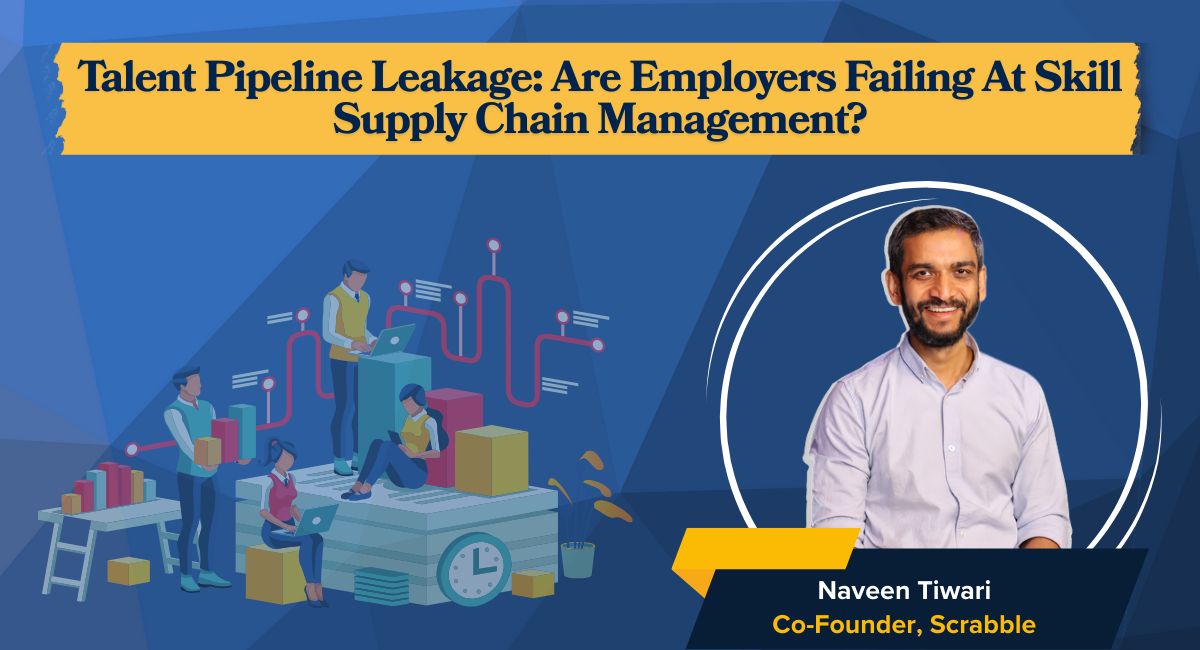

In the present times, skills and competencies have emerged as the unit of value in the talent markets. Fast-growing companies have taken a whiff of this change and are no longer playing by the age-old hiring playbook. However, the same cannot be said of other companies at large, which are still trying to fill the skills gap through a primitive approach of job titles and headcount. This slows down the pace of transformation and growth for organisations. And to mitigate this, a new paradigm emerges: treating skills as a supply chain problem. This equips and empowers companies to see where the gaps and breakdowns are, and stay preemptively ahead in the game.
The Pitfalls in the Skill Supply Chain
Global research by the World Economic Forum and others shows that skill requirements are evolving faster than companies are able to redesign the job descriptions. Major changes have been brought up by AI capabilities and technical competencies. The same is prompting companies to prioritise demonstrable capabilities, leadership and emotional intelligence over degrees and pedigrees. Yet, most organisations are struggling to keep a steady demand-supply dynamic, and the pitfalls include:
- Foresight in Demand Planning – in these fast-evolving times, only a few organisations are able to truly develop a forward-looking view of the skills that they are going to need. This, in turn, forces hiring and learning to operate reactively, and may get quite exhausting.
- Ensuring complete visibility – we are only beginning to prioritise skills; however, this data is fragmented across CVs, learning platforms and performance systems. When not organised and updated well, it doesn’t provide complete visibility to business leaders.
- Choice between sourcing/ creating – What is also crippling the skill supply chain is the choice between recruiting new talent or promoting the internal talent. While a talent from outside may bring freshness and diversity, at times, reskilling or upskilling internal talent may be cheaper and better for retention.
To avoid these pitfalls, organisations should develop a more proactive approach towards maintaining a skill pipeline. Treating it as a core dependency for projects and developing a more preemptive and data-driven approach would help the organisations.
An Organisation’s Imperative: The Most Critical Skill Deficits
To ensure a steady skill supply chain, organisations plan for the skills that are relevant to the present and future. After studying the hiring mandates across sectors, we have noticed a pattern emerging, i.e. the convergence of digital, analytical, and human skills.
- AI & Digital – As per a survey by the World Economic Forum, skills that are projected to grow in importance within the next 5 years include: AI and big data, networks and cybersecurity, and general technological literacy. Companies are increasingly looking for talent in AI literacy, large language models, automation, software development, and more.
- Data & Problem-Solving – A growing number of organisations are realising the scarcity of talent to work with technology in operational contexts and analyse data. As per the supply chain movement, the gaps are felt more across the supply chain and operations sectors. Organisations need talent that can not only extract data but also interpret it meaningfully, leading to actionable insights, decisions, and improvement across processes.
- Emotional Intelligence & Leadership – At the beginning of the year, LinkedIn published its report, Skills on the Rise in 2025. While this mentions AI literacy as the Numero Uno skill, a lot of other skills are about creative thinking, problem solving, conflict mitigation and social influence. Often, in our conversations around the skill supply chain, we tend to focus on the technical skills, but forget that a business is fundamentally about making human relations. Skills like conflict resolution, creativity, and transformational leadership determine whether or not technical skills lead to business outcomes.
Getting into the Skill Supply Chain Mindset
The writing on the wall is clear: role-based hiring is passe. It assumes long shelf life for skills, which is constantly getting disrupted now with AI, data, and other emerging technologies. Instead, what leaders need to do now is to get into a supply chain mindset for skill planning and sourcing.
Mapping and forecasting skill demand would be a great start. Companies can identify various themes for transformation, including AI transformation, sustainability, digital enablement, etc. This can be followed by a real-time skill inventory. This map should be updated regularly to ensure organisations stay ahead of the curve.
Equally important is to design a make-buy-borrow strategy. This includes reskilling the existing talent, hiring new one, or partnering with specialised vendors, universities, or gig talent to access niche skills, while the organisations work towards building internal capability.
Lastly, organisations should continue to work on developing the “human side” of talent. Supporting leaders with decision making, conflict mitigation, persuasion and influence will go a long way in ensuring optimum health of the organisation.